The Duck Curve
#virtual power plants
Senate passes BAAJA permitting bill 62-33, sending it to the House
The Senate passed H.R. 2347, the vehicle for the Bipartisan American Affordability and Jobs Act, 62-33 on November 19, 2026, with the Capito substitute's permitting, transmission and data center cost provisions. The House, which passed H.R. 2347 as an unrelated tax bill in April, must now act on the Senate's version.
Austin widens its battery VPP; Puerto Rico's reaches 114,428 participants
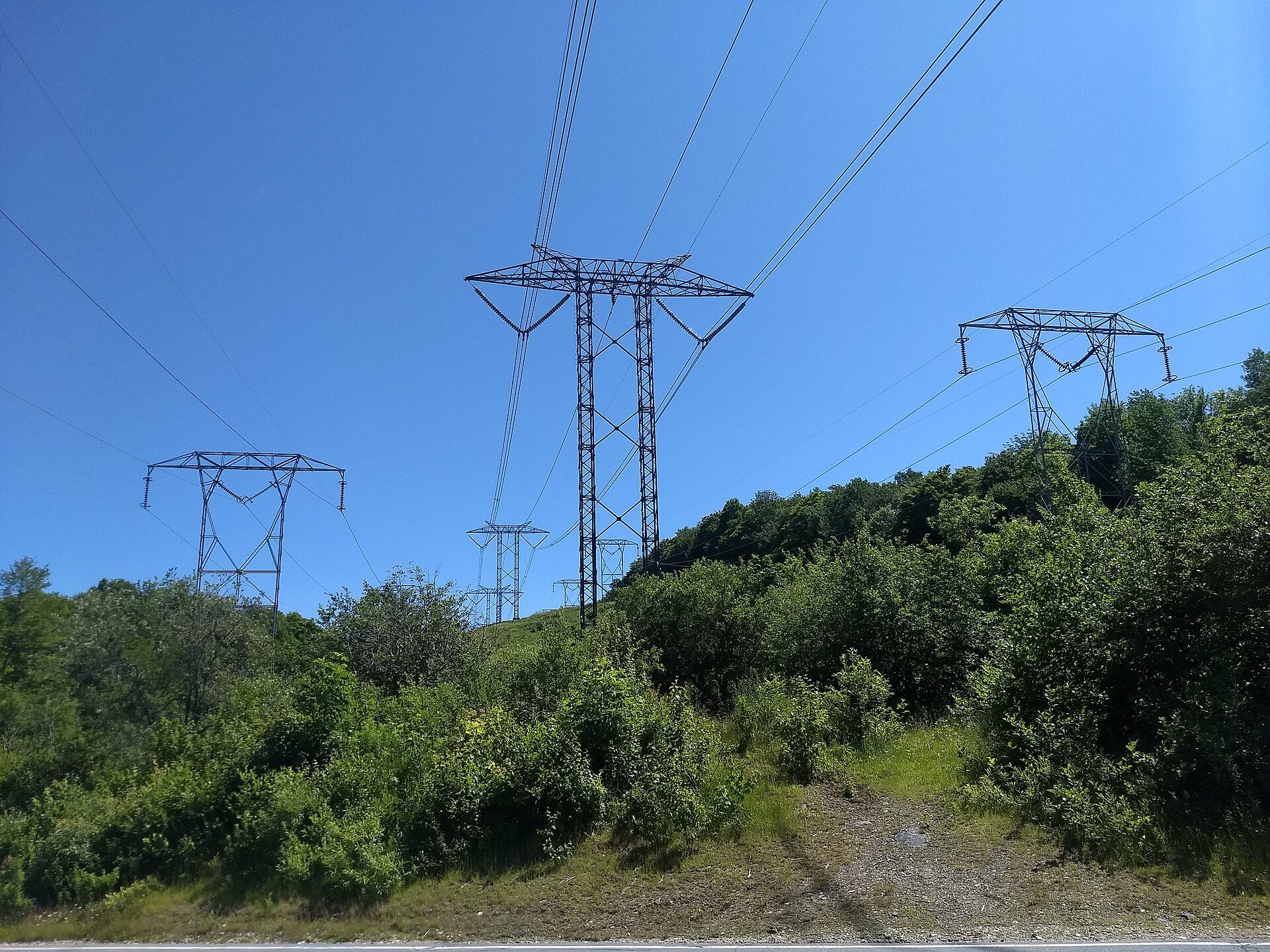
Austin Energy's Power Partner Battery pilot now takes Tesla, Generac and Enphase home batteries as well as SolarEdge and FranklinWH, with a $500 rebate and $75 a year per kW of average event output. Puerto Rico's CBES program called 14 events in September 2026 with a record 114,428 participants, and Vattenfall chose Kraken to run its German batteries, wind and solar as a virtual power plant.
Jackery supplies Every Electric's NYC window-AC battery program
Jackery and Every Electric said on November 16, 2026 that Jackery is lead hardware provider for Every Electric's New York City A/C Powerbank Program, which they put at about 2,000 portable power stations in more than 1,000 households and 4 MWh of flexible storage in Con Edison territory.
House ON-DEMAND Act would have DOE write model standards for VPPs
Reps. Kathy Castor, Jay Obernolte and Doris Matsui introduced the ON-DEMAND Act on November 12, 2026. The bill would have the Department of Energy develop model standards and best practices for virtual power plants after stakeholder meetings, and give technical assistance to utilities, regulators and grid operators.
New Jersey orders utilities to build PowerUp NJ battery and VPP programs
The New Jersey Board of Public Utilities established PowerUp NJ on November 12, 2026: an interim utility-run virtual power plant program plus Garden State Energy Storage Program Block 1, which offers performance-based payments of up to $200 per kW a year for 10 years for up to 150 MW of new residential and small commercial batteries and up to $100 for up to 100 MW of existing ones. Utilities must file program petitions by February 12, 2027.
CoServ and Base Power grow Texas home battery program to 450 MW
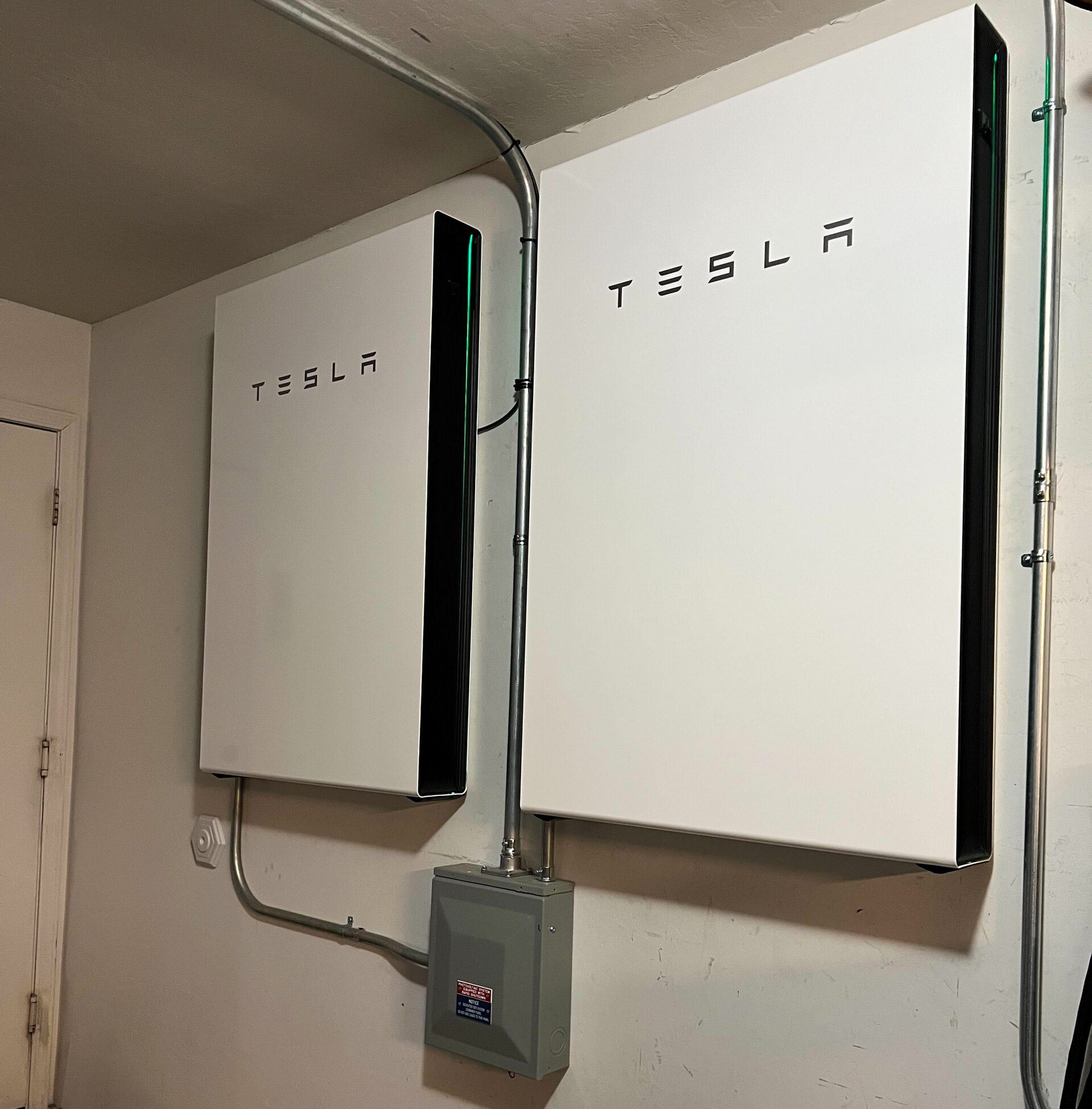
Denton County Electric Cooperative (CoServ) and Base Power said on November 10, 2026 that they are expanding their North Texas residential battery program to 450 MW, from the 100 MW announced in March. Base has installed 75 MW at members' homes so far, and CoServ dispatches the fleet during peak demand.
Senate permitting bill gets substitute text two days before cloture vote
Senators Lee, Capito, Heinrich and Whitehouse released a substitute amendment to the Bipartisan American Affordability and Jobs Act on November 7, 2026, ahead of a November 9 cloture vote on the motion to proceed to H.R. 2347, its House-passed vehicle. Heatmap News reports the text makes transmission developers go to states for a year before seeking FERC's siting backstop; the text itself caps the behind-the-meter facilities its market-access rule covers at 5 MW.

National Grid offers free batteries to up to 125 Fall River households
National Grid's BackupBattery+ pilot, announced November 6, 2026 with Haven Energy, will give up to 125 income-eligible households in the Fall River, Massachusetts area no-cost home batteries of up to 45 kWh, with initial installations targeted to begin in spring 2027.
Brattle puts US distributed energy savings at $614 billion through 2050
A Brattle Group study for The Pew Charitable Trusts, released November 5, 2026, estimates that removing barriers to distributed solar, batteries and flexible demand would avoid $614 billion in US power system costs through 2050 (2026 dollars, undiscounted). It models distributed capacity growing from 113 GW to 524 GW and average household bills $122 a year lower by 2050, about half the projected rise above inflation.
Sunrun says its Puerto Rico battery fleet doubled to over 60,000 customers
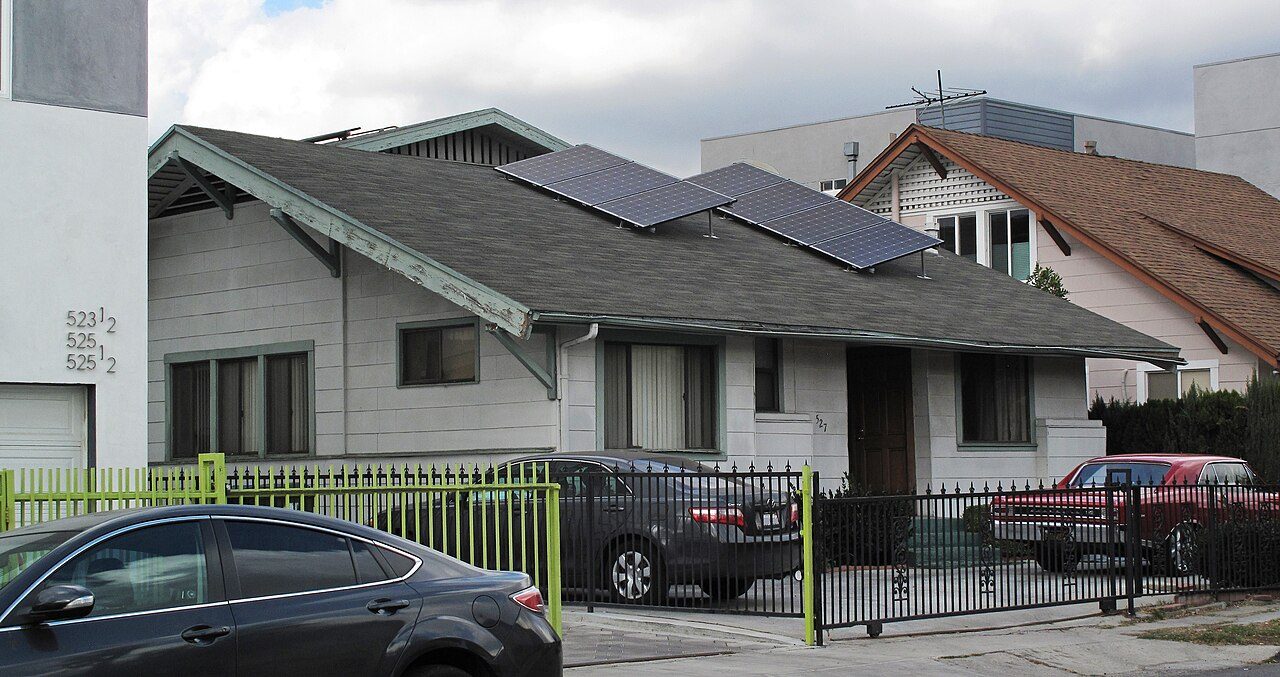
Sunrun says participation in its Puerto Rico distributed power plant, part of LUMA's Customer Battery Energy Sharing program, has doubled to more than 60,000 customers with nearly 70,000 home batteries delivering 45 MW for four hours at a time. It has dispatched the fleet more than 60 times since April.
ISO New England opens its markets to distributed energy aggregations
ISO New England began letting aggregators register pooled distributed energy resources, such as solar, storage, demand response and EVs with controllable charging, on November 1, 2026 under FERC Order No. 2222, with a 100 kW minimum. Energy and ancillary-service rules took effect that day. FERC's 2023 order had set November 1, 2022 for capacity-market rules aimed at the FCA 18 auction; ISO-NE's refresher now lists its capacity-market changes as effective for 2028-29.
CPUC orders a common DER orchestration plan from PG&E, SCE and SDG&E
The California Public Utilities Commission on October 29, 2026 directed PG&E, Southern California Edison and San Diego Gas & Electric to file a joint application for a common distributed energy resources orchestration framework within 12 months of the decision's issuance. The utilities must also present a load flexibility scenario for distribution planning at a workshop within 120 calendar days.
DTE and sonnen launch a home battery VPP pilot at Ann Arbor's Veridian
DTE Energy and sonnen launched a two-year pilot on October 29, 2026 that pools the batteries of nearly 100 homes at Veridian at County Farm in Ann Arbor, which the companies call Michigan's first residential battery virtual power plant pilot. The Michigan PSC approved the pilot, estimated to cost $500,000, on September 10; participants earn up to $504 a year per battery.
Enphase guides Q4 lower, Western Australia drafts plug-in solar rules
Enphase Energy expects fourth-quarter 2026 revenue of $225 million to $255 million after third-quarter revenue of $293.3 million; third-quarter US sell-through fell 35% year over year and European sell-through fell 12% from the second quarter. SunPower is expanding in Texas with VPP financier SOLRITE, LADWP's board paused residential disconnections through 2026, Western Australia opened consultation on legal plug-in solar, and Micron gave $2.5 million toward geothermal heat for Boise affordable housing.
Buffalo apartment battery, CEC's $6.8M for VPPs, Budderfly's $500M
Viridi and Good Carbon Co. said on October 20, 2026 they had installed a 3.75 MWh lithium-ion battery in Peace Bridge Place, a 105-unit affordable apartment building in Buffalo, New York. The California Energy Commission approved two virtual power plant grants worth $6.84 million on October 19, and Budderfly said on October 20 it will make $500 million available for municipal energy upgrades.
Google expands its Voltus virtual power plant in PJM to 1 GW
Google and Voltus said on October 22, 2026 they will build a 1 GW virtual power plant in PJM, adding 1,070 MW of distributed capacity to a 100 MW agreement signed in June, with Voltus paying businesses and homes to cut demand when the grid is strained. The contract is voluntary: FERC rejected PJM's rules for new large loads to bring their own new capacity on October 9.

ARENA funds JET Charge V2G trial of up to 130 ACT Government EVs
The Australian Renewable Energy Agency said on October 21, 2026 it is funding JET Charge's REVS2 project, which will deploy up to 130 EVs and bidirectional chargers across the ACT Government fleet. ARENA's project page lists A$4.1 million in ARENA funding toward a A$6.4 million project running to June 30, 2029.
Sunrun and Tesla home batteries hit 745 MW in California, Sunrun says
Sunrun said on October 14, 2026 that home batteries it and Tesla dispatch delivered 669 MW of peak power to California's grid on October 5 and 745 MW on October 6, at the request of the California Energy Commission and utilities, and called them the largest residential distributed power plant dispatches in US history. The state's DSGS program, which called dispatches on both evenings on a $200/MWh price trigger, is funded only through the end of 2026, per Advanced Energy United.
Home VPPs could offset over half of modeled bill growth, Brattle finds
The Brattle Group estimates that a 301 MW residential virtual power plant at a representative utility with one million residential customers could offset $56 of a modeled $98 five-year rise in the average household's annual electricity bill, in inflation-adjusted terms. Brattle prepared the report for Everyday Electric, formerly Renew Home, whose thermostat program informs the model's largest component.
Central Georgia EMC and Base Power plan 50 MW of $95 home batteries
Central Georgia EMC and Base Power announced on October 13, 2026 a 50 MW residential battery program: co-op members get a whole-home backup battery installed for $95 with no monthly fee, while the cooperative dispatches the fleet for peaks and price arbitrage. First installations are scheduled for 2027; it is Base's first utility partnership outside Texas.
Voltus raises $225M Series D, expects its platform to reach 20 GW by 2030
Voltus said on October 8, 2026 that it raised $225 million in a Series D led by Generation Investment Management, with Activate Capital and Vitol as co-leads, and expects to grow its platform to 20 GW by 2030 as it executes on its Bring Your Own Capacity program in PJM and MISO; its website lists 8.5 GW of distributed energy resources today. On October 9, FERC rejected PJM's IRAS and BYONC large-load rules, which Voltus had supported in September comments.

EV4EU V2X project ends; Azores homes cut charging costs 8.6% on average
EV4EU, an €8.99 million EU-funded V2X charging project coordinated by INESC-ID, closed on May 31, 2026 with a bidirectional CCS charging station prototype and pilots in Portugal, Slovenia, Greece and Denmark. Its Azores report puts the average household charging cost cut at 8.6%, ranging up to 14%; the EU's CORDIS summary of October 8, 2026 gives 14% as the average.
Renew Home, now Everyday Electric, buys connected-car platform Smartcar
Renew Home renamed itself Everyday Electric on October 6, 2026, introduced a whole-home Everyday VPP with HVAC, EV, EVSE, storage and solar OEM partners, and said it acquired connected-vehicle platform Smartcar for managed charging in utility programs, without disclosing terms. It claims 6+ GW of capacity and a five-year goal of over $5 billion in household savings that counts avoided system costs for all households its energy provider partners serve.
Newsom signs SB 913, a 2028 deadline to count aggregations as grid capacity
Governor Gavin Newsom approved SB 913 on September 30, 2026, and the Secretary of State chaptered it the same day as Chapter 987, Statutes of 2026. The law adds Section 380.1 to the Public Utilities Code: by June 30, 2028, the California Public Utilities Commission, with the California Energy Commission and the Independent System Operator, must enhance existing market-integrated pathways for aggregated distributed energy resources to qualify as resource adequacy capacity. The digest key records no appropriation.

Sunrun to supply solar and batteries for SPAN's XFRA nodes in Texas homes
Sunrun and SPAN said on September 23, 2026 that Sunrun will provide home solar and battery storage to help power SPAN's XFRA distributed data center nodes, starting in Texas new-construction communities and other unnamed markets; each host home gets a smart panel, batteries and solar through a pre-paid lease and hosting compensation, at no cost to the builder or buyer. The release names no node count, price or compute buyer; SPAN's xfra.ai page specs each node at 16 NVIDIA GPUs with a 15 kWh battery and says it is on a first 100-home proof of concept and plans to expand more broadly in 2027.
Sunrun and Tesla put the September 9 home-battery dispatch at over 580 MW
Sunrun and Tesla said on September 21, 2026 that their home battery fleets dispatched more than 580 MW of peak power to California's grid for three hours on the evening of September 9, 2026: 517 MW from Tesla Powerwalls, 110,000 of which participated (55% Sunrun-owned), and 63 MW from what the release calls additional batteries; Sunrun separately dispatched more than 30,000 customer batteries from other manufacturers. The release ties the event to the CEC's DSGS price trigger and a PG&E call under the CPUC's ELRP, and calls it the largest distributed power plant dispatch event on record.
Virgin Islands VPP discharges at 800 kW and 500 kW in two half-hour tests
The Virgin Islands Energy Office said on September 16, 2026 that its Tesla-operated VIBES-2.0 virtual power plant ran two half-hour tests on September 11: 190 residential batteries on St. Thomas and St. John discharged at approximately 800 kW and 108 on St. Croix at approximately 500 kW, and VIEO put the combined total at 2.5 MWh without saying how it was measured. It has paid out over $176,000 in participation incentives; its Terms and Conditions set a $500 per battery enrollment incentive and a $500 per battery annual participation incentive, each capped at $2,000 per participant.
Tesla says about 69,000 California homes sent over 500 MW to the grid
Tesla Energy said on X on September 9, 2026 that about 69,000 Powerwall owners across California were dispatching more than 500 MW to the grid during that day's heatwave. The attached screenshot of Tesla's California Virtual Power Plant dashboard showed 105,009 homes in California VPPs, 68,887 homes in a VPP event, and 507 MW of battery power discharging. The dashboard credits Tesla VPPs with the majority of a July 2025 event that delivered over 500 MW, which a Brattle Group report commissioned by Sunrun and Tesla Energy measured as an average 539 MW net-load reduction in a test event.
Virtual power plants in the US
As of November 19, 2026, US VPPs grow through state programs like New Jersey's PowerUp NJ and deals like Google's 1 GW Voltus VPP while Order 2222 market access arrives operator by operator and a Senate-passed bill would mandate it for qualifying behind-the-meter aggregations.
California budget bill carries no 2027 money for its DSGS home-battery VPP
California's end-of-session budget bill AB 113, passed by the Senate on September 1, 2026 with the Assembly concurring the same day, contains no appropriation for the Demand Side Grid Support program, the California Energy Commission's virtual power plant of home batteries, smart thermostats and demand response that the CEC estimated at 1,145 MW enrolled in April 2026. The bill adds $20 million for the sister Distributed Electricity Backup Assets program; a Senate proposal to shift $70 million of CalSHAPE interest into DSGS was not included, and Advanced Energy United says the program is funded only through the end of 2026.