 The Duck Curve
CPUC orders a common DER orchestration plan from PG&E, SCE and SDG&E
The utilities get 12 months from the decision's issuance to propose one shared framework for steering customer batteries, EVs and flexible loads, and 120 days to present a load flexibility scenario for distribution planning.
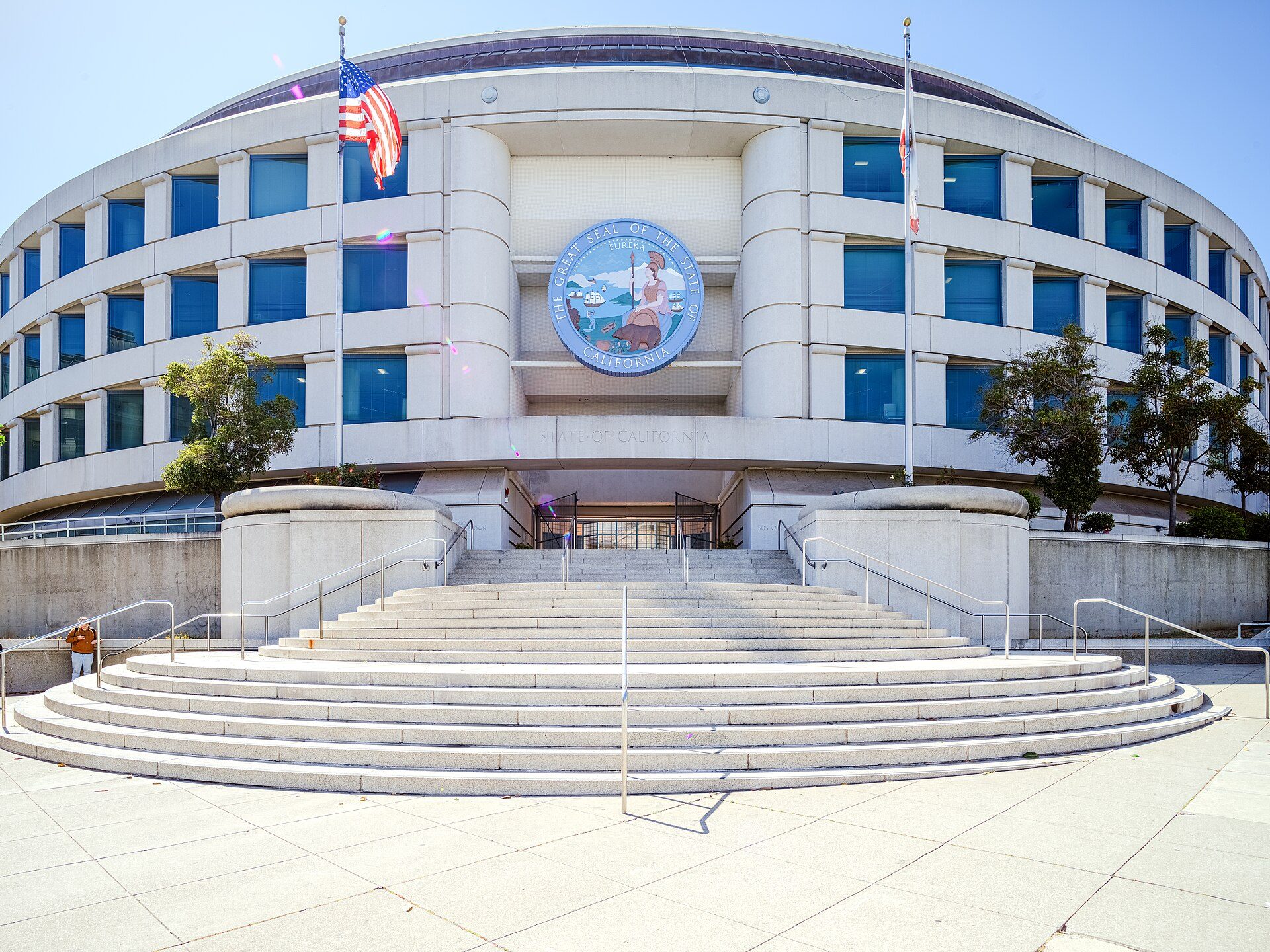
California's three big investor-owned utilities now have a deadline to agree on how to direct other people's batteries. On October 29, 2026, the California Public Utilities Commission directed Pacific Gas and Electric, Southern California Edison and San Diego Gas & Electric to propose a common framework for coordinating distributed energy resources (DERs), including customer-sited batteries, electric vehicles and other technologies that can adjust when and how electricity is used. Under the proposed decision the commission approved, the utilities must file a joint application within 12 months of the decision's issuance and present a load flexibility scenario for their distribution planning at a full-day workshop within 120 calendar days.
The CPUC defines orchestration as the coordinated management of DERs by a distribution system operator, with the utilities in that role. The framework would use visibility, forecasting and scheduling tools to find location- and time-specific needs on the distribution grid and signal eligible devices to deliver verifiable services, the commission says. The CPUC's release links Revision 1 of Commissioner Darcie L. Houck's proposed decision as the approved proposal; the requirements below come from that text.
The order's main clocks start at issuance rather than at the vote. By our arithmetic, a decision issued before the end of 2026 puts the joint application due in late 2027 and the load flexibility workshop no later than April 30, 2027.
What the joint application has to settle
The order is a plan to write a plan, with a schedule. The three utilities must jointly hire and fund a working group facilitator within one month of issuance. The facilitator drafts a report within eight months and finalizes it within 10, and the final report rides along as an attachment to the application.
The application is where the hard parts live: what the devices are for, and how utilities talk to them. It has to define the grid services DERs would provide, such as reliability, distribution capacity, outage mitigation or avoidance, infrastructure deferral and electrification support, and link each one to specific system or distribution needs. It must propose "open, standardized, and interoperable communication protocols that reduce reliance on proprietary original equipment manufacturer clouds and enable grid-edge innovation," and justify any deviation. The utilities must also address communication barriers such as excessive access fees, limited functionality and vendor lock-in, and follow 11 guiding principles, including net ratepayer benefits and preventing double compensation.
Aggregators get a hearing and no guaranteed seat. The California Solar & Storage Association argued that aggregators should be the primary operators of DER fleets; the commission instead said it "partially agrees" with EnergyHub that aggregators should not necessarily be entitled to a role, while finding they "may offer enhanced abilities to manage customer assets cost-effectively." The order says that if aggregators are included, "they must add value, not undermine the goal of cost effectiveness, nor add unnecessary complexity." That is a working group question in a state where Sunrun and Tesla home batteries delivered 745 MW on October 6, 2026, by Sunrun's count, as we reported in Sunrun and Tesla home batteries hit 745 MW in California, Sunrun says. CPUC President John Reynolds said he will be "particularly interested in proposals regarding affordability and competitive neutrality when it comes time to review utility applications."
The utilities start from different places. PG&E deployed a distributed energy resource management system (DERMS) in 2023 that now sends commands to two energy storage systems run to help avoid distribution upgrades, per the proposed decision; SCE has completed site acceptance testing of its phase 1 Base DERMS; and SDG&E has no enterprise DERMS and targets procurement for 2027. The joint application must carry each utility's own proposal for how it will use the common framework given its circumstances.
Who pays, and for what
The order leans hard on money already granted. The utilities must first use existing or pending technology investment authorizations before asking for any incremental technology investment, and must show why general rate case funding cannot cover what they seek. For the application work itself, they may open memorandum accounts capped at $500,000 shared across all three, limited to application development; recording costs "does not establish their reasonableness or authorize recovery."
The planning half of the order is where the commission sees the larger savings. The utilities' own Electrification Impact Study Part 2 reports, as summarized in the decision, show cost reductions from demand flexibility scenarios: about $1.8 billion through 2040 for PG&E's Enhanced Demand Flexibility Scenario relative to its base case, $0.32 billion to $1.38 billion across SCE's two flexibility scenarios, and about $697 million over 2025-2040 for SDG&E. The decision notes those results "reflect modeled potential under study assumptions" and treats capturing flexibility in distribution planning as a significant affordability tool.
So the utilities must add a Load Flexibility Scenario as a fourth case beside the Low, Base and High scenarios in their annual Distribution Planning and Execution Process. After the 120-day workshop, they file a joint Tier 3 advice letter within 60 calendar days setting out the technical basis, including how they will avoid counting flexibility more than once against existing scenarios, pending loads and other demand-side management programs. In December 2025, Resolution E-5414 had declined a stand-alone demand flexibility scenario for the 2025-2026 cycle, citing immature methods and pending study results. SCE argued in comments that flexibility assumptions "should not inform forecasting assumptions used in the yearly DPEP until they have been validated with pilots and empirical data."
One date in the order disagrees with itself. The decision's summary and the CPUC release say the scenario applies beginning with the 2028-2029 planning cycle, while the advice letter's required contents in the same document ask how it will be incorporated "starting in the 2027-2028 DPEP cycle."
The rulemaking, R.21-06-017, stays open for a third track. A separate Houck proposed decision dated October 20, 2026 would direct the same three utilities to expand flexible service connections, which let customers connect using available distribution capacity while deferring or avoiding upgrades where feasible; it could be heard as early as the commission's December 3, 2026 business meeting. The wholesale side of the same devices runs on a different track: SB 913 gives the CPUC until June 30, 2028 to enhance existing market-integrated pathways for aggregated DERs to qualify as resource adequacy capacity (Newsom signs SB 913, a 2028 deadline to count aggregations as grid capacity). Our explainer on virtual power plants covers how those aggregations work.
Sources
Primary
- Decision Adopting an Application Process for Utility Distributed Energy Resources Orchestration and Ordering Utilities to Incorporate Load Flexibility Scenarios into Their Distribution Planning and Execution Processes (Proposed Decision, Rev. 1) · California Public Utilities Commission
- CPUC Advances Integration of Customer Energy Resources Into California's Electric Grid · California Public Utilities Commission
Supporting
- Proposed Decision Addressing Track 3 Issues Directing Large Investor-Owned Utilities to Support Affordability Through Flexible Service Connections · California Public Utilities Commission
Copies of cited sources are retained where available. If a link no longer resolves, request a copy at contact@theduckcurve.com.