 The Duck Curve
Senate passes BAAJA permitting bill 62-33, sending it to the House
The Senate passed the BAAJA permitting bill 62-33 on November 19, 2026; the bill would bar utilities from charging other customers the retail incremental cost of serving data centers that interconnect on or after enactment.
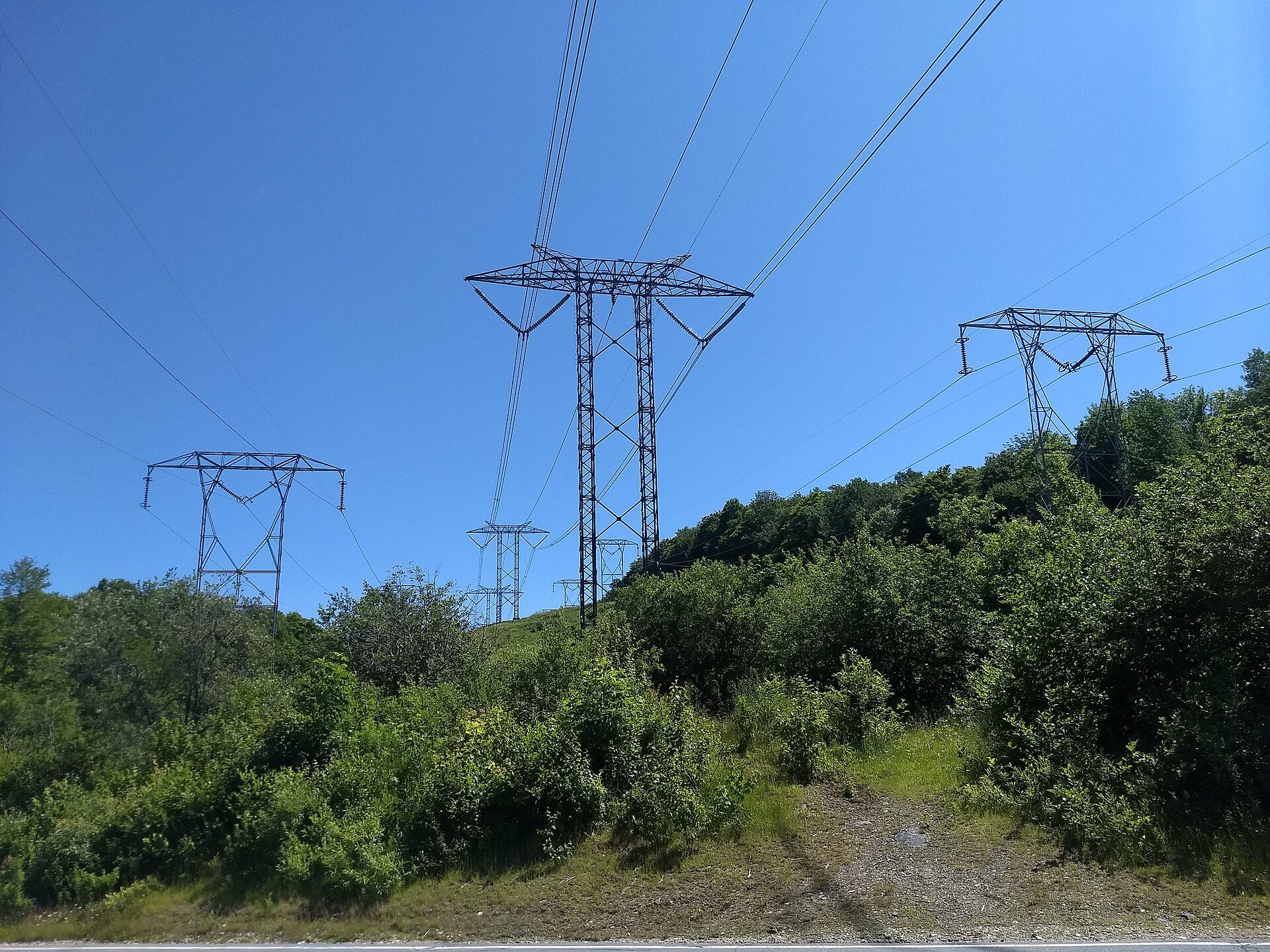
The Senate passed the Bipartisan American Affordability and Jobs Act (BAAJA) 62-33 on the night of November 19, 2026, sending the permitting overhaul to the House. Forty-seven Republicans, 14 Democrats and independent Angus King voted yes; Republicans Josh Hawley and Mike Rounds joined 30 Democrats and independent Bernie Sanders in voting no. A simple majority was required, and five senators did not vote. The bill rides on H.R. 2347, a House tax bill, carrying the Capito substitute the Senate adopted on November 18, whose changes we covered when it was released.
Support from Democrats and independents started with Martin Heinrich and Sheldon Whitehouse, both lead negotiators of the deal by Latitude Media's account, and reached 13 more. The Senate Daily Press floor log lists all 15 Democrats and independents in favor (Chris Coons, John Fetterman, Ruben Gallego, Heinrich, John Hickenlooper, King, Amy Klobuchar, Gary Peters, Jack Reed, Jacky Rosen, Brian Schatz, Chuck Schumer, Elissa Slotkin, Mark Warner and Whitehouse) and has the roll call opening at 9:30 p.m. and the bill passing at 10:02 p.m.
Tribal consultation was one stated reason for a no. Catherine Cortez Masto voted against the bill in part over provisions narrowing tribes' consultation rights on cultural and sacred sites, Latitude Media reports. Elsewhere the coalition moved at the edges from the day before, when the Senate invoked cloture on the bill 65-31. Kirsten Gillibrand and Raphael Warnock voted for cloture and against passage; Peters went the other way. Adam Schiff, who did not vote on cloture, voted no. New Mexico split again, Heinrich voting yes and Ben Ray Luján no. So did Delaware: Coons yes, Lisa Blunt Rochester no, though the substitute's data center community assistance program mirrors legislation she introduced with John Curtis, Heatmap reported.
The bill passed without its last-minute cleanup. Before the vote, Shelley Moore Capito sought consent for votes on 19 amendments; Jeff Merkley objected after Capito rejected his modification. Capito then called up a bipartisan managers' amendment, number 7030, and Merkley objected again, the Daily Press log shows. After passage, Schatz asked consent to pass a Lee-Heinrich-Capito amendment as an enrollment correction. Merkley objected a third time.
The House passed H.R. 2347 by voice vote on April 27, 2026, when it was the Survivor Justice Tax Prevention Act, a bill to exclude damages received on account of sexual acts or sexual contact from gross income. It now gets back a permitting law. Cramer says the bill "now heads to the House of Representatives for consideration." Latitude reports a coalition of more than 100 moderate House Democrats is warming to it, while Reps. Jared Huffman and Rashida Tlaib oppose it and argue the party should hold out until 2027, when it will control Congress.
What it does for the grid
The data center language is written for ratepayers. The substitute adds a section 229 to the Federal Power Act whose operative sentence is blunt: "No portion of the retail incremental cost may be allocated to, or recovered in the rates of, any customer other than a computational load owner or a computational load operator" (SA 6883 text). That cost is defined to include generation, storage, transmission and distribution associated with serving the site, recovery continues if a data center ends its contract before the cost is recovered, and utilities must collect financial assurances before building for one. States may charge data centers more and credit the surplus to other customers. These retail rules are prospective: they apply to data centers that interconnect on or after enactment, while arrangements a state approved before then remain in effect, though a state may revise them to conform. FERC gets 90 days after enactment to revise its 1994 transmission pricing policy so data center transmission customers pay embedded cost plus a reasonable assessment of incremental cost. Latitude reports the provision is a version of the White House's ratepayer protection pledge and calls the result an effective double charge. Utilities are not waiting: PJM's transmission owners asked FERC on November 16 for 10-year minimum data center contracts.
For transmission, FERC could site interstate lines of 230 kilovolts or more when a state lacks siting authority, fails to act within a year of an application, or denies a certificate, according to Sen. Kevin Cramer, whose summary also says costs must roughly align with benefits, with public power and co-ops exempt. Latitude reports the final bill softened provisions that would have ended utilities' federal right of first refusal, effectively keeping their right to replace aging corridors. Eighteen months after enactment, grid operators could no longer keep qualifying aggregations of behind-the-meter batteries, generators and other dispatchable resources out of wholesale markets; each device must be 5 kilowatts to 5 megawatts and each aggregation at least 100 kilowatts. Those are the building blocks of virtual power plants.
The permit certainty sections bar agencies from rescinding issued permits except in listed cases; senators aim to use them to lift the Trump administration's blockade of solar and wind projects on federal lands and waters, Latitude reports. President Trump endorsed the bill on Truth Social, and has told reporters he still won't approve wind turbines.
What it might be worth is a modeling question. Rhodium Group, analyzing the version introduced September 30 and leaving out permit certainty and the virtual power plant provisions, projects household electricity bills $50-78 a year lower in 2040, 17-249 GW of additional clean capacity through 2040, and interregional transmission additions 167-262% above the last decade's pace. It also estimates the ratepayer protection provisions, if fully implemented, would raise the retail price data centers pay for grid power by 88-102%, and that LNG exports rise 8-15% beyond current policy.
Outlook
If the House passes the Senate text unchanged, the bill goes to a president who has endorsed it. Any House change, including the corrections Merkley blocked on November 19, would send it back to a Senate that needed three cloture votes to pass it once. The data center provisions would then move to FERC, whose 90-day clock on the transmission pricing policy starts at enactment.
⚠ The Outlook extrapolates from the Senate Daily Press floor log of November 19, 2026 (the blocked managers' amendment and enrollment correction), the November 9-18 cloture record, Latitude Media's reporting on the President's endorsement and House positions, and the 90-day FERC deadline in the SA 6883 text; it assumes standard bicameral procedure, under which a House change requires further Senate action.
Sources
Primary
- Roll Call Vote 119th Congress - 2nd Session, Vote Number 270 (On Passage of the Bill, H.R. 2347, as Amended) · U.S. Senate
- Thursday, November 19, 2026 · U.S. Senate Press Gallery (Senate Daily Press)
Supporting
- BILLSTATUS H.R. 2347, Survivor Justice Tax Prevention Act · U.S. Government Publishing Office (GovInfo) / Library of Congress
- Estimating the US Energy System Impacts of the Bipartisan American Affordability and Jobs Act · Rhodium Group
- The Last-Minute Changes to the Senate Permitting Deal, Explained · Heatmap News
- SA 6883 (Capito substitute to H.R. 2347), Congressional Record, November 10, 2026, pages S5471-S5520 · Congressional Record (U.S. Government Publishing Office via Congress.gov)
- Roll Call Vote 119th Congress - 2nd Session, Vote Number 268 (On the Cloture Motion H.R. 2347) · U.S. Senate
- Senate Passes Permitting Reform to Unleash North Dakota Energy, Infrastructure Development · Office of U.S. Senator Kevin Cramer
- Senate clears permitting reform after a bitter split among greens · Latitude Media
Copies of cited sources are retained where available. If a link no longer resolves, request a copy at contact@theduckcurve.com.