 The Duck Curve
Senate permitting bill gets substitute text two days before cloture vote
The November 9 vote is on cloture on the motion to proceed to H.R. 2347, the bill's vehicle; Heatmap reports the new text makes transmission developers go to states for a year before seeking FERC's backstop.
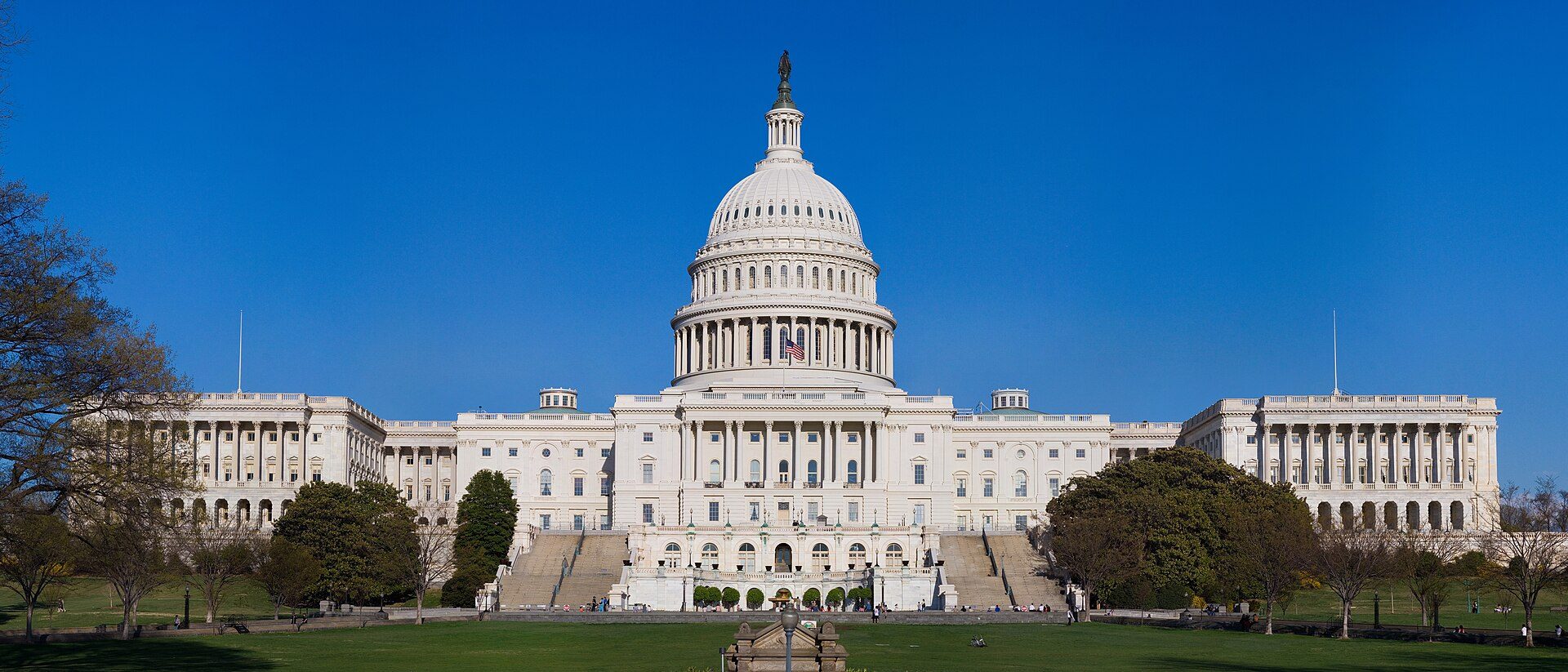
The four senators behind the Senate's permitting deal released a substitute amendment to the Bipartisan American Affordability and Jobs Act (BAAJA) on November 7, 2026, two days before a scheduled cloture vote. Mike Lee and Martin Heinrich, the chair and ranking member of the Energy and Natural Resources Committee, and Shelley Moore Capito and Sheldon Whitehouse, their counterparts on Environment and Public Works, say it includes "clarifying, conforming, and technical edits to reflect feedback received since BAAJA's introduction in September." In the same release Capito says the substitute makes "targeted changes based on feedback from our members and stakeholders to further build support," and Whitehouse calls it "our manager's amendment."
The November 9 vote is procedural. At about 5:30 p.m. that day the Senate votes on cloture on the motion to proceed to H.R. 2347, according to the Senate Daily Press schedule and the Congressional Record's Daily Digest. H.R. 2347 is the Survivor Justice Tax Prevention Act, which passed the House by voice vote on April 27, 2026 and would exclude from gross income certain damages received due to a sexual act or sexual contact. The Daily Press schedule calls it "the legislative vehicle for the permitting reform bill," so a rewrite of federal permitting law is riding on a bill about the tax treatment of sexual-abuse damages. Heatmap reports the motion needs at least 60 votes. The same 5:30 p.m. vote was already on the Daily Press schedule on October 26, so the substitute landed near the end of a wait of at least two weeks.
The Duck Curve has not reviewed the amendment text, which the committees posted as a PDF; the provision-level changes below are as Heatmap News reported them on November 7.
Transmission: states first, then FERC
The transmission changes start with sequence. The bill introduced as S. 5653 on September 30 had a developer of a line of at least 345 kilovolts file its FERC siting application "simultaneously with, or any time after," its state application. Heatmap reports the substitute removes the simultaneous track: developers must now go to states for a year before applying for the federal backstop. Former FERC Commissioner Mark Christie had argued that simultaneous filing "effectively renders the state proceeding meaningless," Heatmap notes.
Developers got something back, by Heatmap's account. Projects can use the bill's cost allocation formula without using the federal backstop, and can apply it to only part of a project. The backstop now explicitly reaches state-owned land, which Heatmap says closes a potential loophole in which a state could acquire land to block a federally approved line. The introduced text already let lines with advanced conductors qualify at voltages FERC determines appropriate instead of the 230-kilovolt floor; Heatmap reports the substitute ties that to a throughput roughly similar to a conventional 230-kilovolt line.
The Southeast's monopoly utilities won a carve-out. The introduced bill would have had FERC require every transmission planning region to file a consolidated process that jointly evaluates transmission and the generating capacity reasonably anticipated to be needed over the next 20 years. Heatmap reports the substitute exempts vertically integrated utilities that are not in an electricity market from that process. They remain subject to the interregional planning mandate and to the bill's oversight of local transmission projects, which Heatmap says now covers replacement of old lines as well as new builds.
Data centers, tribes and the reaction
The substitute closes what Heatmap calls "a loophole that might have allowed data centers with behind-the-meter natural gas power plants to profit by selling excess power to the grid." The reason is in Section 2108 of the introduced bill. Unless state law or state regulators provide otherwise, it would require distribution utilities inside an organized wholesale market's footprint to interconnect, in a timely fashion, "any behind-the-meter resource that is eligible to participate in that wholesale market, including any qualifying BTM DES facility or qualifying BTM DES aggregation." Its qualifying-facility definition covers storage, fuel cells, "a generator, or other resource" that sits behind a retail customer's meter, can be brought online within 15 minutes and dispatched at the system operator's signal, carries metering and telemetry sufficient to dispatch it, account for its grid withdrawals and injections, and communicate its operational data, and has a "rated capacity of not less than 5 kilowatts." Neither the definition nor the interconnection obligation capped size. Heatmap reports the substitute applies the requirement only to resources below 5 megawatts, which it says is smaller than a data center power source. By our arithmetic that ceiling is a thousand times the qualifying-facility definition's 5-kilowatt floor, leaving room for the residential batteries and virtual power plants Heatmap says the section was meant to help.
The substitute also adds a Data Center Community Assistance Program at the Energy Department, through which local communities could request information and technical help on data center impacts, according to Heatmap, which says the language mirrors legislation Sens. John Curtis and Lisa Blunt Rochester introduced in October and that the text does not say how the program would be set up or explicitly authorize funding. Heinrich says in the release that the bill "makes sure data centers pay for the energy they use and the grid upgrades they cause, instead of passing those costs on to New Mexico families."
The historic preservation changes have not won over the bill's tribal opponents. Heatmap reports the substitute strikes the introduced bill's definition of "property of traditional religious or cultural importance" and drops a provision letting the Interior Secretary assume the role of a tribal historic preservation officer in certain cases. It also explicitly lets agencies revoke or alter permits "in response to an order by a court" and lengthens the baseline of past projects used to judge "disparate treatment" claims from five years to 10. The 106 Coalition of tribal organizations still opposes the bill, Heatmap reports.
Reaction split the same day. Ray Long, president and CEO of the American Council on Renewable Energy, said the amendment "specifically improves the transmission provisions, allowing us to make much-needed upgrades to our grid so we can build more clean energy." Erich Pica, president of Friends of the Earth U.S., said that "even amended, BAAJA is filled with industry giveaways that throw communities and our environment under the fossil fuel and data center bus."
Sources
Primary
- Lee, Capito, Heinrich, and Whitehouse Release Substitute Amendment to Bipartisan American Affordability and Jobs Act of 2026 · U.S. Senate Committee on Energy and Natural Resources
- Substitute amendment to the Bipartisan American Affordability and Jobs Act of 2026 (KAT26764) · U.S. Senate Committee on Energy and Natural Resources
Supporting
- S. 5653 (IS), Bipartisan American Affordability and Jobs Act of 2026 · U.S. Government Publishing Office (GovInfo)
- BILLSTATUS H.R. 2347, Survivor Justice Tax Prevention Act · U.S. Government Publishing Office (GovInfo) / Library of Congress
- Monday, October 26, 2026 · U.S. Senate Daily Press
- Congressional Record Daily Digest, November 5, 2026 · U.S. Government Publishing Office (GovInfo)
- Thursday, November 5, 2026 · U.S. Senate Daily Press
- ACORE Statement on Bipartisan American Affordability and Jobs Act Substitute Amendment from President and CEO Ray Long · American Council on Renewable Energy
- Statement: Friends of the Earth U.S. still opposes disastrous Senate permitting bill · Friends of the Earth U.S.
- The Last-Minute Changes to the Senate Permitting Deal, Explained · Heatmap News
Copies of cited sources are retained where available. If a link no longer resolves, request a copy at contact@theduckcurve.com.