 The Duck Curve
PJM transmission owners ask FERC for 10-year minimum data center contracts
Data centers would guarantee 80 to 100% of their firm transmission charges and post collateral for the whole projected bill; PG&E and Southern California Edison filed 15-year versions the same day.
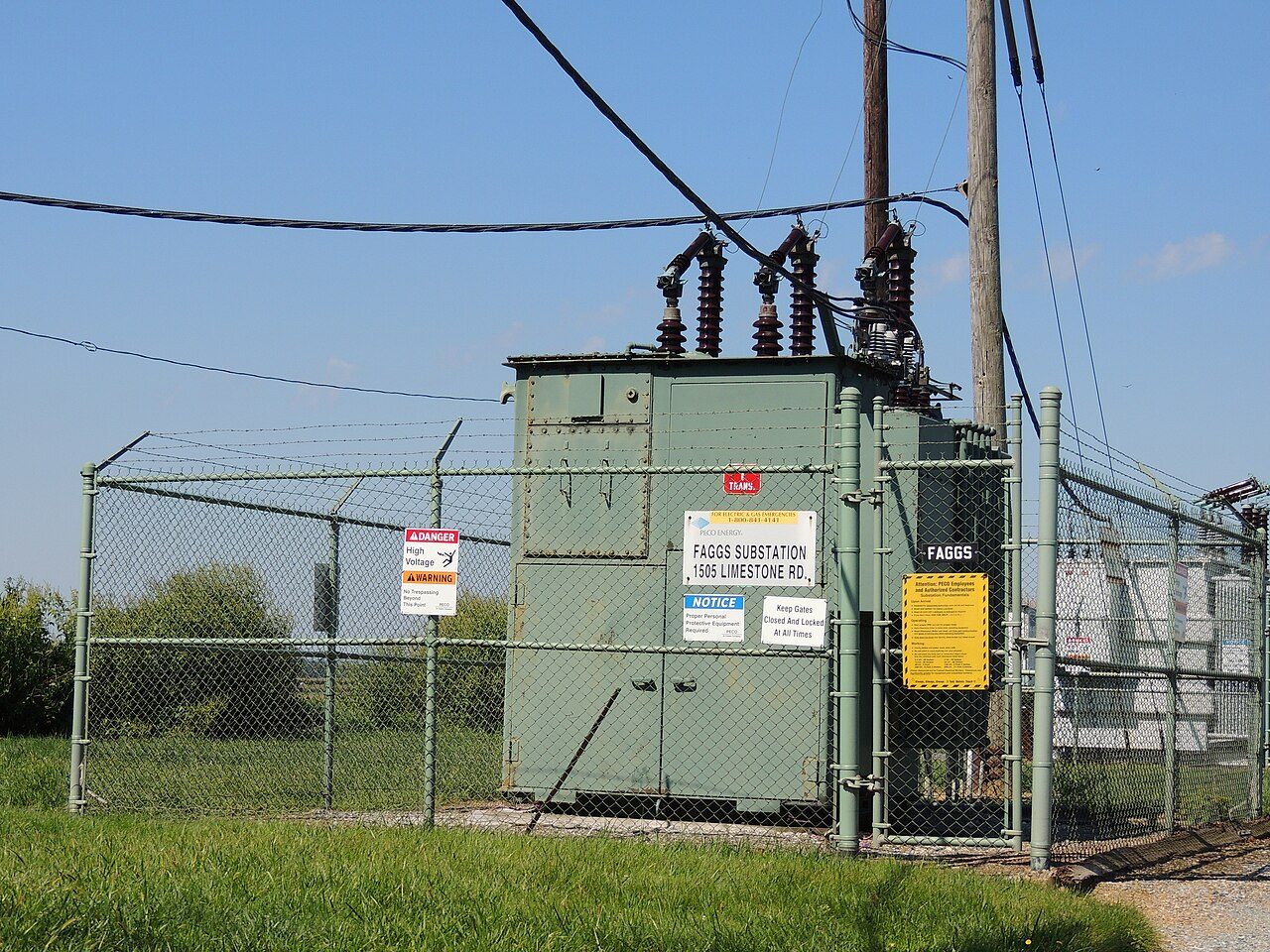
The utilities that own PJM's transmission lines want data centers seeking firm grid service in PJM to sign for at least ten years. In a filing at the Federal Energy Regulatory Commission on November 16, 2026, the PJM Transmission Owners proposed a pro forma Cost Recovery Agreement (CRA) under which the large load itself guarantees a minimum of 80 to 100 percent of the charges for the firm transmission service requested on its behalf, posts collateral sized to the full projected bill, and pays to leave early. The filing, docket ER27-520, answers FERC's June 18 show-cause order on large loads and takes up the question PJM's own Fast Energization filing left to the owners: who pays for the wires, and for how long.
The CRA is a three-party agreement among the transmission owner, the Large Load Customer (whoever owns, operates, leases or otherwise controls the facility) and the Eligible Customer that actually takes transmission service on its behalf, which under PJM's tariff can be a utility or a power marketer, among others. PJM is not a party. The owners place the payment and collateral obligations on the data center rather than the transmission customer, because the transmission customer may be an intermediary that does not control the project's construction, financing or demand. Making a utility secure its customer's commitment, they argue, could be extremely costly, a cost they say all ratepayers would end up bearing.
A data center signs after its transmission owner's retail interconnection study and before entering PJM's study process, and signing plus posting credit support are conditions for proceeding.
None of it is in force yet. The owners ask for March 16, 2027 for the rates and terms of the new transmission services, but for the CRA itself the indeterminate effective date of December 31, 9998 that PJM is requesting for Fast Energization, tying the two together. FERC extended comments on ER27-520 to January 15, 2027; its November 16 notice had listed December 7 inadvertently.
What the data center signs up for
Once service starts, each period's minimum is the Minimum Commitment Percentage, which the owners say may vary between 80 and 100 percent and may change over the term, times the charges for the full firm service the load committed to. The transmission owner compares that with the revenue the load's service actually produced and bills only the shortfall. The term is at least ten years, its exact length negotiated between the owner and the counterparties.
Collateral is sized at 100 percent regardless: the initial requirement equals the projected charges for 100 percent of the load commitment over the whole term, recalculated after PJM's final agreement and reduced as each period's obligations are settled. The owners concede the security may exceed what is ultimately owed, since it is calculated on the full benchmark, and say it remains collateral that does not change the payment obligation.
Leaving early costs a share of the present value of the committed payments still to come, less credits: 25 percent before PJM's final agreement is signed, 50 percent for the 180 days after, 75 percent until service begins and 100 percent after that. A data center that permanently shrinks its request pays on the reduced portion only, and a schedule change because PJM finds the upgrades will not be ready in time does not count against it.
A data center may never see the pro forma. A PJM owner can use its own FERC-accepted agreement instead, as long as that agreement, together with state and federal requirements, gives comparable protection, and qualifying agreements already in place stand. The CRA itself does not "establish or govern any terms and conditions of retail service," the owners say.
Some PJM utilities already ask for longer terms at the state level. According to Latitude Media, Dominion Energy's Virginia large-load tariff sets its floor at 85% of contracted transmission demand over 14 years and AEP Ohio requires 85% over 12 years. The bigger change, Latitude argues, is in retail-choice states such as New Jersey and Pennsylvania, where a utility's minimum bill generally does not apply and the federal agreement would become a data center's only long-term commitment to pay for transmission upgrades.
How the other filings compare
PG&E and Southern California Edison filed 15-year floors the same day. SCE's filing (ER27-508) proposes a 15-year minimum transmission revenue obligation backed by five years of security, plus exit fees, and notes that no state tariff currently requires its retail transmission customers to provide security or payments for the network upgrades needed to serve them. PG&E's filing (ER27-513) puts an obligation built on the same formula into a 15-year Cost Assurance Agreement, with security of five years of the obligation at the load's full requested capacity and an exit fee equal to the security required at the time. Comments on both, which request February 16, 2027 effective dates, are due December 7, 2026.
Both formulas multiply each year's scheduled megawatts by the hours in the year, by 80 percent and by 75 percent, then by the applicable transmission access charge, with the access charge fixed for 15 years. PJM's and California's formulas both carry an 80 percent, and it measures different things. In PJM it is the floor share of the bill. In California it is an assumed capacity factor, and the floor is the 75 percent on top: by our arithmetic, the minimum equals the charges on a load running at 60 percent of its scheduled capacity around the clock. PG&E supports the 80 percent with an E3 study of data centers, which found, as PG&E quotes it, that only two "had load factors above 90% of their reported peak loads, and fewer than half had load factors above 80%."
The signatories differ too. PG&E's agreement adds the data center as a party when PG&E is the one taking transmission service for it, and otherwise leaves that choice to the transmission customer. In filings made the same day, New York's transmission owners sign with the large load or its agent and recover its upgrade costs over 15 years, while MISO's revenue commitment, 20 years where upgrades are rolled into rates, binds the transmission customer, commonly the load-serving utility.
Outlook
FERC rejected PJM's previous large-load service in October partly because its tariff appeared to place obligations directly on new large loads, an apparent intrusion on retail rate regulation. The owners argue that it is "appropriate, and jurisdictionally sound, to place the financial risks addressed by the CRA on the Large Load directly," and point to FERC's acceptance of Commonwealth Edison agreements in which individual large loads assumed such commitments directly. If FERC accepts that reading, the data center itself would carry the risk that the transmission revenue expected from it never arrives. The owners have also told FERC that the option to use separate agreements in place of the pro forma "is a key aspect of, and is not severable from, the PJM Transmission Owners' pro forma CRA proposal."
⚠ The Outlook extrapolates from FERC's October 9, 2026 order on PJM's ER26-3515 filing, as reported in our earlier coverage, and from the PJM Transmission Owners' ER27-520 filing: its argument that placing the CRA's financial risk on the large load is jurisdictionally sound, its citation of FERC's Commonwealth Edison orders, and its statement that the separate-agreement option is not severable from the CRA.
Sources
Primary
- PJM Transmission Owners, Tariff Revisions for Service to Co-Located Loads and Large Loads, Docket No. ER27-520-000 (submitted by PECO Energy Company) · PJM Transmission Owners (filed with the Federal Energy Regulatory Commission)
Supporting
- Southern California Edison Company, Large Load Show Cause Order Response, TO Tariff Revisions, Docket No. ER27-508-000 · Southern California Edison (filed with the Federal Energy Regulatory Commission)
- Pacific Gas and Electric Company, Response to Large Load Order to Show Cause in EL26-71-000, TO Tariff Revisions, Docket No. ER27-513-000 · Pacific Gas and Electric Company (filed with the Federal Energy Regulatory Commission)
- FERC, Combined Notice of Filings #1, November 16, 2026 · Federal Energy Regulatory Commission
- Errata Notice Extending Comment Period, PECO Energy Company, Docket No. ER27-520-000 · Federal Energy Regulatory Commission
- Utilities want FERC to lock data centers into paying for grid upgrades · Latitude Media
Copies of cited sources are retained where available. If a link no longer resolves, request a copy at contact@theduckcurve.com.