 The Duck Curve
New Jersey orders utilities to build PowerUp NJ battery and VPP programs
The November 12 order keeps the August proposal's maximum of $200 per kW a year for new batteries, adds up to $100 for up to 100 MW already installed, and gives utilities until February 12, 2027 to file.
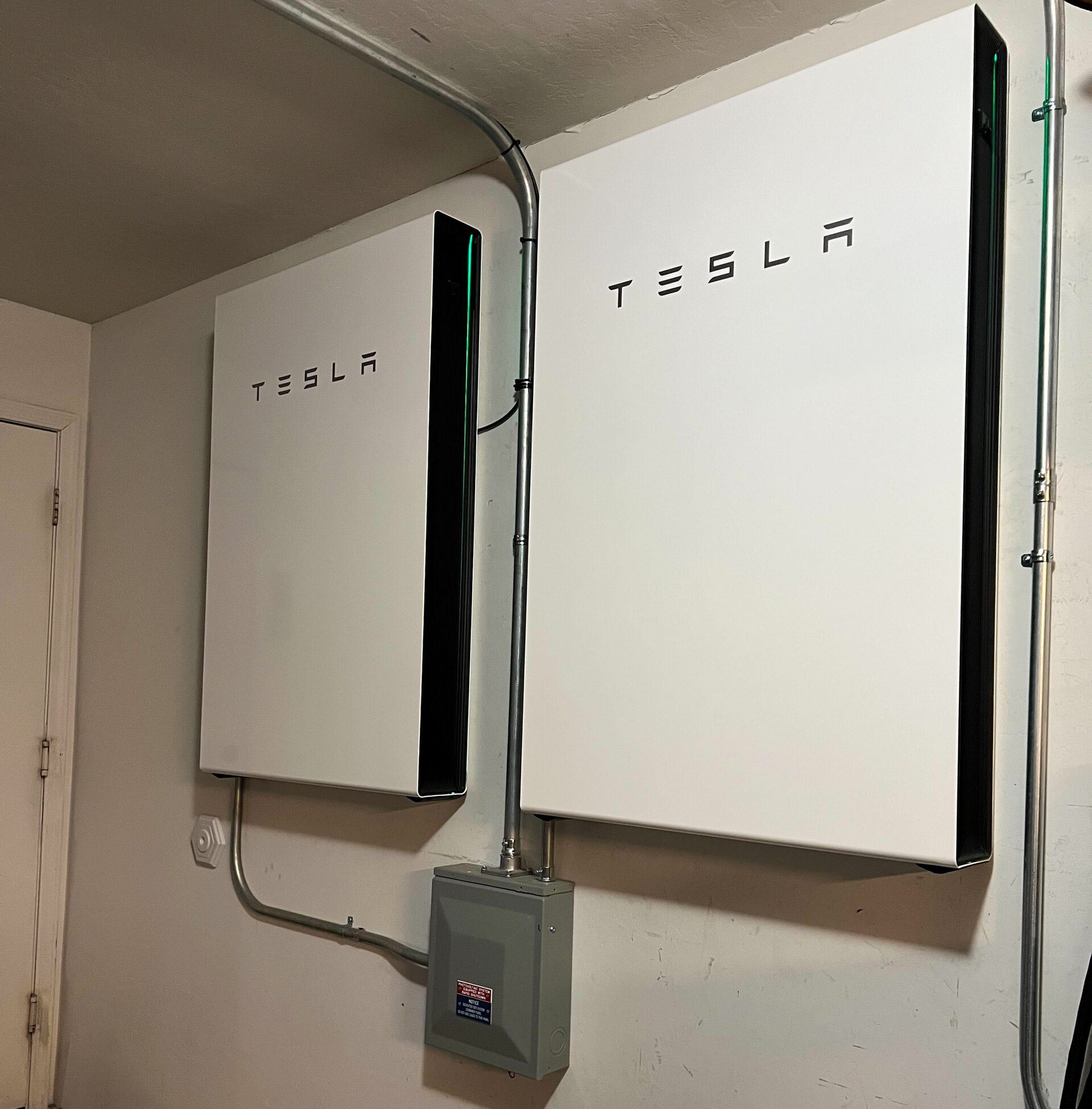
New Jersey's four electric utilities have until February 12, 2027 to propose how they will pay customers to let thermostats, EV chargers and batteries shave the grid's peaks. The Board of Public Utilities established PowerUp NJ on November 12, 2026, an umbrella for two programs: a utility-run interim virtual power plant program, and Block 1 of the Garden State Energy Storage Program, which offers performance-based payments of up to $200 per kW a year for 10 years for up to 150 MW of new residential and small commercial batteries, and up to $100 per kW a year for up to 100 MW of batteries already installed.
That second tier is the clearest departure from staff's August straw proposal, which shut out existing and previously operational systems entirely. The order defines existing storage as any system that reached commercial operation before November 12, 2026, and caps its rate at half the new-system maximum on staff's reasoning that those batteries "did not require a financial inducement to install." The $200 maximum itself survived the comment round unchanged. To the many commenters who, by staff's account, believe it may be too modest, staff pointed to "empirical data showing that many New Jersey residential customers have decided to invest in BTM energy storage for private resilience reasons absent any pay-for-performance revenue stream." Against the Division of Rate Counsel's worry that administratively set incentives risk overpaying, staff noted the rates are smaller than comparable programs in other states, "indicating they constitute a modest starting point and should not be reduced further."
Two programs, one brand
The interim VPP program is technology-neutral: any distributed resource that can deliver dispatchable demand reduction may enroll, with a minimum aggregation of 10 kW per dispatch event, though a solar-only system on a net metering tariff may not. Utilities must have it operational no later than October 1, 2027, subject to Board approval of their filings, and it runs through September 30, 2029. The July VPP straw proposal had set June 1, 2027 for new sub-programs and July 1, 2027 for those migrating from the utilities' existing demand response portfolios. Events are capped at three hours and 35 a year unless the Board approves otherwise.
VPP payments to customers must arrive as a check, an electronic funds transfer or a gift card, "and not as a credit on the Host Customer's electric bill." The order pitches the programs as lowering energy costs for participants and other ratepayers alike; the participant's own reward is barred from appearing on a bill. Aggregators that enroll a whole site carry a non-binding goal of passing at least 70% of what they earn on to the customer.
Staff's budget guidance for the interim program is $100 million for 2027 to 2029: $50 million for PSE&G, $25 million for Jersey Central Power & Light, $22 million for Atlantic City Electric and $3 million for Rockland Electric. Atlantic City Electric and Rockland get more than their peak-load share to cover start-up costs, per the order, since PSE&G and JCP&L already run VPP pilots and demand response programs (PSE&G's include a home battery pilot).
Block 1 opens for enrollment within 60 days of the Board approving each utility's program. New-storage capacity is split by residential sales, as proposed in August: 73 MW for PSE&G, 52 MW for JCP&L, 21 MW for Atlantic City Electric and 4 MW for Rockland. Batteries enroll through a provider that dispatches them and collects the payment; the straw's rule that aggregators pass at least 70% of the incentive to the homeowner is gone for Block 1, left to private negotiation.
What a battery actually earns
Battery events got shorter and better signposted: the storage straw proposed up to four hours per event on two hours' notice; the order's preliminary parameters are three hours, at least 21 hours' notice, and up to 25 summer and five winter events within a 35-event annual cap. Payment is still the rate times the battery's awarded capacity times a performance factor scored on the weakest hour of each event.
The order's own worked example shows how far that sits from the headline. A theoretical 10 kW, 15 kWh battery, called 30 times for an average of 2.5 hours with a 20% manufacturer holdback, scores a 48% performance factor and earns $960 a year, where the headline rate would imply $2,000.
Batteries paired with net-metered solar can get permission to export and earn net metering credit if they run in a "NEM integrity" mode that exports only stored solar energy. Standalone batteries can export too, but until the Board approves a tariff or orders otherwise, their kWh exports earn no state-level compensation beyond Block 1, which pays for discharge during events rather than for exports. Where a tariff needs an export rate, utilities file a zero rate within 60 days, alongside the net metering changes.
Who pays
Staff's ratepayer impact test, the order's primary benefit-cost measure, found the programs can deliver net benefits to ratepayers, with a benefit-to-cost ratio of 1.98 for Block 1 and 1.16 for the interim VPP program. Each utility's proposals must score above 1.0 on that test or justify why not. Program costs are to be recovered as an operating expense, with no separate equity return, apart from any capital investment the Board specifically approves. The Board found that conventional cost-of-service treatment "does not by itself tie utility earnings to delivered load reduction or verified cost savings," and directed staff to evaluate a mechanism that scales utility earnings with verified savings, without adopting one yet. Block 1's budget guidance is $29 million for 2027 to 2029 and $220.6 million for 2030 to 2039.
Each utility must also propose a peak reduction target of at least 3.5% of its service-territory peak for PowerUp NJ as a whole, at least 3% of it from the interim VPP program, or justify going lower. Staff's reference values, built on weather-normalized summer 2025 peaks, put those at 638 MW and 547 MW statewide.
Outlook
The February 12 filings will show how much of the 3% target the utilities think they can reach; staff expects it can be met quickly by enrolling customers whose devices were already funded through energy efficiency incentives and current EV programs. Staff's base-case benefit-cost analysis assumes all 100 MW of existing batteries are deployed and participating in the first program year, and each utility must now file its own estimate of how much existing storage could enroll. Utility and Tesla responses cited in staff's August straw put the batteries already installed in New Jersey at an estimated 8,500 to 11,000. By our arithmetic, if they average something like the 10 kW of the order's worked example (our assumption; the order gives no average), that fleet totals roughly 85 to 110 MW, so the first-year assumption would need most of those owners to sign up.
⚠ The Outlook extrapolates from the Board's November 12, 2026 order (its peak reduction targets, staff's expectation that customers whose devices were funded through energy efficiency incentives and current EV programs can meet them quickly, its benefit-cost assumption that 100 MW of existing storage participates in the first program year, and the required utility estimates of enrollable existing storage) from the battery-count estimate cited in staff's August 2026 storage straw proposal, and from our own arithmetic applying the order's 10 kW worked-example battery size to that count as a stated assumption.
Sources
Primary
- Order Establishing the PowerUp NJ Program and Adopting Minimum Filing Requirements (Dockets QO26100658, QO26030099, QO26040116) · New Jersey Board of Public Utilities
Supporting
- Straw Proposal: Virtual Power Plant Program (Docket No. QO26030099) · New Jersey Board of Public Utilities (Staff)
- Garden State Energy Storage Program (GSESP) Phase 2: Distributed Energy Storage Capacity Block 1 Straw Proposal · New Jersey Board of Public Utilities
Copies of cited sources are retained where available. If a link no longer resolves, request a copy at contact@theduckcurve.com.