 The Duck Curve
New Jersey proposes 10-year payments for up to 150 MW of home batteries
The BPU straw proposal offers up to $200 per kilowatt-year, though its own worked example lands a Powerwall-class battery at $540 a year.
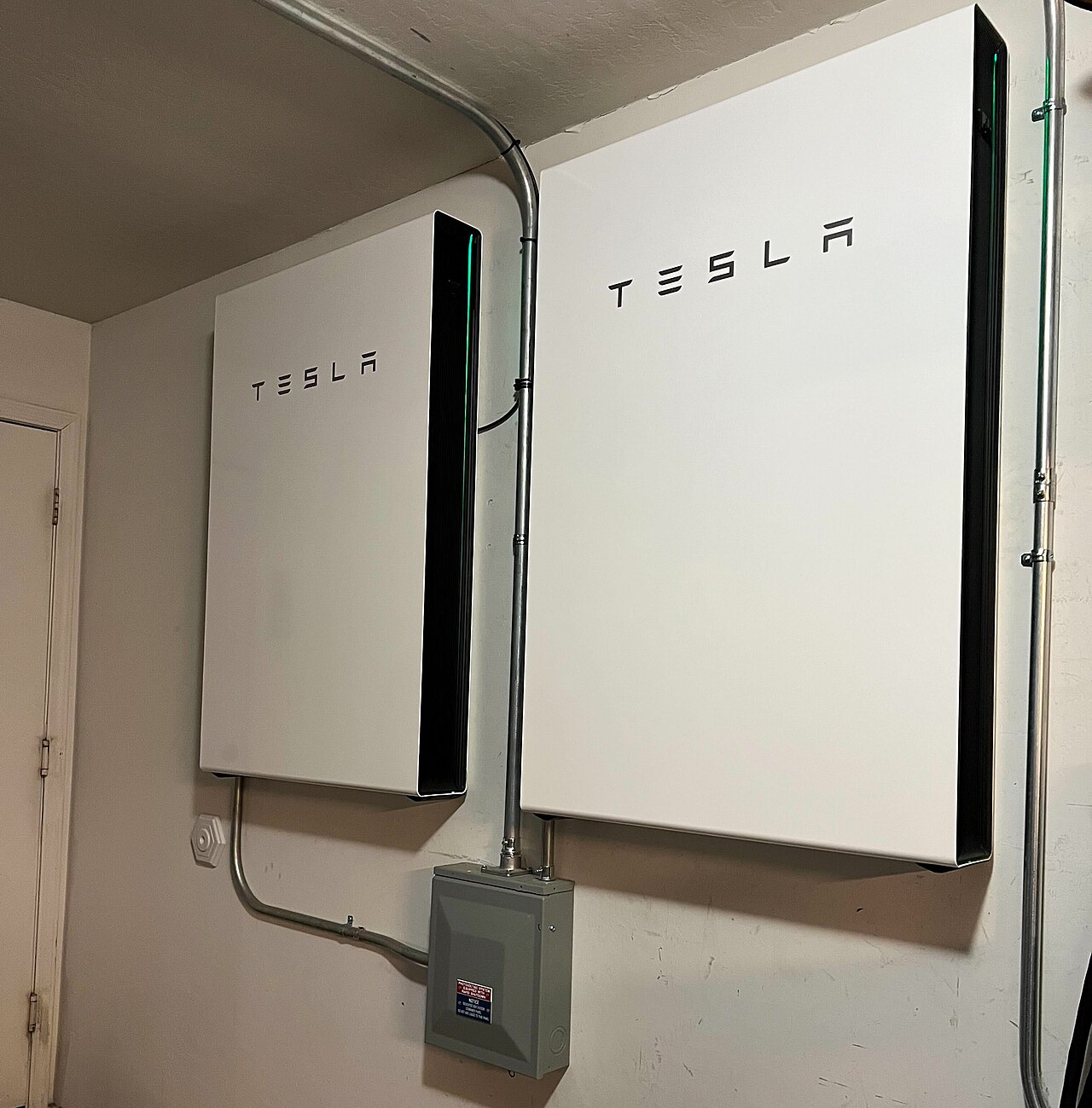
The New Jersey Board of Public Utilities has proposed paying homeowners up to $200 per kilowatt per year, for 10 years, to let their batteries discharge when the grid needs it most. A straw proposal dated August 17, 2026 and announced August 19 lays out Phase 2, Block 1 of the Garden State Energy Storage Program: up to 150 MW of behind-the-meter residential storage, enrolled and dispatched by the state's four electric utilities, with the program targeted to open by July 2027.
The program serves New Jersey's statutory goal of 2,000 MW of energy storage by 2030. Phase 1 covers transmission-scale projects; Block 1 is the program's first move into homes.
How the money would flow
Enrollment would run through the four electric distribution companies. PSE&G would administer 73 MW, Jersey Central Power & Light 52 MW, Atlantic City Electric 21 MW, and Rockland Electric 4 MW, allocated by each utility's share of residential sales. Applications would be first-come, first-served in weekly batches, with a non-refundable $50 fee and an active interconnection application required up front. Only new systems qualify: existing batteries, retrofits, and repowered systems are out, as is any project under contract with a data center or other new large load.
Payments are pure pay-for-performance. Utilities would call up to 35 dispatch events a year (a preliminary cap of 20 in summer and 10 in winter), each up to 4 hours long, with 2 hours of advance notice, or 10 minutes in an emergency. The annual check equals the incentive rate times the battery's awarded capacity times a performance factor measured during those events. Homeowners could enroll directly or through third-party owners and aggregators; aggregators would have to pass at least 70% of the incentive through to the customer.
The worked example pays $540, not $2,300
At $200 per kilowatt, an 11.5 kW battery reads like $2,300 a year. The proposal's own example works out differently. Its Table 3 runs a battery with 13.5 kWh of energy capacity and 11.5 kW of output (the spec of a Tesla Powerwall 3) through 35 events averaging 3.5 hours and arrives at a performance factor of 23.5%, for an annual payment of $540. The gap is physics: a battery storing 13.5 kWh cannot sustain 11.5 kW across a 4-hour event, and the formula prorates payment to the lowest hourly discharge in each event. Duration is what gets paid, though the proposal notes these event parameters are preliminary and utility-dependent.
Who pays, and why now
Costs would be recovered through a new rider on the bills of all distribution customers, with incentive payments treated as expenses the utilities earn no return on. Board staff's benefit-cost analysis, run under assumptions the proposal calls purposefully conservative (PJM capacity prices are assumed to stay at the price cap for the life of the program), finds $2.16 in benefits per program dollar across all ratepayers and $1.79 for residential customers who never enroll.
The timing tracks a federal retreat. The Section 25D residential tax credit expired at the end of 2025, and the rush to beat the deadline produced a record quarter: 1.3 GWh of US residential storage installed in Q1 2026, up 86% year over year, according to American Clean Power and Wood Mackenzie, which project a 5% residential contraction in 2026. State programs are becoming the incentive layer, and New Jersey's proposed rate sits below its peers: Connecticut pays $300 per kW and the Massachusetts and Rhode Island Connected Solutions program $275, per the proposal's own benchmarking. Staff's gap analysis likewise indicated a $300 per kW deficiency; it recommended $200 anyway, reasoning that backup power is its own reward. Responses to the board's May request for information from the utilities and Tesla count an estimated 8,500 to 11,000 batteries already installed in New Jersey, which the proposal reads as evidence many buyers pay for resilience with no incentive at all.
Block 1 would replace the residential storage incentives some utilities run under the Triennium 2 framework, and it is designed as a bridge to the state's planned virtual power plant program, proposed on July 15, 2026; participants could later opt out of Block 1 and move to a future VPP tariff. Written comments on the straw proposal are due to Docket QO26040116 by September 10, 2026, with a stakeholder meeting on September 3. Staff expects a board order in October 2026 and utility filings in December, and, if the schedule holds, the first enrolled batteries online within 12 months of a July 2027 opening and the full 150 MW deployed by February 2030.
Outlook
The $200 rate looks like the pressure point. Staff's own gap analysis indicated $300 per kW, the closest comparable programs pay $275 to $300, and the proposal's stakeholder questions invite alternatives, so the September comment window gives developers and aggregators an obvious opening to argue the number up. The VPP interplay is the other thread to watch: the board plans to allow stacking of compensation for distinct services once a tariff exists, and the proposal's recommended hardware standards point enrolled batteries toward UL 1741 smart-inverter certification, the same equipment category whose import rules the FCC redrew in August 2026 around the 45X manufacturing credit. And the deployment table leaves little slack: if the July 2027 opening slips, the February 2030 date for the full 150 MW starts crowding the state's 2030 statutory deadline.
⚠ The Outlook extrapolates from the straw proposal's own gap analysis, comparable-program benchmarks, deployment schedule, and stakeholder questions, and from The Duck Curve's cited coverage of the FCC inverter rules.
Sources
Primary
- Garden State Energy Storage Program (GSESP) Phase 2: Distributed Energy Storage Capacity Block 1 Straw Proposal · New Jersey Board of Public Utilities
Supporting
- U.S. Energy Storage Market Q1 2026 Sets Records Across Sectors · American Clean Power Association / Wood Mackenzie
- Straw Proposal: Virtual Power Plant Program (Docket No. QO26030099) · New Jersey Board of Public Utilities (Staff)
- NJBPU Advances Statewide Home Batteries Program with New Garden State Energy Storage Proposal · New Jersey Board of Public Utilities
Copies of cited sources are retained where available. If a link no longer resolves, request a copy at contact@theduckcurve.com.