 The Duck Curve
SEIA/WoodMac: residential solar fell 12% in Q2 2026, utility-scale up 61%
Wood Mackenzie and SEIA now expect residential installations to contract 23% in 2026, steeper than the 21% decline in their previous outlook, and see growth returning in 2027 on prepaid third-party-owned offerings.
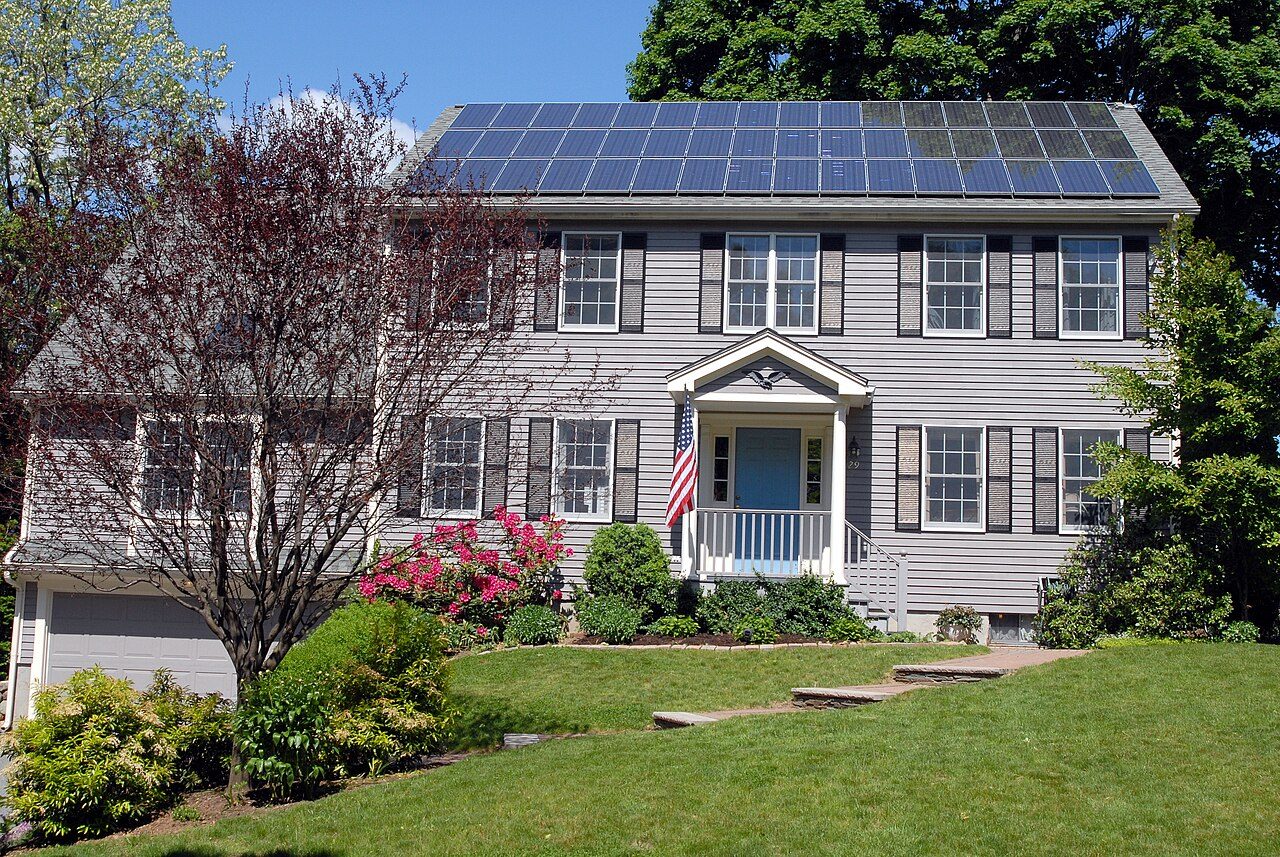
US homeowners installed 995 MWdc of rooftop solar in Q2 2026, down 12% from Q2 2025 and 10% from Q1 2026, according to the Q3 2026 US Solar Market Insight that the Solar Energy Industries Association and Wood Mackenzie published on September 10, 2026. The report says interconnection data "now reflects the impact of the Section 25D tax credit elimination for customer-owned systems," and its authors now expect a 23% residential contraction in 2026, steeper than the 21% decline in the previous quarter's outlook.
The rest of the market ran the other way. Total US installations reached 11.4 GWdc in the quarter, up 45% year over year and 43% from Q1, and utility-scale solar supplied 9.6 GWdc of that, up 61% year over year and 56% from Q1. The report attributes the utility-scale jump to developers placing safe-harbored projects into service before the Section 48E and 45Y window closes. Commercial solar installed 638 MWdc, up 11% year over year, and community solar 231 MWdc, down 14%.
The credit whose absence the residential numbers now show paid 30% of the cost of qualifying home solar, battery, and other clean energy property installed from 2022 through December 31, 2025, and, per the IRS, "is not available for any property placed in service after December 31, 2025." The deadline pulled demand forward: the report says the residential market grew 6% year over year in Q1 2026, one of the segment's strongest quarters in two years apart from Q4 2025 by its account, before the customer-owned segment contracted in Q2. Storage saw the same rush: American Clean Power and Wood Mackenzie reported in June a record 1.3 GWh of residential storage in Q1 2026, up 86% year over year, buoyed by installations started in late 2025 to capture the expiring credit, with the solar-plus-storage attachment rate at 45%, from 38% a year earlier.
The report's explanation for cutting the 2026 outlook is about installers, not hardware. Installers, it says, have had difficulty shifting from cash and loan sales to third-party ownership, the lease and power-purchase model the report says keeps its tax credit eligibility, compounded by scarce tax equity and prepaid TPO products available only in select states. Installers also report longer sales cycles and falling close rates, with homeowners citing personal finances and broader economic uncertainty. In the report's forecast, growth returns in 2027 on greater availability of prepaid TPO offerings and averages 6% a year from 2027 to 2031, helped by rising retail rates, resiliency concerns, and what the report calls the industry's emerging push to position residential solar as a load-growth enabler through virtual power plants, the argument behind deals like Sunrun's August agreement with Voltus.
Hardware got cheaper. Residential system pricing fell 1.4% year over year to $3.36 per Wdc, the only segment where prices fell, and module prices for the distributed segment dropped 16% year over year to $0.37 per Wdc after the IEEPA tariffs were invalidated at the start of 2026, per the report. The report also flags the FCC's July 28, 2026 addition of foreign-produced power inverters to its Covered List, covered here in August, with limited near-term disruption to existing contracts in its reading.
The state programs that were supposed to become the next incentive layer are having a mixed year. New Jersey's utilities board proposed in August paying homeowners up to $200 per kilowatt per year for 10 years for new home batteries, with comments due September 10, 2026. California's end-of-session budget bill carries no 2027 money for the state's home-battery virtual power plant. Massachusetts replaced case-by-case upgrade charges with a flat $225 fee on simplified-path solar and battery interconnection applications, effective November 1, 2026.
Utility-scale, and the total
The 9.6 GWdc of utility-scale solar in the quarter was concentrated in Texas (1.7 GWdc), Arizona (1.4 GWdc), and Michigan (0.9 GWdc), per the report, and contracting held up: 4.9 GWdc was signed in Q2 2026, down 8% from Q2 2025, with data and technology companies "continuing to account for the majority of new offtake agreements."
The safe-harbor mechanics explain the timing. The July 4, 2026 begin-construction deadline has passed; the report puts the safe-harbored pipeline that keeps tax-credit eligibility at up to 240 GWdc, supporting installations through 2030 even after attrition, while developers who missed the deadline face a December 31, 2027 placed-in-service cliff. The report expects the utility-scale segment to add 217 GWdc between 2026 and 2031. In SEIA's release, Wood Mackenzie senior analyst Caitlin Connelly said "robust project pipelines and the build out of safe-harbored capacity will sustain roughly 44 GWdc of annual capacity through 2031," with permitting and the post-ITC transition as headwinds.
Solar and battery storage together accounted for 70% of new electricity-generating capacity added in the first half of 2026, and solar alone for 45%, the report says. SEIA's release leads with the cumulative figure, enough operating solar to power more than 50 million American homes by its count, and notes that states President Trump won in 2024 accounted for 71% of capacity installed in the first half.
Outlook
The report's own leading indicators point lower before they point up. It expects 1.6 GWdc of new residential interconnections in the second half of 2026 against 2.1 GWdc in the first half, and says the interconnection data "has yet to hit the trough." In California and Illinois, which the report says led the residential market in Q2 2026, first-half installed capacity rose 8% and 38% year over year while permits fell 25% and 20%; permits precede installations, so the next quarterly edition is likelier to show a deeper residential decline than a rebound. Storage may hold up better than panels: the June storage report's forecast, from Wood Mackenzie's Allison Feeney, was a 5% residential storage contraction in 2026, less than a quarter of the solar figure, with the attachment rate still climbing in Q1. If that gap persists, home batteries fall by less than panels this year, which is the shape the virtual-power-plant pitch in the report's 2031 forecast depends on.
⚠ The Outlook extrapolates from the report's own leading indicators (its second-half 2026 interconnection forecast and the California and Illinois permit declines it reports) and from the June 2026 ACP/Wood Mackenzie storage figures cited in the article.
Sources
Primary
- Solar Market Insight Report Q3 2026 · Solar Energy Industries Association / Wood Mackenzie
Supporting
- Residential Clean Energy Credit · Internal Revenue Service
- U.S. Energy Storage Market Q1 2026 Sets Records Across Sectors · American Clean Power Association / Wood Mackenzie
- REPORT: U.S. Solar Capacity Can Now Power Over 50 Million American Homes · Solar Energy Industries Association
Copies of cited sources are retained where available. If a link no longer resolves, request a copy at contact@theduckcurve.com.