 The Duck Curve
Sunrun will supply home battery capacity to Voltus's AI hyperscaler deals
The August 17 agreement puts a portion of Sunrun's PJM and MISO fleet behind Voltus's data center capacity contracts; the release names no megawatts and no term.
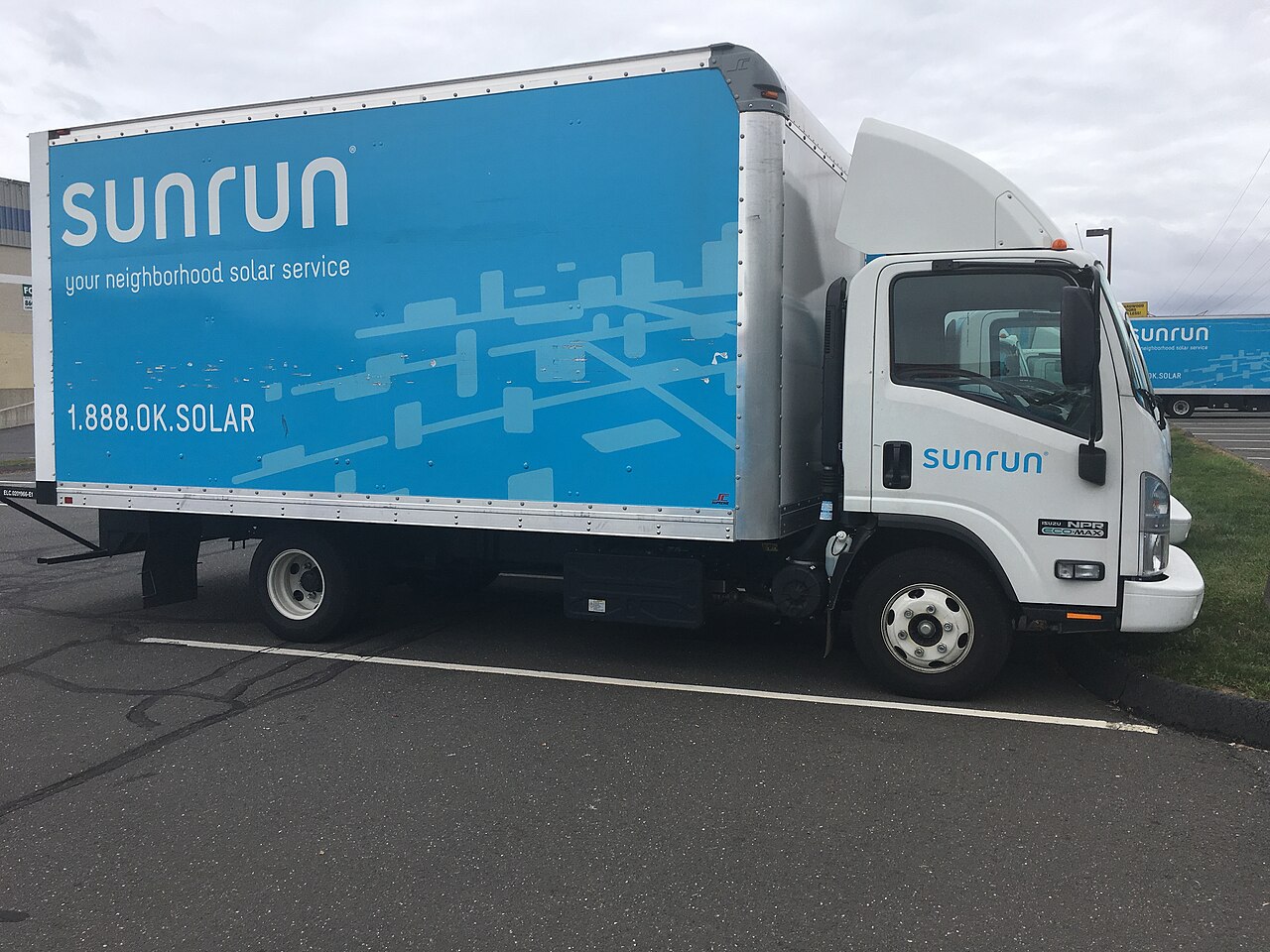
Sunrun will supply energy capacity from part of its residential solar-plus-storage fleet to Voltus's Bring Your Own Capacity programs for AI hyperscalers, under an agreement announced August 17, 2026. The batteries sit on homes in the PJM and MISO grid regions, the participating households get paid, and the data center operators put up the money. What the release does not contain is a number: no megawatt commitment, no contract term, no dollar figure.
How Bring Your Own Capacity works
Voltus, a virtual power plant operator that aggregates distributed energy resources into wholesale markets, pitches BYOC at large new loads whose interconnection requests make grid planners nervous. The customer funds flexible capacity (home batteries, smart thermostats, commercial demand response) that Voltus orchestrates and delivers to the market, so the new load arrives with supply attached. The program's first disclosed buyer was Google, under a three-year agreement announced June 2, 2026 to aggregate up to 100 MW of distributed resources each year into a Google-funded virtual power plant in PJM. Voltus described that deal as a "scalable blueprint" for other large energy users.
Sunrun is now on the supply side of the blueprint. The company, which describes itself as America's largest provider of residential battery storage, says it will provide capacity from a portion of its thousands of storage-plus-solar systems in PJM and MISO. "In collaboration with Voltus, we are providing critical capacity from home batteries supported by funding from hyperscalers," Sunrun CEO Mary Powell said in the release, adding that "this is just the beginning of what distributed energy assets can achieve."
Why hyperscalers are buying home batteries
The backdrop is a capacity market with nothing to spare. PJM's 2028/2029 Base Residual Auction, announced July 14, 2026, cleared at its FERC-approved price cap of $325 per MW-day across the entire footprint and procured 138,318 MW of unforced capacity. Even with a further 10,864 MW from regions that self-supply under the Fixed Resource Requirement, committed capacity fell 6,831 MW short of PJM's reliability requirement. By PJM's own account, the last two auctions were the first in its history in which the entire RTO fell short of that standard, and the operator plans to seek FERC approval to hold a special backstop procurement in September 2026. Cleared supply times clearing price works out to $16.4 billion. In a market like that, a data center that arrives with accredited capacity in hand is a far easier interconnection conversation than one that arrives with load alone.
Two funding models for the same battery
Home batteries earning capacity revenue is a pattern with momentum. A GridLab, Kevala, and E3 blueprint published in August 2026 argued that V2G resources should be accredited and operated on a comparable basis with grid-scale storage, and New Jersey's proposed Garden State storage program would pay home batteries for dispatch performance out of a rider on every distribution customer's bill. Notably, the New Jersey proposal bars any project under contract with a data center or other new large load from enrolling. Sunrun's agreement is the other funding model: no rider, no docket, a hyperscaler's checkbook. The release also points to a separate, earlier Sunrun initiative with Renew Home and Tesla that it says targets more than 16.8 GW of flexible capacity from home batteries, solar, smart thermostats, and EVs.
Outlook
Voltus framed the Google agreement as a repeatable path for large energy users, and Sunrun's release presents hyperscaler funding as a beginning rather than a one-off. If that framing holds, residential fleets in constrained markets gain a second buyer class alongside utility programs, and the two will compete for the same batteries: New Jersey's proposal caps its incentive at $200 per kilowatt-year, while PJM capacity cleared its most recent auction at the FERC-approved price cap. The number missing from Sunrun's release, how many megawatts its fleet actually delivers to Voltus, is the figure to watch for whether hyperscaler funding becomes a material revenue line for residential solar companies.
⚠ The Outlook extrapolates from the repeatable-blueprint framing in Voltus's June 2026 Google announcement, Sunrun's own release, PJM's published 2028/2029 auction results, and New Jersey's proposed incentive rate as cited.
Sources
Primary
Supporting
- Voltus and Google to Deliver Grid Capacity and Local Economic Benefits Through Bring Your Own Capacity Agreement · Voltus, Inc.
- PJM Capacity Auction Procures 138,318 MW of Generation Resources as Work Continues To Address Growing Electricity Demand · PJM Interconnection
Copies of cited sources are retained where available. If a link no longer resolves, request a copy at contact@theduckcurve.com.