 The Duck Curve
Fervo and Google sign 396 MW geothermal PPA for possible Utah data center
The 8-K dates the signing to August 26 and adds terms the release rounds off: a floor of not less than approximately 950 MW if Google takes the expansion offer, a June 2030 guaranteed date, and a delivery path under Utah's S.B. 132 that is still subject to approvals.
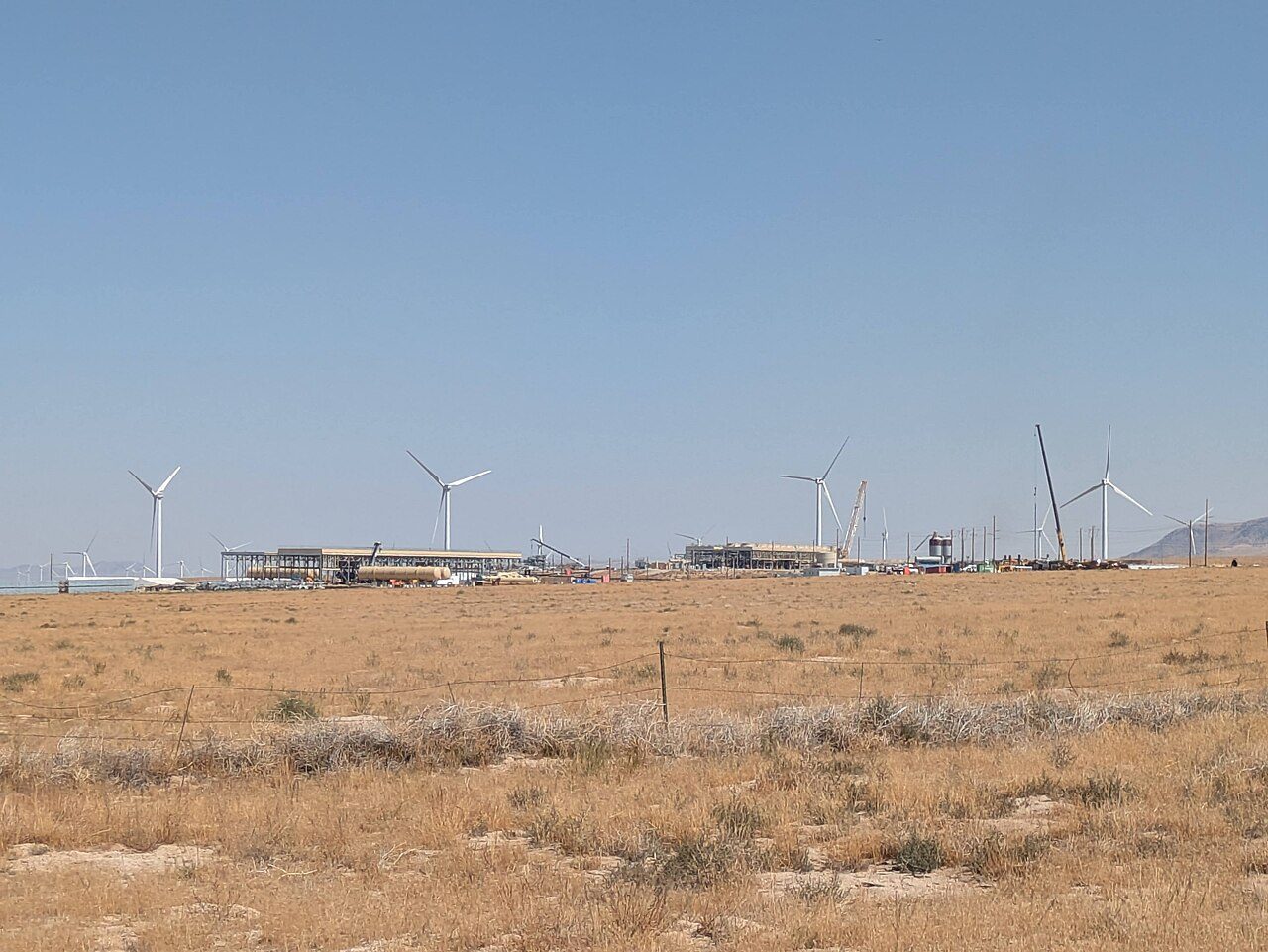
Fervo Energy will sell Google 396 MW of enhanced geothermal power from its Cape Station project in Beaver County, Utah, under a 15-year power purchase agreement that Fervo subsidiary Cape Generating Station 6 LLC signed with Google Energy LLC on August 26, 2026, according to the Form 8-K Fervo filed on September 1. The filing says the project will be delivered in four successive 99 MW sub-tranches with target commercial operation dates beginning in the third quarter of 2028. Fervo's press release of September 1 describes the power as "a foundational building block for a potential data center in Utah" and calls the contract the world's largest enhanced geothermal PPA to date.
The release and the filing tell the same story at different resolutions. The release says Fervo "will offer Google an option to expand its offtake by approximately 600 MW, for a total of nearly 1 GW, by June 2030." The 8-K states the offer as an obligation with a floor: Fervo has agreed to offer an expansion of approximately 600 MW "such that total contracted enhanced geothermal capacity would be not less than approximately 950 MW, with a guaranteed commercial operation date no later than June 2030." Any expansion depends on Google accepting the offer and on a definitive agreement. If Fervo fails to make the required offer, the filing says, it must reimburse Google for amounts already paid for "deemed delivered energy," a sum Fervo says is not currently estimable.
Per the 8-K, Fervo has guaranteed CGS 6's obligations and Alphabet Inc. has guaranteed Google's. Neither document discloses a price. The release says the deal "unlocks new, around-the-clock electricity capacity at no cost to existing ratepayers," a claim that rests on the delivery structure described below, and adds that final data center plans "remain subject to a variety of factors including engineering feasibility, state and local approvals, and commercial conditions." "This agreement reinforces that EGS is ready to power the next generation of computing infrastructure," Fervo CEO Tim Latimer said in the release.
The Utah law the deal is built around
The 8-K says the project "is being developed in a manner intended to utilize flexible power delivery pathways authorized under Utah Senate Bill 132" and remains subject to the regulatory approvals that law requires. Under that framework, the filing anticipates that Fervo's geothermal output, "supplemented by additional energy resources," would deliver capacity "through a closed private generation system," configured for either front-of-the-meter or behind-the-meter interconnection to serve data center load. Fervo targets commercial operation of that expanded delivery capability in the first half of 2030.
S.B. 132, sponsored by Senator Scott D. Sandall and effective May 7, 2025, created a new chapter of Utah utility law for loads expected to reach a cumulative demand of 100 MW or more within five years. It lets such a customer buy from a "large-scale generation provider," a non-utility registered with the Public Service Commission, through a "closed private generation system": generation and transmission that are not connected to and operate independently from a utility's transmission system and serve the customer by direct connection. Such a system and its provider "are exempt from commission oversight or regulation as a public utility," the statute says, and may connect to or take services from a utility only under a commission-approved contract.
The ratepayer protection the release invokes works differently on each of the statute's paths. Contracts with the incumbent utility, or with a provider on a grid-connected system, must "ensure that all large load incremental costs are allocated to and paid by the large load customer," and the commission may approve them only if "existing ratepayers do not bear costs justly and reasonably attributable to providing electric service for the large load customer." A customer taking the closed-system route is not required to submit a service request to the utility at all and contracts "under terms and conditions acceptable to" the two parties; there, the protection is physical separation rather than a cost review. The 8-K names neither the provider registration nor the specific approvals it still needs.
What Fervo told investors before the deal
Fervo's quarterly report for the period ended June 30, 2026, filed August 13, gives the baseline the Google contract lands on. The company says it has 500 MW under construction at Cape Station in Milford, Utah, expects first power from the site by late 2026, approximately 100 MW of operating capacity by early 2027, and 500 MW cumulative by the end of 2028. As of June 30 it had signed 658 MW of binding PPAs and similar arrangements, representing approximately $7.2 billion in potential revenue backlog. The Duck Curve's August 23 coverage of Sage Geosystems' Texas plant relayed Canary Media's expectation that Cape Station would begin partial operation in October 2026; Fervo's own filing puts first power at "late 2026."
The report also discloses the arrangement the new PPA appears to fulfill in part: a Geothermal Framework Agreement with Google Energy LLC under which Fervo committed to propose projects representing at least 1 GW of geothermal capacity to Google within two years and up to 3 GW over the agreement's term. The 10-Q is careful about what that means: the GFA "is a non-binding agreement and does not obligate Google to purchase power from us," and Google "has the sole and unilateral right to accept or reject any proposed project for any reason or no reason." The 396 MW contract plus the roughly 600 MW expansion offer would account for most of the first gigawatt Fervo committed to propose.
The filing's risk factors explain why a delivery path that bypasses the utility grid matters. For Cape Station Phase II, the company holds approximately 290 MW of interconnection and transmission rights, which it says is sufficient for its original PPAs with Southern California Edison and Clean Power Alliance but "insufficient to support the full 384 megawatts of combined contracted capacity" after those contracts were expanded. Failing to secure more could mean undelivered megawatts, liquidated damages, or contract modifications, the report says, and it notes that "behind-the-meter opportunities with data centers may not be available or sufficient to offset transmission constraints."
Outlook
Read together, the two filings suggest the Google contract is as much a delivery strategy as a sales record. The 10-Q's stated constraint is transmission; the 8-K's answer is a closed private generation system that, under S.B. 132, touches the utility's wires only by commission-approved contract. Whether that holds depends on approvals the filing says are still required, so a large-scale generation provider registration by a Fervo entity, or a Public Service Commission filing for any utility connection of the closed system, would be the next observable step. The phrase "supplemented by additional energy resources" is the other thing to watch: the statute requires closed systems to use qualifying generation resources, and neither document says what supplements a plant Fervo's release describes as around-the-clock. If the expansion is accepted, the June 2030 guaranteed date would put not less than approximately 950 MW of contracted EGS capacity on a site whose first 100 MW, by Fervo's own schedule, will not be fully operational until early 2027.
⚠ The Outlook extrapolates from Fervo's September 1, 2026 Form 8-K, its August 13, 2026 Form 10-Q, and the enrolled text of Utah S.B. 132 as cited; the delivery-strategy reading and the inference that 'additional energy resources' means storage or other generation are The Duck Curve's, not Fervo's.
Sources
Primary
- Fervo Energy Co, Form 8-K, Item 8.01 Other Events (period of report August 26, 2026) · Fervo Energy Company via SEC EDGAR
Supporting
- S.B. 132 Electric Utility Amendments, 2025 General Session, State of Utah (enrolled copy) · Utah State Legislature
- Fervo Energy Co, Form 10-Q for the quarter ended June 30, 2026 · Fervo Energy Company via SEC EDGAR
- Fervo Energy and Google Sign 396 MW PPA (Exhibit 99.1 press release, September 1, 2026) · Fervo Energy Company via SEC EDGAR
Copies of cited sources are retained where available. If a link no longer resolves, request a copy at contact@theduckcurve.com.