 The Duck Curve
California budget bill carries no 2027 money for its DSGS home-battery VPP
AB 113, which the Senate passed and the Assembly concurred in on September 1, 2026, adds $20 million for the sister DEBA program and nothing for DSGS, which Advanced Energy United says is funded only through the end of 2026; the Senate's $70 million CalSHAPE-interest proposal is not in the bill, though supporters did block, per Canary Media, the Governor's plan to move the program to the CPUC.
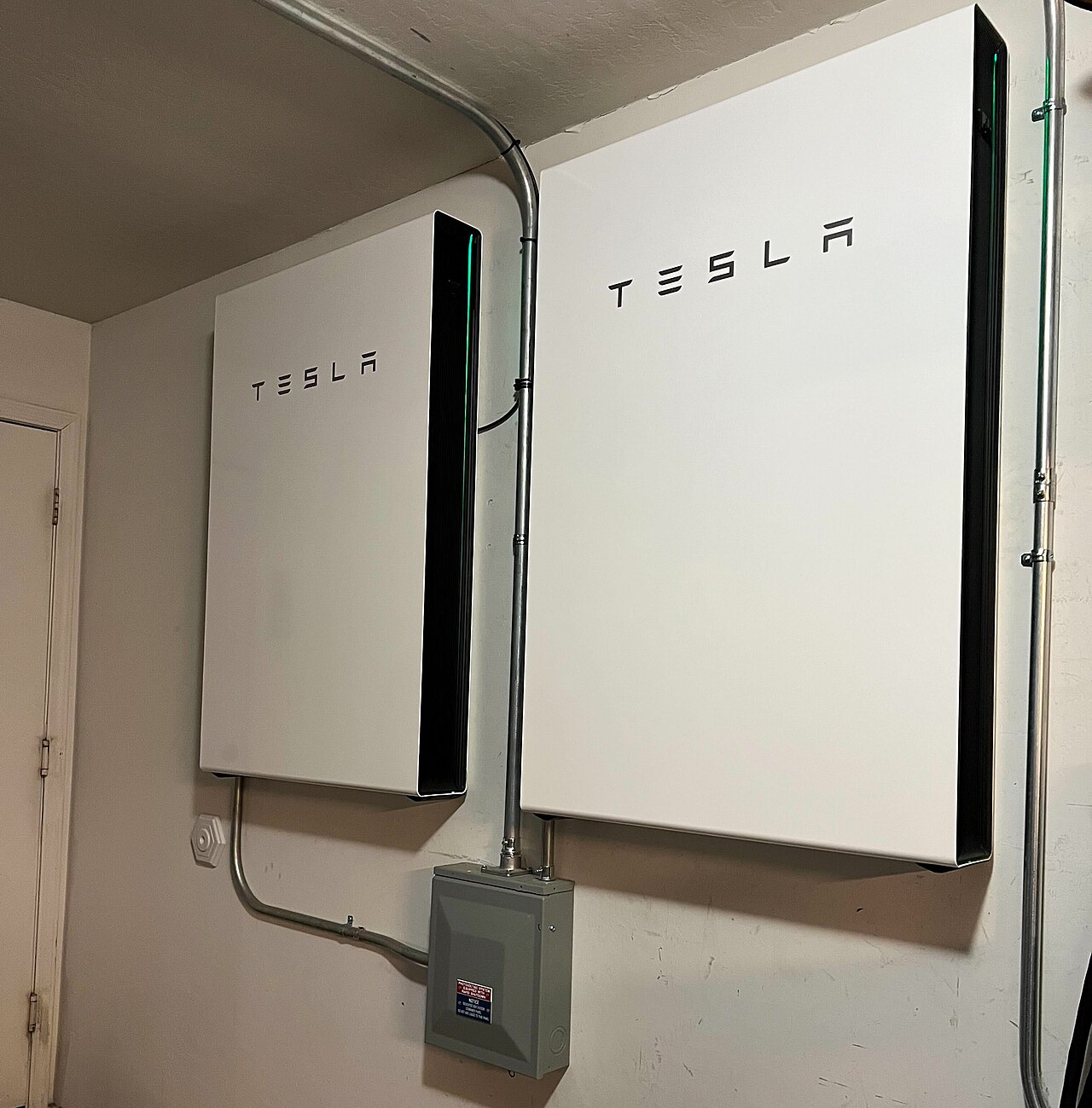
California's end-of-session budget bill, AB 113, passed the Senate on September 1, 2026, with the Assembly concurring in the Senate amendments the same day, and carries no appropriation for the Demand Side Grid Support program, the California Energy Commission's virtual power plant of home batteries, smart thermostats and demand response that the CEC estimated at 1,145 MW enrolled in April 2026. The bill text, as amended on August 28, adds $20 million for the Distributed Electricity Backup Assets program, DSGS's sister program under the state's Strategic Reliability Reserve, and nothing for DSGS itself. A Senate proposal to move $70 million of interest from a school efficiency program into DSGS did not make it into the bill, and Advanced Energy United said on August 29 that the program "is currently funded only through the end of 2026."
The bill history shows the Senate passing AB 113 on September 1 with an urgency clause, 29 to 4, and the Assembly concurring in the Senate amendments the same day, 61 to 11; the last entry reads "To Engrossing and Enrolling." The only new items in the bill that name DEBA add $10 million each for it: Item 3360-102-0001, a $10,250,000 General Fund item of which $10 million is for DEBA and $250,000 is for electric vehicle charging infrastructure in the Antelope Valley, and Item 3360-102-6093, $10 million payable from the "Safe Drinking Water, Wildfire Prevention, Drought Preparedness, and Clean Air Fund." Both DEBA amounts are "exclusively for new clean Microgrids, or new non-residential or aggregated residential distributed clean energy and storage projects." DEBA pays to build new assets; DSGS pays existing ones to perform. The Duck Curve also searched the August package's prior-year budget bill and its public resources, transmission and general government trailer bills (AB and SB 114, AB and SB 178, AB and SB 193, AB 192, AB 184) for the program's name; none mentions it.
How the money went missing
Canary Media reported on September 1 that Governor Gavin Newsom's administration blocked the effort to fund the program for 2027 and that the final budget language also left out the Governor's own plan to move DSGS from the CEC to the California Public Utilities Commission, which Canary sums up as supporters having "blocked an effort that could have disbanded the VPP altogether." García's accounting to the outlet was that "at the very least it wasn't outright gutted." Canary also quoted Brandon García of Advanced Energy United: "We're incredibly disappointed the administration rejected the legislature's proposal to fund DSGS." In the group's May 14 statement, García had objected to the CPUC transfer "due to the higher administration costs and lower enrollment capacity."
The proposal in question is on page 11 of the Senate's May 28, 2026 budget plan, which approved trailer bill language that "transfers $22 million from the Distributed Electricity Backup Assets (DEBA) Program to the Demand Side Grid Support (DSGS) Program," extends the California Schools Healthy Air, Plumbing and Efficiency Program, "and shifts $70 million in interest funds from CalSHAPE to DSGS." The first half happened. SB 168, the June public resources trailer bill, was chaptered on July 13, 2026 as Chapter 81; its Section 10 makes the money appropriated for DEBA in the Budget Act of 2021 "also available to be used for the Demand Side Grid Support Program" and extends that appropriation to June 30, 2027, without stating an amount. Advanced Energy United's June 30 statement described the three-party agreement as "a $22 million transfer to DSGS from the Distributed Electricity Backup Assets (DEBA) program"; García later told Canary Media the transfer was $27 million. The second half, the $70 million of CalSHAPE interest, was left to the August package; the same June 30 statement urged leaders to direct "available interest funding from that program toward DSGS." The administration had started from the other direction: Advanced Energy United's May 14 statement said the May Revision "maintains the proposal to end the Demand Side Grid Support (DSGS) program."
The program the money was for is described in the CEC's DSGS Program Guidelines, Fifth Edition, approved at the commission's April 27, 2026 business meeting. The preface says DSGS "was originally envisioned as a $314 million program to build 1 GW of demand-side resources for the state by 2030," that "only $109.5 million has been allocated to the program with no new funding allocations authorized in the 2025-26 Budget," and that in three years it "has expanded to four participation options with over 448,000 participants and an estimated 1,145 MW enrolled, with nearly 1GW from clean resources." The guidelines ration the 2026 season accordingly: they set $19.5 million for the storage VPP option's performance-based capacity payments, rising to as much as $42.7 million "if additional funding becomes available through the 2026-2027 budget process," and limited that option, apart from bidirectional EV charger aggregators, to storage aggregators that participated in October 2025. The budget process the guidelines were waiting on has now closed without the additional funding.
The program's value has been priced by its own participants. A Brattle Group study commissioned by Sunrun and Tesla Energy, announced August 18, 2025, estimated that from 2025 to 2028 DSGS would deliver net system cost savings of between $28 million and $206 million, and reported an average net-load reduction of 539 MW during a July 2025 test event, which the release says represented roughly 1.9% of CAISO's net peak demand during the event; Canary Media's account gives that test as "roughly 476 megawatts of grid capacity over two hours." The August 2026 GridLab, Kevala and E3 blueprint made the case for paying California's flexible load on verified performance, which is how DSGS's storage option pays. And on September 3, PG&E launched a virtual power plant that Google is paying for.
Outlook
The next decision point, on García's own timeline, is the January 2027 budget proposal rather than the June deal. In Advanced Energy United's August 29 statement he said "the next session will bring a new administration and new policymakers," and he told Canary Media that "even if the next incoming administration wants to fund DSGS, if they wait until June, I don't know how many participants will be around." A second route exists on paper: SB 913, presented to the Governor on September 2, 2026, would require the CPUC, with the CEC and the California Independent System Operator, to enhance market-integrated pathways for aggregated distributed energy resources to qualify as resource adequacy capacity by June 30, 2028. If signed, it would give the same batteries a buyer in the resource adequacy market rather than the General Fund, on a statutory clock that runs to June 30, 2028.
⚠ The Outlook extrapolates from Advanced Energy United's August 29 statement, Brandon García's remarks to Canary Media, the text and history of SB 913, and the funding language in the CEC's fifth-edition DSGS guidelines.
Sources
Primary
- AB-113 Budget Act of 2026 (amendments), Chapter 248, Statutes of 2026 · California Legislative Information
Supporting
- Brattle Report Finds California's Distributed Power Plant Program Could Deliver Hundreds of Millions in Cost Savings While Supporting Grid Reliability · The Brattle Group via PR Newswire
- Demand Side Grid Support (DSGS) Program Guidelines, Fifth Edition (CEC-300-2026-001-CMF) · California Energy Commission
- California's May Budget Still Proposing to End the Nation's Largest Virtual Power Plant Program · Advanced Energy United
- Foundation for the Future: Senate Version of the Budget (May 28, 2026) · California Senate Committee on Budget and Fiscal Review
- California State Budget Agreement Recognizes Value of Distributed Resources, Geothermal · Advanced Energy United
- SB-168 Public Resources (Chapter 81, Statutes of 2026) · California Legislative Information
- SB-913 Resource adequacy: aggregated distributed energy resources · California Legislative Information
- California Turns Its Back on Proven Low-Cost Reliability Program · Advanced Energy United
- California declines to fund its biggest virtual power plant · Canary Media
- AB 113 bill history (2025-2026 session) · California Legislative Information
- SB-913 bill history · California Legislative Information
Copies of cited sources are retained where available. If a link no longer resolves, request a copy at contact@theduckcurve.com.