 The Duck Curve
FCC redraws its foreign inverter ban around the 45X tax credit
An August 20 notice narrows the ban to grid-tied inverters, extends it to wired connectivity, and waves through 45X-eligible hardware.
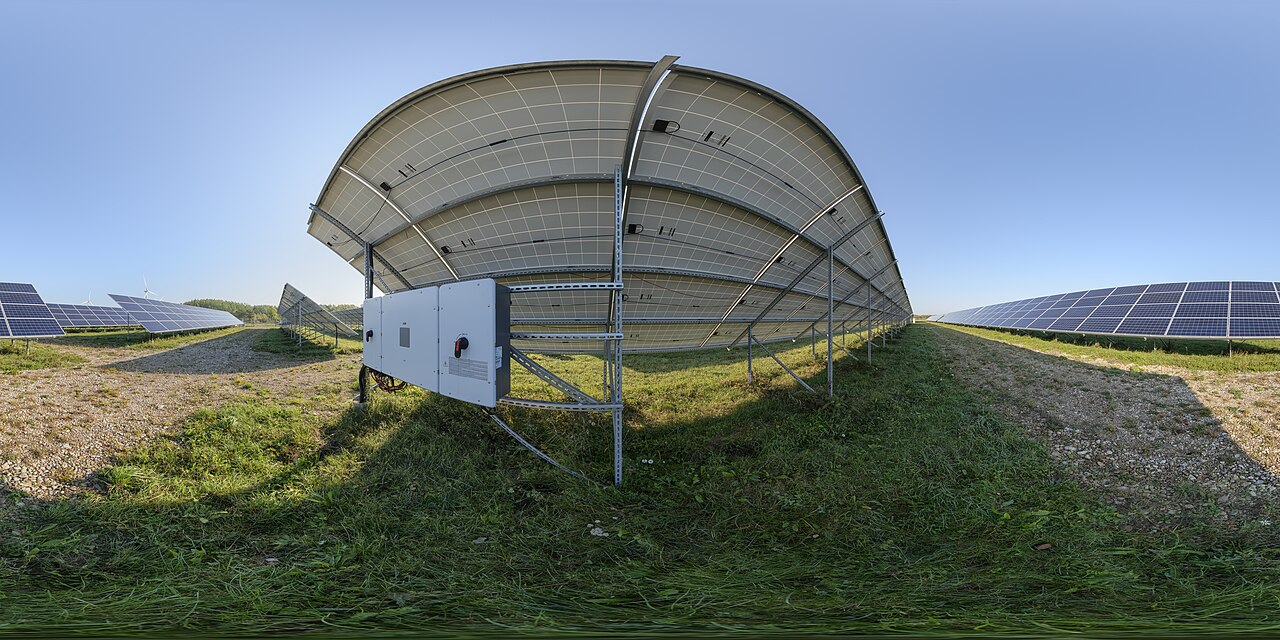
The Federal Communications Commission has redrawn its month-old ban on foreign-made power inverters. In a public notice released on August 20, 2026, the agency's Public Safety and Homeland Security Bureau narrowed the banned category to grid-interactive inverters as defined by the UL 1741 standard, extended it to cover wired as well as wireless communications, and exempted any inverter eligible for the Section 45X advanced manufacturing tax credit, wherever it is made.
The changes follow a second national security determination from the Department of War, which the FCC received on August 19, 2026. The first determination led the Bureau to add power inverters produced in a foreign country to the FCC's Covered List on July 28, 2026, citing the risk that foreign firms could "turn off the inverters or use them to collect and exfiltrate data." Equipment on the Covered List, which the FCC maintains under the Secure and Trusted Communications Networks Act, is barred from the equipment authorizations new products need to reach the US market.
What changed on August 20
The definition narrowed. The ban now applies only to utility-interactive inverters as defined in UL 1741, the safety standard covering hardware that operates in parallel with an electric utility. Off-grid inverters and plain AC-to-DC rectifiers are off the list; the determination reasons that hardware incapable of grid connection poses risks that are "limited to local impacts."
The connectivity test broadened. The July entry described inverters with remote communication over "WiFi, cellular, Bluetooth, or other similar connection." The new determination reads "similar connection" to include wired links, so an inverter that contains, or is designed to accept, a communications component running over Ethernet is now explicitly covered. That settles the question hanging over utility-scale central inverters, which typically communicate over wired links rather than radios.
And "foreign-produced" acquired a tax-law definition. An inverter stays off the Covered List if it is either eligible for the 45X production credit or qualifies as a domestic end product under federal acquisition rules, meaning domestic components above 65% of total component cost through 2028 and 75% from 2029.
A tax credit as security clearance
The 45X exemption's legal logic runs through Congress rather than through any technical finding. The 2025 One Big Beautiful Bill Act barred 45X claims on components made with "material assistance" from prohibited foreign entities, and the Department of War concludes from this that Congress and the President "determined that such power inverters should be considered domestically-produced." Eligibility for a domestic manufacturing subsidy now functions as a security clearance. Law firm Norton Rose Fulbright, quoted by pv magazine USA, read the notice the same way: "The FCC said the nationality of the company making the inverter is irrelevant." What keeps the carve-out from swallowing the ban is 45X's own restrictions, which deny the credit to prohibited foreign entities and to companies under their effective control.
The supply chain it lands on
The ban arrived on a market built on imports. More than 200 GW of PV inverters were delivered for US commercial and utility-scale projects in the decade before the ban, over 90% of them imported and more than 70 GW of them from Chinese-headquartered manufacturers, according to Wood Mackenzie, which puts Chinese vendors near 50% of US market share in 2024 and 2025. The firm's August 6, 2026 analysis flagged the exact ambiguity the FCC has now resolved: research analyst Joe Shangraw said the wireless-focused definition "leaves real questions about how broadly it will apply, particularly for utility-scale central inverters that operate over wired connections." The August 20 notice answers him, in the direction of coverage.
On the supply side, Wood Mackenzie counts announced plans for more than 100 GW (AC) of US inverter and power-conversion manufacturing capacity by the end of 2027, and expects average US inverter prices to rise in 2027 as procurement shifts toward costlier domestic production. The 45X credit already anchors battery-materials projects like Anthro Energy's Louisville plant; for inverter makers it now does double duty as subsidy and import pass.
Outlook
Wood Mackenzie's analysis points to domestic inverter prices moderating as capacity scales, then facing renewed pressure when 45X begins phasing out after 2030, a schedule that now doubles as the expiration date on the ban's main exemption. The notice itself promises further revisions: the Department of War and the Department of Homeland Security can grant conditional approvals for specific products, and the Bureau states it will update the Covered List as new determinations arrive. Tying the ban's scope to the tax code has a corollary worth watching: if 45X eligibility rules shift in a future budget bill, the national-security perimeter for grid hardware shifts with them.
⚠ The Outlook extrapolates from Wood Mackenzie's August 6, 2026 capacity and price analysis and from the revision process described in the FCC's own notice.
Sources
Primary
- Following New National Security Determination, FCC Announces Modification of Power Inverters Entry on the Covered List (DA 26-870) · Federal Communications Commission, Public Safety and Homeland Security Bureau
Supporting
- FCC's Public Safety and Homeland Security Bureau Announces Addition of Foreign-Produced Power Inverters and Advanced Robotic Devices to FCC Covered List (DA 26-786) · Federal Communications Commission, Public Safety and Homeland Security Bureau
- US manufacturing poised to meet new inverter demand following FCC ban on foreign power inverters · Wood Mackenzie
- FCC updates foreign inverter ban to include wired devices, adds 45X safe harbor · pv magazine USA
Copies of cited sources are retained where available. If a link no longer resolves, request a copy at contact@theduckcurve.com.