 The Duck Curve
Type One Energy raises $200M Series B for its Tennessee fusion plant
Breakthrough Energy Ventures and Clutterbuck Capital co-led the round, which the company says follows the fusion-specific license Tennessee issued on August 31 for Project Infinity at TVA's Bull Run site.
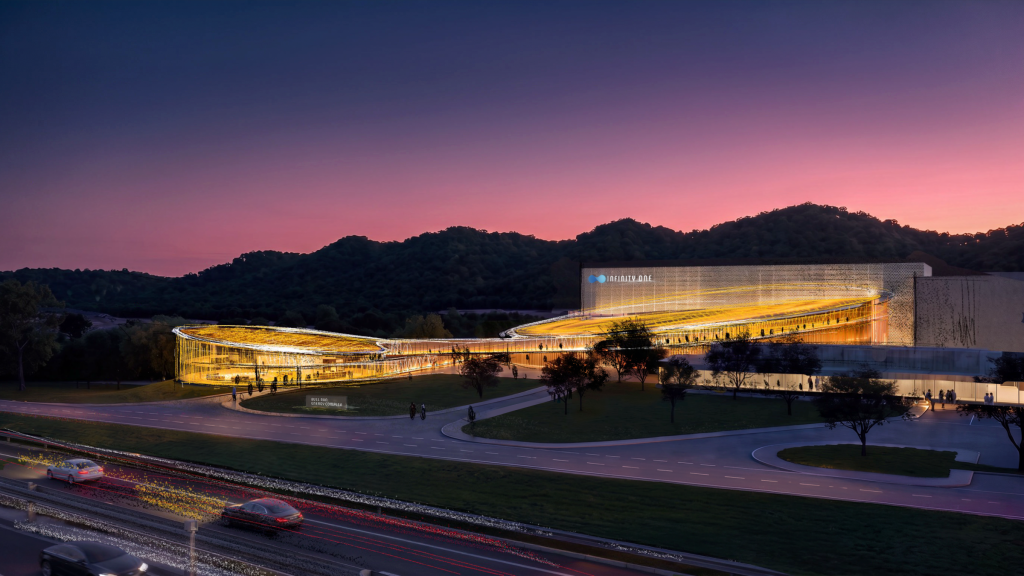
Type One Energy has closed a $200 million Series B to carry its stellarator fusion design toward a 400 MWe power plant at the Tennessee Valley Authority's Bull Run site, the Knoxville company announced on October 6, 2026. Breakthrough Energy Ventures and Clutterbuck Capital co-led the round, with participation from Lowercarbon Capital, Siemens Energy Ventures, SiteGround Capital "and other new investors." The money funds the company's FusionDirect technology development program and Project Infinity, which pairs the Infinity One stellarator engineering prototype with Infinity Two, the 400 MWe plant at Bull Run that Type One calls the world's first commercial fusion power plant.
Type One flagged the round in June. When it appointed former bp chief executive Bernard Looney to its board on June 16, 2026, it said it was preparing to close its Series B, confirmed its plan to bring commercial fusion power to the grid by 2034, and said construction of Infinity Two is targeted to begin in 2028. Chief executive Christofer Mowry told TechCrunch that the Series B should get the company halfway to paying for a 400-megawatt commercial power plant; TechCrunch reports the company had previously raised $82.5 million in an extended Series A. Neither the release nor TechCrunch's account puts a price on the plant, so the halfway mark has no published denominator.
The license the release cites is Tennessee's. Type One says the financing "follows Type One Energy's receipt of its initial operating license from the State of Tennessee for Project Infinity at Bull Run," the license Governor Bill Lee and the Tennessee Department of Environment and Conservation announced on August 31, 2026, which The Duck Curve covered at the time. TDEC's release calls it both "the state's first ever fusion-specific byproduct material license," issued to Type One "in preparation for a new commercial fusion project," and, in its subhead, a "first-of-its-kind license to operate nuclear fusion machines at Bull Run Site." Per TDEC, its Division of Radiological Health built the licensing program after the Nuclear Regulatory Commission delegated fusion regulation to the states. The grantor is Tennessee, not the NRC.
The license comes before the hardware. Neither Infinity One nor Infinity Two has been built: in June Type One said it was initiating procurement for the Infinity One prototype, and TDEC's release says the company intends to break ground on the first phase of Project Infinity at Bull Run in 2026 and expects a full startup by 2034. Mowry, quoted in the same release, said Tennessee's process had been used "to grant a fusion-specific license to operate a fusion machine, consistent with a national regulatory framework for fusion energy," and called the result an "initial fusion machine license for Project Infinity."
The investor list fits Type One's pitch that it is an integrator rather than a manufacturer. The release describes a partner-based business model that "draws upon the expertise, resources and existing production infrastructure of established energy industry leaders, rather than recreating them at Type One Energy," and presents Siemens Energy Ventures' participation as representative of that capital structure. Mowry was blunter with TechCrunch: "Why would I want to spend on bricks and mortar?" TechCrunch reports that infrastructure consultant AECOM is working on engineering for Infinity Two. Enrique Gonzalez Zanetich, a partner at Siemens Energy Ventures, said in the release that the investment strengthens its position in fusion "as we continue to explore the technologies and collaborations that can help advance commercialization."
Type One's magnets run through a competitor. Per its April 7, 2025 magnet-testing release, the company's stellarator magnet program builds on MIT's VIPER high-temperature superconducting cable technology, for which it "indirectly received exclusive rights via a sub-license from Commonwealth Fusion Systems (CFS), as previously announced on February 11th, 2025." TechCrunch describes the arrangement as CFS licensing its high-temperature superconducting magnet technology to Type One.
CFS also sets the scale for the money. On July 30, 2026, it announced $1 billion of additional equity, which it called the largest single funding round among fusion companies since its own $1.8 billion Series B in 2021, bringing its total to $4 billion, about 30 percent of the capital the fusion industry has raised to date by CFS's count. Type One's round is a fifth the size of that single raise. Among stellarator developers, Thea Energy announced a $100 million Series B on May 27, 2026, as The Duck Curve noted in covering its Helios design papers; that coverage also recounts Type One's six-article Journal of Plasma Physics collection on the Infinity Two physics basis.
Type One is also working in Britain. Through the UK Infinity Fusion Consortium, the company says it is progressing a second commercial fusion deployment project, working with Tokamak Energy, AECOM, Sheffield Forgemasters and Barclays. Tennessee, TVA and the UK government announced a strengthened fusion partnership on September 14, 2026 in a release naming both Project Infinity and the UK consortium, as The Duck Curve's UK Fusion Week roundup reported. The Series B release itself gives no construction or startup date for either project.
Sources
Primary
- Type One Energy Completes $200M Series B Financing · Type One Energy
Supporting
- Type One Energy Begins Testing Advanced Fusion Magnet for Stellarators · Type One Energy
- Type One Energy Appoints Bernard Looney to Board of Directors · Type One Energy
- Commonwealth Fusion Systems Raises Another $1 Billion, Bringing Total Capital Raised to $4 Billion · Commonwealth Fusion Systems
- Governor Bill Lee, TDEC Announce First License for Commercial Fusion · Tennessee Department of Environment and Conservation
- Type One Energy raised $200M to build a fusion power plant by 2034 · TechCrunch
Copies of cited sources are retained where available. If a link no longer resolves, request a copy at contact@theduckcurve.com.