 The Duck Curve
Google backs 890 MW of Constellation nuclear uprates at 11 PJM units
Constellation calls the 20-year deal a direct response to PJM's bring-your-own-power proposal; both companies have asked FERC to reject PJM's pending large-load filing except its registry.
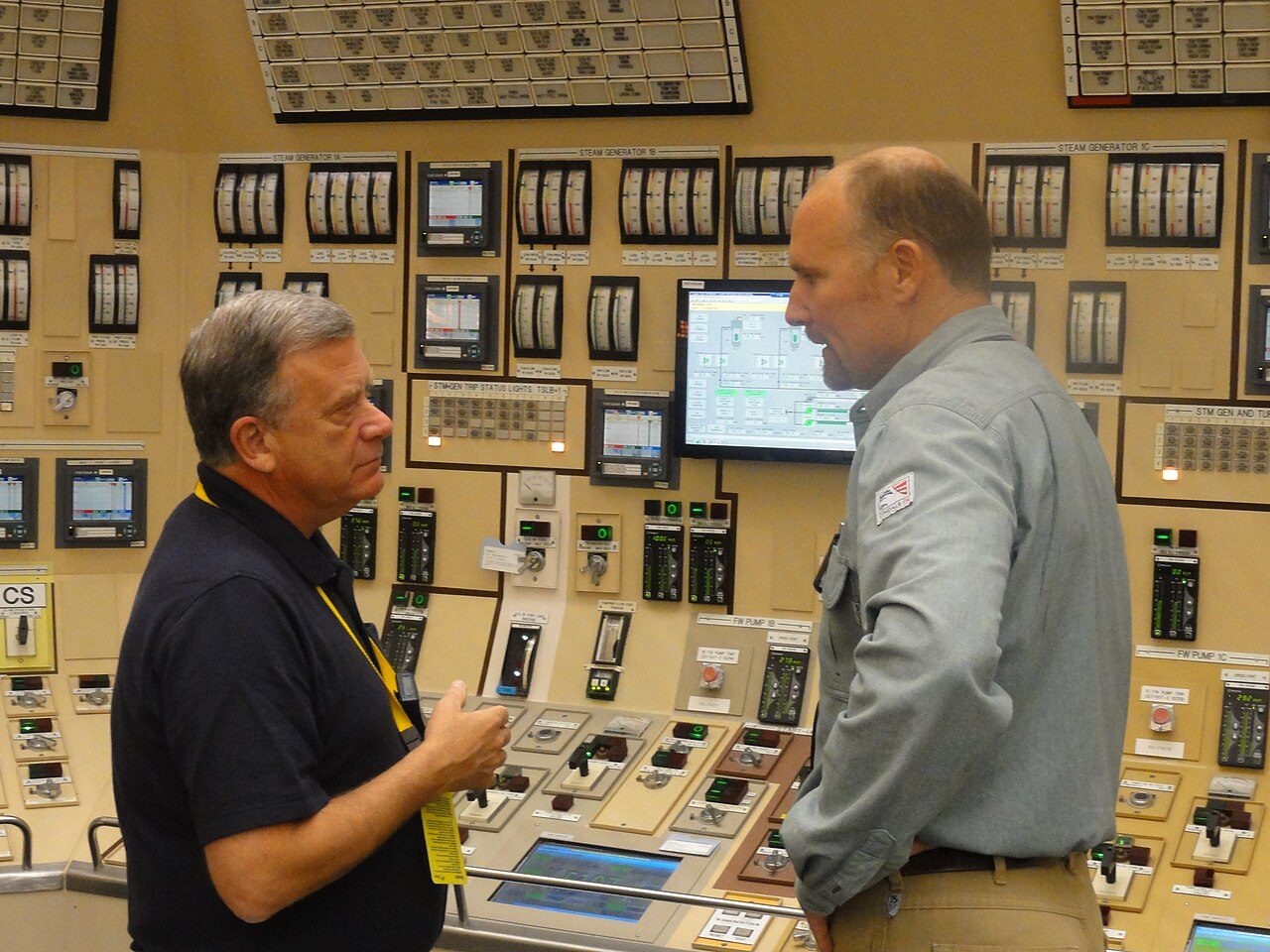
Google will pay for 890 MW of new nuclear output from reactors already running. Under a 20-year power purchase agreement announced on October 6, 2026, Constellation Energy says Google's commitment will enable new equipment at 11 Constellation-owned nuclear units in Illinois, Pennsylvania and New Jersey, adding 890 MW to the PJM Interconnection grid, with the first uprate "expected to be delivered by 2028." Constellation puts its own investment at more than $4.3 billion. A second, 15-year energy supply agreement covers an additional 2,700 MW, which the release says keeps "Constellation's operating generation assets" delivering energy and capacity to the PJM market.
Google's announcement supplies the finish line Constellation's release leaves out: Google says the uprate projects will add the 890 MW before the end of 2032. It also labels a video as covering its uprate project with Constellation at the Braidwood Clean Energy Center in Illinois. Together, the announcements put the first uprate by 2028 and all 890 MW before the end of 2032. Constellation's release names no plant, only "six nuclear sites," and neither company published a price.
The agreement also incorporates "operational load-shaping and demand-response capabilities to curtail non-critical power consumption during high-stress grid events," per the release, alongside an expanded five-year Google Cloud technology agreement. Utility Dive counts almost 1.1 GW of nuclear expansions across this contract and Constellation's September 30 Amazon deal.
A response to a filing both companies oppose
The release calls the deal "a direct response to PJM's 'Bring Your Own Power' proposal," a model for how big power users can expand new supply "without state or federal mandates," and says it aligns with the White House Ratepayer Protection Pledge. It names no filing.
PJM's version is before the Federal Energy Regulatory Commission. On August 13, 2026, PJM filed "its proposed framework to connect new data centers and other Large Load customers that bring their own power supplies consistent with the Ratepayer Protection Pledge." New large loads that have neither brought their own new capacity nor had their needs covered through PJM's Reliability Backstop Procurement would fall under a new Interim Resource Adequacy Service (IRAS): in an emergency, PJM would direct utilities to cut demand in proportion to their area's share of new large load "not supported by new generation," before calling on customers paid to curtail, and from the 2029/2030 capacity auction those loads would no longer count toward the capacity PJM procures. PJM asked for the tariff to take effect on October 12, 2026; FERC had not ruled on the docket, ER26-3515, as of October 6.
Both partners have asked FERC to throw out the curtailment service. Google's September 3 protest agrees that new large loads without enough new capacity should be curtailed ahead of other firm wholesale customers in tight conditions, but argues PJM cannot guarantee that loads which do bring capacity will be spared, because only states can set curtailment priority among retail customers. Without that assurance, Google wrote, in the filing's shorthand for bringing your own new capacity, "BYONC is a gamble, not an investment." It asks FERC to accept the Large Load Registry, "the only legally defensible part of PJM's proposal," and reject IRAS. Constellation's September 29 answer says the proposal exceeds FERC's jurisdiction and discriminates unlawfully by load size, load date and resource vintage, and concludes that the Commission "should reject PJM's Proposal (other than the proposal to create the Large Load Registry)."
The vintage fight maps onto the deal's two halves. The release says the 890 MW "is entirely new, expanding total electricity generation available across the PJM footprint"; the 2,700 MW comes from operating plants. Per Constellation's filing, Pennsylvania Governor Josh Shapiro argues that PJM's new-resource requirement is needed to prevent cross-subsidization of new large loads by existing ratepayers, by keeping those loads from contracting with cheaper "available capacity resources," which would be motivated to "lock-in long-term contracts with new large loads." Constellation's reply: "That argument is economically incoherent, as there is no reason to expect that existing capacity is 'cheaper' in a market that is set by competition among new and existing capacity." Its release describes the 15-year contract as keeping existing assets "economically viable without taking resources off of the grid." The commercial deal draws the same line between new and existing supply that PJM's filing draws and Constellation's FERC filing disputes.
Uprates as the near-term supply
The Google contract is the third uprate deal for PJM reactors The Duck Curve has covered between September 30 and October 6. On September 30, Constellation and Amazon announced a 20-year Calvert Cliffs agreement that includes an approximately 190 MW uprate Constellation expects online between 2030 and 2032; by our arithmetic the Google uprates are more than four times that. On October 5, DOE offered Vistra a conditional loan of up to $4.2 billion for uprates DOE says will add 433 MW, the same uprate output Meta agreed in January to buy. Google says this contract brings the new nuclear capacity it has enabled through uprates and restarts to over 1.5 GW, and that by the end of the decade its agreements are expected to enable nearly 25% of what it describes as a Department of Energy goal of 5 GW from uprates and restarts by 2030.
Each uprate also needs the Nuclear Regulatory Commission. As The Duck Curve noted on Calvert Cliffs, a plant's maximum power level sits in its license, which can change only after the NRC approves an application. The NRC's table of expected uprate applications, last updated September 8, 2026, lists 12 planned submittals from Constellation Energy Generation between the fourth quarter of 2026 and the fourth quarter of 2030: five extended power uprates and seven measurement uncertainty recaptures. Every one of them lists its plant as "Proprietary," so the table cannot say which belong to the Google deal.
The grid needs the megawatts. FERC accepted PJM's Reliability Backstop Procurement on September 29 but suspended it to February 28, 2027; the procurement would buy up to 6,831 MW, per the order the amount by which the 2028/2029 capacity auction cleared short of the reliability requirement once Fixed Resource Requirement resources are counted. Google's end-of-2032 date for the full 890 MW falls well after that auction's delivery year.
Outlook
The nearest marker is FERC's action on ER26-3515, where PJM asked for an October 12, 2026 effective date. If the Commission rejects IRAS as both companies urge, the deal Constellation calls a direct response will stand as a voluntary version of the rule; if it accepts the service, the contract's split matters, because PJM's filing asks for new capacity and the 15-year, 2,700 MW half is existing supply. The first public sign of which plants are involved would most likely be an NRC submittal; the agency's table puts the first planned Constellation extended power uprate filing in the fourth quarter of 2026, though nothing in it ties that filing to Google.
⚠ The Outlook extrapolates from PJM's August 13, 2026 filing and its requested October 12, 2026 effective date, the Google and Constellation FERC filings asking that IRAS be rejected, the deal's split between 890 MW of new and 2,700 MW of existing supply in Constellation's release, and the NRC's expected-applications table as updated September 8, 2026; no FERC order has issued and no plant has been tied to the deal in an NRC filing.
Sources
Primary
- Google and Constellation Announce Landmark Agreement to Bring 890 MW of New Nuclear Capacity to PJM Grid as Part of Long-Term Power Deal · Constellation Energy Corporation
Supporting
- PJM Proposes Framework To Connect Data Centers Without Compromising Reliability, Affordability · PJM Interconnection (Inside Lines)
- Protest of Google LLC, Docket No. ER26-3515-000 · Google LLC, via FERC eLibrary
- Expected Applications for Power Uprates · US Nuclear Regulatory Commission
- Motion for Leave to Answer and Answer of Constellation Energy Generation, LLC, Docket No. ER26-3515-000 · Constellation Energy Generation, LLC, via FERC eLibrary
- Constellation-Google deal will bring 890 MW of new nuclear to PJM · Utility Dive
- Why we're backing America's existing nuclear plants · Google
Copies of cited sources are retained where available. If a link no longer resolves, request a copy at contact@theduckcurve.com.