 The Duck Curve
NRDC projects US loses up to 540 GW of renewables under Trump policies
Per trade-press accounts, the group's modeling finds the lost wind, solar, and storage projects are not replaced: at most 9 GW of added gas, and household rates up an additional 4.2% to 5.5% by 2035.
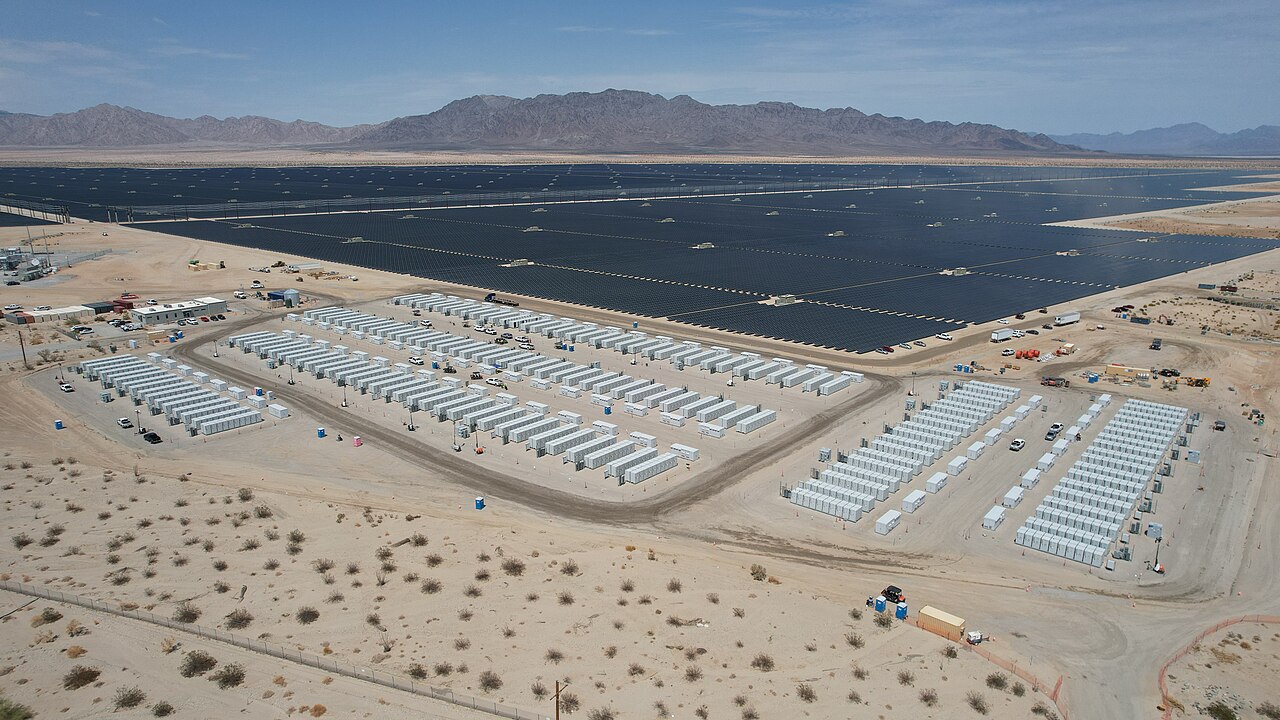
The Natural Resources Defense Council projects that the United States will lose between 390 GW and 540 GW of new wind, solar, and energy storage capacity over the next decade under the Trump administration's energy policies, according to Utility Dive's account of a report the group announced at an August 25, 2026 press briefing. The modeling, built with Evolved Energy Research according to RTO Insider, puts the associated clean-energy investment cancellations at potentially more than $700 billion by 2035. For scale, energynews.pro's account notes the group compares the capacity at stake to India's entire installed power fleet of roughly 520 GW.
What the modeling projects
The losses are measured against NRDC's own January 2025 "Snapshot" baseline, meaning what the group expected the US to build under the policies in place before the current term, not against today's installed fleet. Utility Dive's account lists the policy drivers NRDC models: the rollback of Inflation Reduction Act tax credits, new tariffs, and offshore wind lease buybacks.
The projected gap is not filled by other generation. "Crucially, these lost projects are not actually replaced with other sources of new power," Utility Dive quotes the report as saying. "At most, only 9 GW of additional gas capacity is added with Trump's policies in place." The report attributes that small gas figure to near-term turbine supply bottlenecks, volatile fuel prices, and the cost-competitiveness of new renewables relative to gas, per the same account.
On costs, Utility Dive reports the modeling has the power sector spending $5 billion to $15 billion more on fossil fuels while claiming $45 billion less in IRA tax incentives, and quotes the report projecting average household electricity rates "to increase by an additional 4.2% to 5.5% nationwide" by 2035, again relative to the January 2025 case. energynews.pro's account adds a consumer framing from the group: up to $30 billion more per year for electricity by 2035, with regional increases reaching as high as 25%.
Amanda Levin, NRDC's director of policy analysis, said on the group's press call that the modeling still anticipates significant renewables growth under this administration, but that "we lose more than half of everything that we expected to be able to build with the combination of market forces and proactive policy," per Utility Dive.
The gas that would fill the gap
Whether gas substitutes for the lost capacity is the live dispute, and the report's 9 GW assumption lands against a very large announced pipeline. Utility Dive pairs the NRDC projection with an August report from Global Energy Monitor counting 189 GW of US gas-fired capacity in announced, pre-construction, and construction phases, a figure that nearly doubled in the first half of 2026. The same Global Energy Monitor report, as quoted by Utility Dive, found two-thirds of gas capacity in development globally has no named turbine manufacturer, and that developers needing firm power quickly are turning to less efficient simple-cycle and reciprocating-engine plants. Both numbers can be true at once: announcements are not turbines.
The buildout NRDC says is at risk is the one currently running at record pace. US grid batteries neared 52 GW by mid-2026 after three years of 70% annual growth, and federal rules for clean-energy hardware are already shifting on other fronts: the FCC's foreign inverter ban now pivots on the 45X manufacturing credit.
What could not be checked
NRDC is an advocacy organization and the report is a projection exercise, with the choices of baseline and scenario that implies. The Duck Curve could not independently review the report; characterizations of its contents here rest on the cited accounts from Utility Dive, RTO Insider, and energynews.pro, which may be incomplete or imprecise. The accounts differ at the edges: Utility Dive frames the capacity loss as occurring "over the next decade" while energynews.pro anchors it to 2035, and the investment figure appears as "potentially exceeding" $700 billion in RTO Insider's rendering and as a flat $700 billion total in energynews.pro's.
Sources
Primary
- NRDC Report: How Trump's Actions Are Hiking Utility Bills and Destroying Investments · Natural Resources Defense Council
Supporting
- NRDC Quantifies Effect of Trump Campaign Against Renewables · RTO Insider
- Trump's Energy Policy Could Double US Electricity Carbon Footprint · energynews.pro
- Trump's energy policy could cost US 540 GW of renewables, says NRDC · Utility Dive
Copies of cited sources are retained where available. If a link no longer resolves, request a copy at contact@theduckcurve.com.