 The Duck Curve
EV4EU V2X project ends; Azores homes cut charging costs 8.6% on average
The EU's CORDIS summary gives 14% as the average saving, the top of the household range, and bidirectional charging was effectively deployed at only one Azores site.
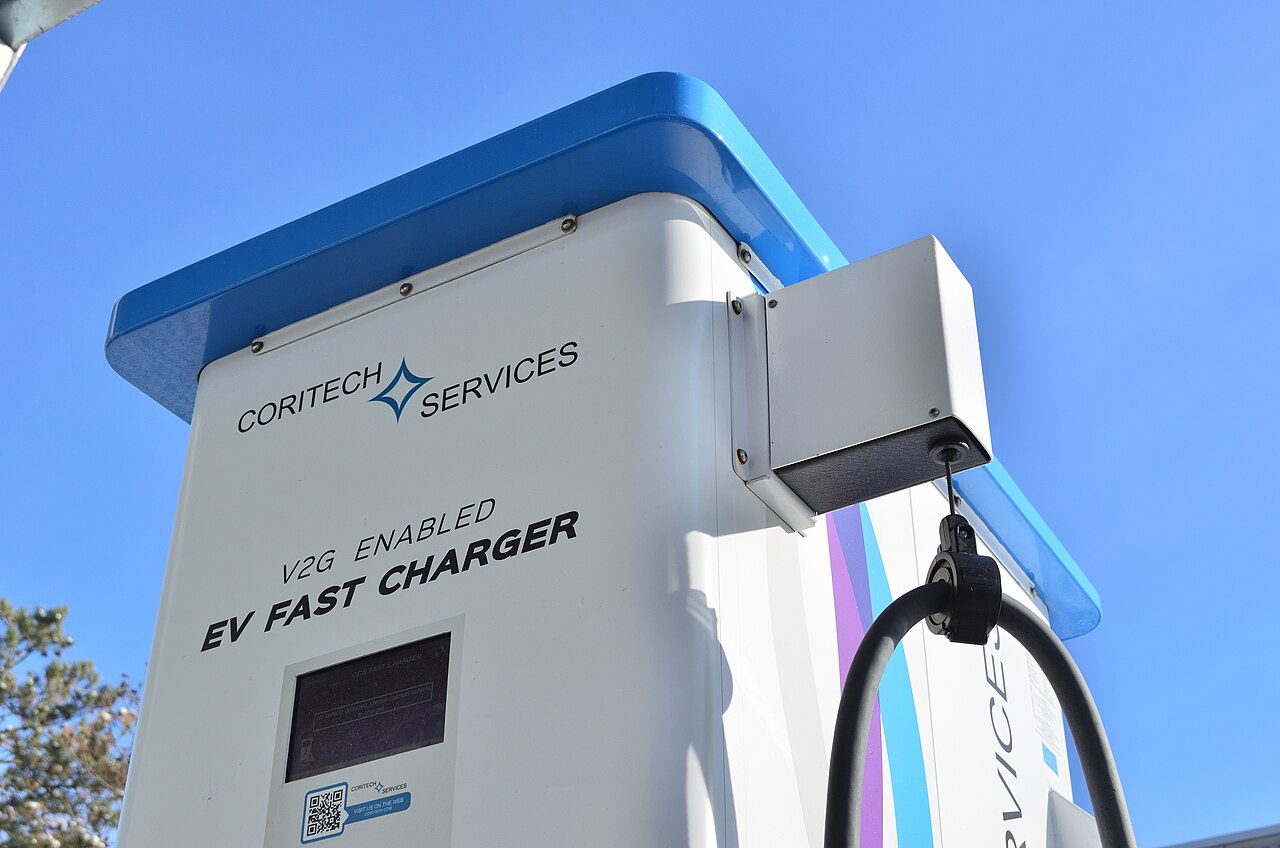
EV4EU, a four-year EU research project on vehicle-to-everything (V2X) charging coordinated by Lisbon's INESC-ID, closed on May 31, 2026 with a bidirectional charging station prototype built on the Combined Charging System (CCS) standard and pilots in Portugal, Slovenia, Greece and Denmark. Its Portuguese pilot cut household charging costs by an average of 8.6%, according to the project's evaluation report on the Azores demonstrator. The EU's CORDIS research portal published a results summary on October 8, 2026 that puts the average at 14%, which the project's report gives as the top of the range.
The EU paid for all but one euro of it, by CORDIS's figures: a total cost of €8,989,683 and an EU contribution of €8,989,682.
What the four pilots found
The headline hardware is a bidirectional charging station built on the Combined Charging System standard. The CORDIS summary counts among the project's most important outputs "the design and successful testing of a fully functional bidirectional charging station prototype using standard combined charging system technology." The project also built open-source tools for charging point operators "that handle communications based on smart/bidirectional charging standards," and explored a virtual power plant that manages EV flexibility and taps available energy markets. "This approach can increase revenue while delivering direct benefits to users," coordinator Hugo Morais said in the summary.
The Portuguese pilot ran on São Miguel island in the Azores, across homes, an office building at the regional civil engineering laboratory (LREC) and the campus of Eletricidade dos Açores (EDA). In six active households, the control platform monitored about 350 charging sessions and over 5,200 kWh between late 2024 and mid-2025. Savings "ranged from almost 0% (with very optimised and literate users) to 14%, with an average value of 8.6% in cost reduction per household," the report says. Most of those drivers had already set their cars to charge as cheaply as possible, and the Azores' fixed tariff scheme compounded that, per the report, which says a dynamic tariff would boost the algorithm's performance.
The renewable figure carries a caveat of its own. "Although few examples, the smart charging algorithm increased RES integration in households by 10.4% to 21.9%," the report says, and lining charging up with rooftop solar output was rare because most users kept a strong preference for night charging. The CORDIS summary renders this as "an increase of up to 21.9 % in renewable energy source integration."
Bidirectional charging reached only one Azores site. The EDA campus was the only Portuguese site where bidirectional charging was effectively deployed, per the report, and in the second half of 2025 it logged over 700 sessions, more than 6 MWh charged and 160 kWh discharged during V2G and fleet management tests. Even there, the report says, bidirectional charging was "successfully tested both manually and automatically," but "the lack of a reliable SoC feed remains a significant barrier to full-scale deployment of discharging strategies." SoC is the battery's state of charge, and the non-intrusive diagnostic units the team first used proved unreliable at reporting it.
The LREC building lost its bidirectional test to a connector standard. The Wallbox Quasar with the CHAdeMO protocol was discontinued, and the one available car was CHAdeMO-only, "making it incompatible with the newer Combined Charging System 2 (CCS2) alternative," per the report. A project whose headline hardware is a CCS bidirectional charger could not test bidirectional charging at one of its own sites for want of matching hardware.
Elsewhere the pilots leaned toward markets and the grid, per the CORDIS summary. Slovenia integrated virtual power plants and local market platforms across office and school buildings and "demonstrated the added value of V2X over standard smart charging." The Athens pilot, on public charging, "validated the importance of dynamic pricing and flexible capacity contracts." The Danish pilot managed charging clusters in parking lots and used distributed control algorithms to reduce three-phase power imbalances, which the summary says maximised local renewable use and cut costs and fossil fuel use.
Compatible cars and standards are scarce
Slovenia had a car problem too. The project's updated innovation strategy says the Slovenian demonstrator used a stationary battery as an emulation platform for EV fleets, which compensated for the limited availability of bidirectional CCS-compatible EVs and allowed testing before the V2X charging stations were available.
The communication standards lag too. The project's roadmap for mass EV deployment says ISO 15118-20, the version that gives "full support for bidirectional power flow," is "not yet widely adopted by EV and EVSE manufacturers," and that current market implementations are largely based on ISO 15118-2, which "does not fully enable V2X functionalities." On the charger-to-backend side, the roadmap says most commercially available chargers use OCPP 2.0.1, which supports only limited aspects of V2X, and that adoption of OCPP 2.1, its successor for bidirectional flows, is still at an early stage. The Azores report's own recommendation is EU-wide standardization of EV and charger technologies.
The bidirectional offers announced in early October 2026 arrive as packages. Renault Group and EDF plan to sell French households an EV, a home charger installed by IZI by EDF and smart charging management through Renault dealers, with bidirectional services expected by summer 2027 (Renault and EDF plan EV, home charger and V2G bundles for French homes). Tesla's Powershare home backup for new Model 3 and Model Y requires a Powerwall 3 (Tesla turns on Powershare home backup for new Model 3 and Model Y).
The V2X Cluster, which EV4EU co-founded with four other EU-funded projects and which later took in four more, remains active, per the CORDIS summary.
Sources
Primary
- EV4EU Deliverable D6.4: Evaluation and lessons learn of the Azores demo · EV4EU consortium (lead contractor NEW; INESC ID, SEL, EDA, DREn)
Supporting
- EV4EU Deliverable D10.4: Innovation Strategy: Update · EV4EU consortium (lead contractor GEN-I)
- EV4EU Deliverable D10.8: Roadmap for the solutions enabling the mass deployment of EVs · EV4EU consortium (lead contractor INESC ID)
- Vehicle-to-everything solutions towards carbon-free mobility (EV4EU Results in Brief) · CORDIS, Publications Office of the European Union
Copies of cited sources are retained where available. If a link no longer resolves, request a copy at contact@theduckcurve.com.