 The Duck Curve
Tesla turns on Powershare home backup for new Model 3 and Model Y
The cars need a Powerwall 3 to extend backup by what Tesla says is over two days; new US and Puerto Rico orders qualify, and only some earlier cars are capable.
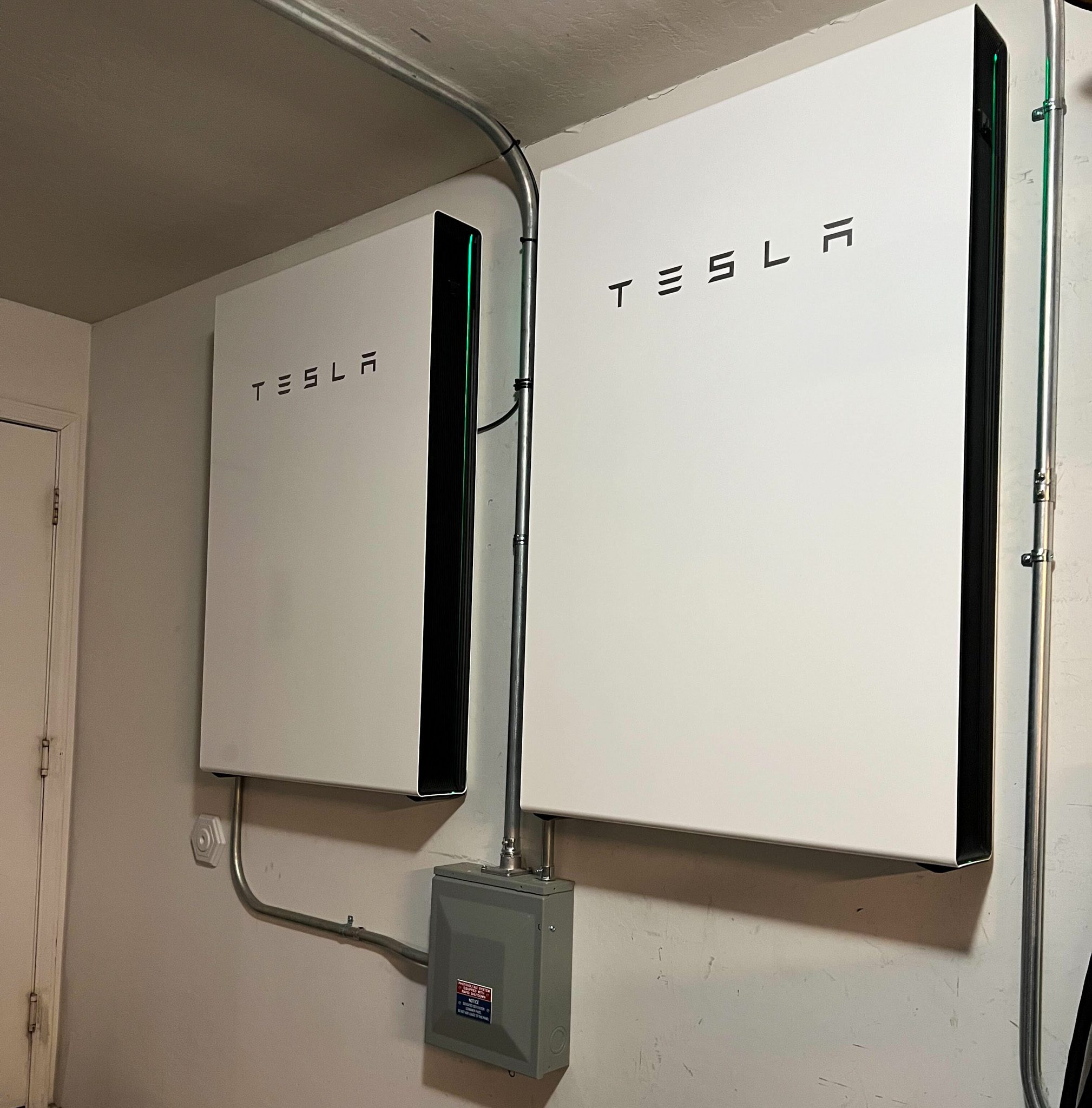
Tesla's two volume cars can now power a house in an outage, provided the house already has a Powerwall 3. Powershare Home Backup "is now available for new Model 3 & Model Y with Powerwall 3," Tesla Energy said on X on October 6, 2026, adding that owners can "Extend your home backup by over 2 days with your vehicle." Tesla's Powershare page bases that figure on a home using 30 kWh a day and a full vehicle battery, and lists 11.52 kW of maximum continuous real power.
Until then the Cybertruck was the only Tesla that could back up a home, and it could pair with a Powerwall 3 only from September 10, when Tesla's Cybertruck account said the pairing extends backup by over three days. The Model 3 and Model Y get the Powerwall route and nothing else. The page's spec table offers two configurations: with Powerwall, a Universal Wall Connector or Wall Connector 3 plus a Powerwall 3 system, compatible with Cybertruck, Model Y and Model 3; without Powerwall, a Universal Wall Connector, a Powershare Gateway and an optional Backup Switch, compatible with Cybertruck alone. For homes that already have a Powerwall and a Wall Connector, Tesla says "no additional equipment is required." Powerwall 2 and Powerwall+ support is "coming soon."
Which cars count
"New" is doing a lot of work. The page's FAQ says Powershare is available on all new Model 3 and Model Y vehicles "ordered on October 1, 2026 or later." Its footnote 2 is narrower on two counts: "All new Model 3 and Model Y vehicles ordered in the U.S. and Puerto Rico after October 1, 2026 are capable of Powershare." It adds that "Some, but not all, Model 3 and Model Y vehicles produced before October 1, 2026 are also capable of Powershare." The FAQ includes an order placed on October 1 and the footnote does not, and a car ordered in September but built in October falls under neither sentence. Owners are told to check the touchscreen under Software, then Additional Vehicle Info, for "Powershare Support: Enabled."
Electrek's October 6 report puts the gap down to hardware. Per Tesla's footnote 3, bidirectional inverter functionality on the Model Y and Model 3 comes from an inverter Tesla calls PCS2 Lite (the Cybertruck uses PCS2), certified pursuant to UL1741. Electrek says Tesla has not said when that part went into production on each trim, that owners have to contact Tesla support to have the feature turned on, and quotes Tesla saying Grid Support is "not available for Model 3 or Model Y." Electrek adds that the car backs up the house and cannot sell power back to the grid.
The rollout is also US and Puerto Rico only. Tesla's Canadian Powershare page, as read on October 7, still says "Powershare is currently available for Cybertruck only" and "not available for Model S, Model 3, Model X and Model Y," and still describes Powerwall 3 compatibility as coming "soon."
Late, and on Tesla's terms
Tesla executives were asked about bidirectional charging at the company's Investor Day on March 1, 2023. Drew Baglino, then senior VP of powertrain and energy engineering, said it could come within the next two years, and Elon Musk followed with, in Electrek's account at the time: "I don't think very many people are going to want to use bidirectional charging, unless you have a Powerwall, because if you unplug your car, your house goes dark, and this is extremely inconvenient." The Model 3 and Model Y version that shipped on October 6 requires one.
Rivals got there earlier, and also through their own hardware. Electrek says Ford launched home backup on the F-150 Lightning in 2022 with 9.6 kW of output. GM said on August 8, 2023 that it would expand vehicle-to-home charging across its retail portfolio of Ultium-based EVs by model year 2026, for customers to use through GM Energy's Ultium Home offerings and its GM Energy Cloud software. Electrek's view is that Ford and GM both require a separate inverter and backup hardware, while a Tesla owner with a Powerwall 3 and a Wall Connector has nothing else to buy.
The Powerwall 3 has already moved the market's numbers. Berkeley Lab's August 2026 distributed solar and storage update, as The Duck Curve reported, found median residential battery discharge capacity went from 6.0 kW in 2024 to 11.4 kW in 2025, on mostly California data, and attributes the jump to "the release of the PowerWall 3 (with a much higher discharge capacity than previous models)." The new feature reaches those households only when a new or eligible Model 3 or Model Y is parked in the driveway.
Sources
Primary
- Tesla Energy on X: Powershare Home Backup is now available for new Model 3 & Model Y with Powerwall 3 · Tesla (Tesla Energy official account on X)
Supporting
- Tesla says it could have bidirectional charging in two years, but will it? · Electrek
- GM Makes Vehicle-to-Home Bidirectional Charging Technology Available Across Portfolio of Upcoming Ultium-based EVs · General Motors
- Tesla Model 3 and Model Y can finally power your home, years after rivals · Electrek
- Powershare - Vehicle to Home/Grid Charging · Tesla
- Powershare (Tesla Canada) · Tesla
Copies of cited sources are retained where available. If a link no longer resolves, request a copy at contact@theduckcurve.com.