 The Duck Curve
UL Solutions opens V2G certification under new UL 1741 Supplement SC
The testing company says its Fremont and Northbrook labs can certify bidirectional chargers to the supplement, for EVs with SAE J3072 onboard inverters, or under UL 1741 multipiece DER requirements paired with UL 9741.
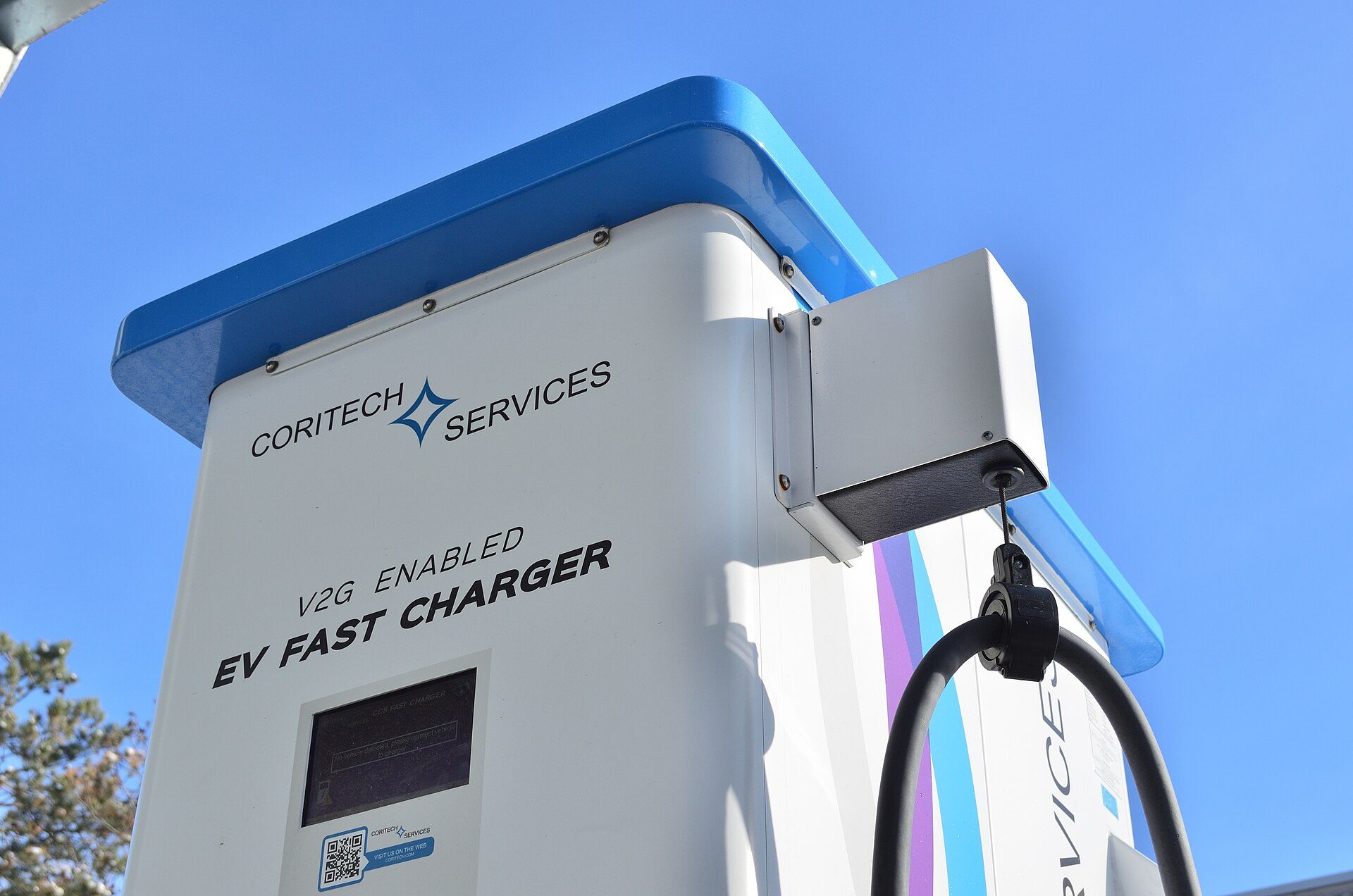
UL Solutions Inc. announced on September 14, 2026 a certification program for vehicle-to-grid equipment: its laboratories in Fremont, California, and Northbrook, Illinois, offer testing and certification of bidirectional electric vehicle supply equipment to UL 1741 Supplement SC, a supplement to UL 1741, the Standard for Inverters, Converters, Controllers and Interconnection System Equipment for Use With Distributed Energy Resources. Products certified to the supplement, the release says, can work with EVs whose onboard bidirectional inverters are designed and tested in accordance with SAE J3072. A second route certifies products for grid interconnection using what the release calls new UL 1741 multipiece DER requirements coupled with UL 9741, the EV power export equipment standard.
UL Solutions (NYSE: ULS) is the testing and certification company; UL Standards & Engagement, ULSE Inc., publishes the standards. The Vehicle-Grid Integration Council wrote on July 29, 2026 that UL Standards & Engagement released the supplement on May 21, 2026, under the title "UL 1741 Supplement SC for AC Bidirectional Electric Vehicle Supply Equipment for EVs with SAE J3072 Bidirectional Onboard Inverters." ULSE's catalog page for UL 1741 lists a May 21, 2026 revision of the standard without labeling it. The release names no manufacturer, product, or customer in the program, and no price.
What the supplement certifies
Bidirectional charging comes in two electrical arrangements, and the distinction is the whole story. In what VGIC calls V2G DC, the inverter that turns battery DC into grid AC sits off the vehicle, in stationary equipment; in V2G AC, the inverter is onboard the car and the wall unit passes AC. Per ULSE's catalog page for UL 9741, that standard covers off-board unidirectional and bidirectional equipment that transfers energy between an EV and off-board loads as well as operating in parallel with an electric power system; its first edition is dated September 29, 2023, and the last configuration in its scope list is equipment using EV on-board interactive inverters that meet SAE J3072 performance requirements.
Supplement SC, by its title, covers the wall box for that configuration. VGIC calls the device an "oversight supervisor" for a vehicle designed and tested to meet SAE J3072, and says the pathway matters because it does not rely on certifying a given vehicle-charger pair as a single system.
Pairing is how V2G AC has been certified until now. Per VGIC, utility rules in California and Maryland define a pathway under a UL 1741 Certification Requirement Decision for multipiece DER systems combined with UL 9741, in which a specific vehicle model and a specific charger are certified together; the release's second route, UL 1741 multipiece DER requirements plus UL 9741, matches that description. The ULSE catalog page notes that Certification Requirement Decisions are "developed and owned by UL LLC" and "are not consensus documents."
The numbers the release borrows
The release leans on two outside studies. The first, an E3 study funded by GM Energy, dated March 2026 on its cover, is cited in the release as estimating that V2G "could potentially deliver 5 to 15 times more per-vehicle value than one-way managed charging in many markets." The study's 2030 grid-value conclusions page says "V2G delivers 5–15x more per-vehicle value than V1G, driven by the ability to discharge during high-value reliability and congestion hours," with no "in many markets" qualifier; that phrase appears in GM's July 27, 2026 post about the study, whose wording the release follows.
The same study says many V1G and V2G programs are in a pilot phase and "may be overpaying customers relative to realized grid benefits."
The second borrowed figure, that about 90% of EVs are parked at any given time under typical driving patterns, links to an EPRI Journal item dated January 9, 2020 summarizing a California Energy Commission-funded EPRI study of California's distribution systems. The item states the figure as a projection, "about 90% of EVs will be parked at any given time," and puts V2G at 2 to 3 times the value of managed charging in its California model. Two to three times in the California distribution model EPRI Journal summarized in 2020, five to fifteen in E3's 2030 grid-value outlook across US regions: both are modeled values.
Interconnection is the gate
A certification is worth what interconnection rules make of it. PG&E's V2X program page states, in its contractor FAQ, that a system able to discharge from the vehicle while the utility grid is in operation must be interconnected under Electric Rule 21 and that systems capable of discharging only during a utility outage can be installed as backup generation only; its Hourly Flex Pricing rate option, per the page's eligibility list, requires a Rule 21 Interconnection Agreement for the V2X system and no solar system, while the FAQ keeps customers with existing generation eligible for the program and its backup testing. The program enrolls specific vehicle-and-charger combinations (PG&E expanded it in August 2026); that matched-pair model is what the supplement is meant to make unnecessary.
VGIC's July 29, 2026 post says the supplement's publication started a "shot clock" in California: on July 10, 2026, the three large investor-owned utilities notified the California Public Utilities Commission of the publication, CPUC staff were authorized to reconvene a dormant V2G AC interconnection working group by August 19, 2026, and within eight months of that reconvening the utilities must propose Rule 21 language for V2G AC systems or continue an interim pathway. The CPUC's Rule 21 page, read on September 15, 2026, carries nothing dated 2026 on V2G AC, so The Duck Curve could not confirm whether the group has reconvened.
Maryland, by VGIC's account, got there first. VGIC reported on June 12, 2025 that the Maryland Public Service Commission voted unanimously to adopt V2G interconnection rules in COMAR 20.50, effective July 7, 2025, under which a V2G AC system can interconnect either with a charger certified to UL 1741 SC paired with a vehicle designed to SAE J3072, or with charger and vehicle certified to UL 1741 SB as a composite DER system. Maryland named the supplement before ULSE published it, which VGIC's July post calls incorporating it in anticipation of publication.
Outlook
If the process VGIC describes runs on schedule, proposed Rule 21 language for V2G AC would be due within eight months of the working group reconvening, which is April 2027 if the group reconvened on the August 19, 2026 deadline (our arithmetic); Maryland, per VGIC, already accepts SC-certified chargers. What the certification removes is the hardware gate; compensation is untouched. The E3 study's conclusions page says monetization pathways, especially for transmission and distribution deferral, "remain constrained and will require regulatory evolution," and the GridLab, Kevala, and E3 blueprint The Duck Curve covered found that enrolling 10 percent of the 9.7 million light-duty EVs the California Energy Commission projects for 2036 could supply 30 percent of the state's cumulative utility-scale storage procurement target for that year, if V2G resources are accredited and operated on a comparable basis with grid-scale storage. The cost case is a prediction: pv magazine USA's Ben Zientara wrote on September 14, 2026 that eliminating the external inverter is likely to result in equipment significantly less expensive than the DC products on the market; the release gives no price.
⚠ The Outlook extrapolates from the CPUC Rule 21 process the Vehicle-Grid Integration Council described on July 29, 2026, Maryland's 2025 interconnection rules, the E3 study's conclusions page, pv magazine USA's cost expectation, and the accreditation condition in the GridLab report The Duck Curve covered; no certified product, price, or regulatory outcome is predicted.
Sources
Primary
- UL Solutions Launches Certification Program to Help Electric Vehicles Support the Power Grid · UL Solutions Inc.
Supporting
- Vehicle-to-Grid: $1 Billion in Annual Grid Benefits? · EPRI Journal
- Maryland Becomes First to Adopt Comprehensive Vehicle-to-Grid (V2G) Interconnection Rules · Vehicle-Grid Integration Council
- Vehicle-Grid Integration Valuation Studies, Funded by GM Energy · E3 (Energy and Environmental Economics)
- A new study shows why vehicle-to-grid matters now · General Motors (GM News)
- Two Critical Links for V2G AC: UL 1741 SC and ISO 15118-20 Amendment 1 Recently Published · Vehicle-Grid Integration Council
- UL Solutions launches AC bidirectional EV charger certification program · pv magazine USA
- UL 9741, Standard for Electric Vehicle Power Export Equipment (EVPE) (catalog page) · UL Standards & Engagement (ULSE Inc.)
- UL 1741, Standard for Inverters, Converters, Controllers and Interconnection System Equipment for Use With Distributed Energy Resources (catalog page) · UL Standards & Engagement (ULSE Inc.)
- Vehicle-to-Everything (V2X) Program · Pacific Gas and Electric Company
- Rule 21 Interconnection · California Public Utilities Commission