 The Duck Curve
ARENA funds JET Charge V2G trial of up to 130 ACT Government EVs
REVS2 runs to June 2029 and moves from proving the cars can export to testing what fleets get paid, stepping from a flat tariff to ActewAGL's dynamic VPP tariff.
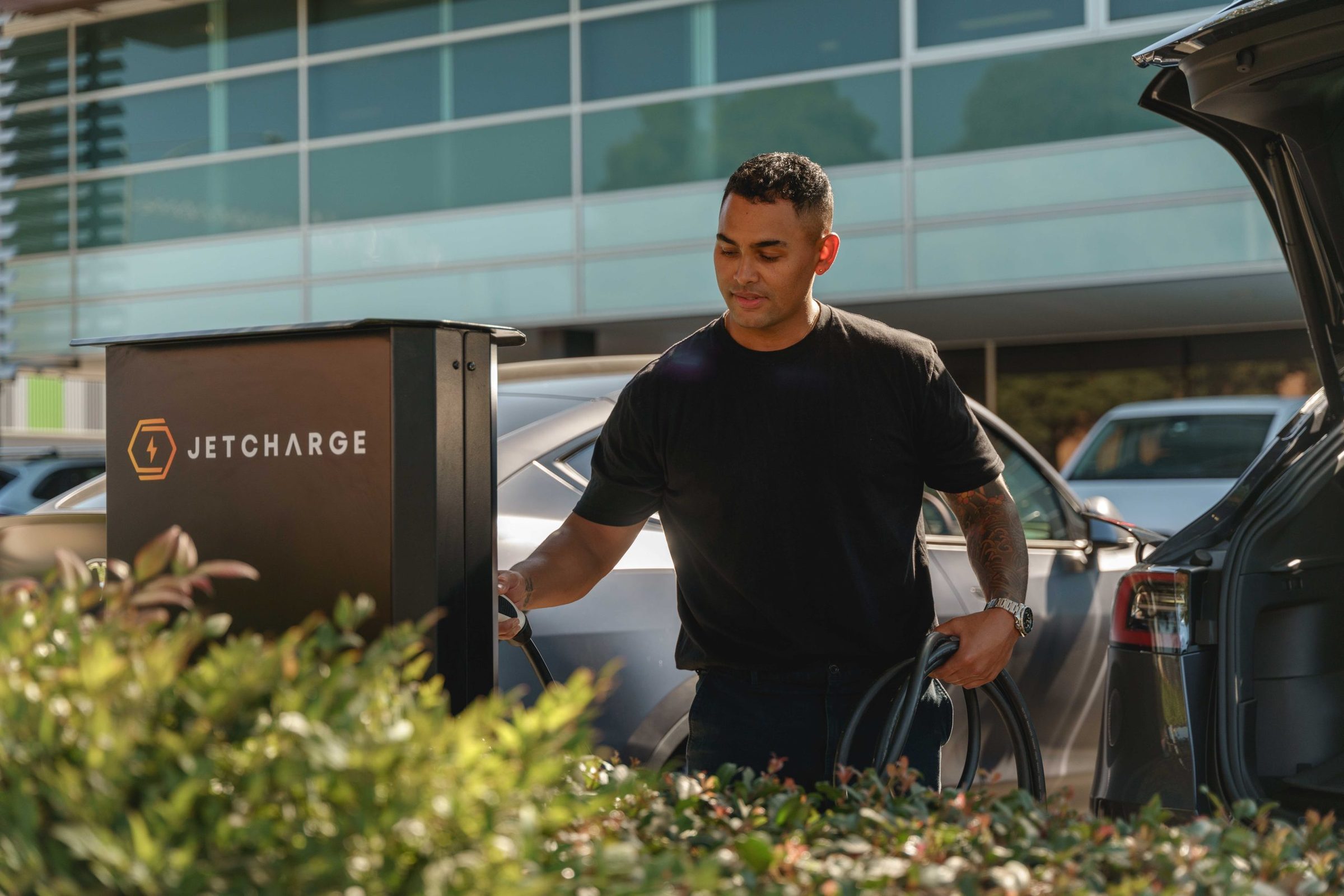
The ACT Government's car fleet is about to test whether parked cars can pay their way. The Australian Renewable Energy Agency (ARENA) said on October 21, 2026 it is giving JET Charge A$4 million for Realising Electric Vehicle-to-Grid Services 2 (REVS2), which will deploy up to 130 electric vehicles and bidirectional chargers across the ACT Government fleet. ARENA calls it Australia's largest commercial deployment of vehicle-to-grid (V2G) technology.
The budget depends on who is counting. ARENA's share is A$4.1 million of a A$6.4 million total project cost, per its project page, with a start date of September 17, 2026 and an end date of June 30, 2029. JET Charge leads; the ACT Government, the Australian National University (ANU) and ActewAGL are partners, and the chargers go in at ACT Government and ANU sites. AAP's report, via The Driven, described a A$5.35 million, three-year trial, with ARENA investing A$4.1 million and JET Charge contributing A$1.25 million. Those two shares add up to AAP's figure. ARENA's page lists only its own share and the A$6.4 million total, and neither it, the release nor AAP says where the remaining A$1.05 million or so (by our arithmetic) comes from.
The cast is familiar, with the billing reversed. The first REVS project, which ARENA funded in 2020, was led by ActewAGL Retail with JET Charge, ANU and the ACT Government among its partners. It set out to install 51 bidirectional chargers and 51 V2G-capable vehicles in the ACT and deliver contingency frequency control ancillary services (FCAS) to the National Electricity Market at fleet scale, with A$2.73 million from ARENA toward a A$7.22 million total, and it was completed on November 21, 2025. ARENA's release says that project showed electric vehicles could safely export electricity back to the grid. Suzanne Orr, the ACT's Minister for Climate Change, Environment, Energy and Water, said a number of ACT Government fleet vehicles in it fed power back into the grid during an outage in February 2024.
REVS2 is about the money. JET Charge will add V2G to its fleet charging management software and pair it with ActewAGL's virtual power plant retail tariff, in three phases, per the project page: a flat tariff at the start while the software and commercial model are built, then a peak/off-peak tariff "to realise a financial benefit from V2G deployment and operation," then a dynamic VPP tariff. ANU will run co-design support, a fleet V2G research hub and the knowledge sharing, including data on fleets' total cost of ownership. A trial that follows one built to sell frequency services starts on a flat tariff, which says where the open question now sits: in the fleet manager's budget, not the charger.
"We know vehicle-to-grid technology works – we helped show that in the original REVS project," JET Charge chief executive Tim Washington said in the release. "Now we need to prove it makes commercial sense." ARENA chief executive Darren Miller called the missing piece "how large fleets can be incentivised to support the grid while still meeting their day-to-day transport needs."
The fleet's schedule is the pitch. Many of the vehicles will be used to deliver in-home health services, JET Charge future business general manager Kristian Handberg told AAP, so they can be connected to the grid at night. "Those vehicles only get used during the day and then they sit back in ACT government buildings from the end of the business day," he said.
The superlative leans on its adjective. ARENA is also funding Amber Electric's household V2G project, which it said in May 2026 would grow from 50 to 1,000 V2G-capable households, as The Duck Curve reported when BYD's Sealion 7 joined that program. REVS2's claim is to the largest commercial fleet deployment; at up to 130 cars, it is a fraction of that household target. ARENA transport general manager Alex Grant told AAP the project should signal to carmakers that Australia is ready to support more V2G-compatible cars.
The territory is an easy place to try this. Orr said more than 40% of newly registered vehicles in the ACT so far in the 2026-27 financial year are battery electric. The announcement also coincided with Australia's first Open Charge Alliance Plugfest in Canberra, where charger makers, software developers and energy companies are testing interoperability, supported by ARENA's Vehicle-Grid Network project.
Sources
Primary
- ARENA powers Australia's largest commercial vehicle-to-grid fleet deployment · Australian Renewable Energy Agency (ARENA)
Supporting
- “We know V2G works:” Biggest commercial vehicle-to-grid trial to test revenue lines for government EV fleet · The Driven (AAP)
- REVS2: Commercialising Fleet V2G · Australian Renewable Energy Agency (ARENA)
- Realising Electric Vehicle-to-Grid Services · Australian Renewable Energy Agency (ARENA)
Copies of cited sources are retained where available. If a link no longer resolves, request a copy at contact@theduckcurve.com.