 The Duck Curve
Rio Tinto and Rondo start design of a 360 MWh heat battery at Yarwun
ARENA's staged package runs to up to A$74.9 million, A$33.3 million of it contingency for risks including cost overruns and electricity costs; Rio Tinto has made no investment decision.
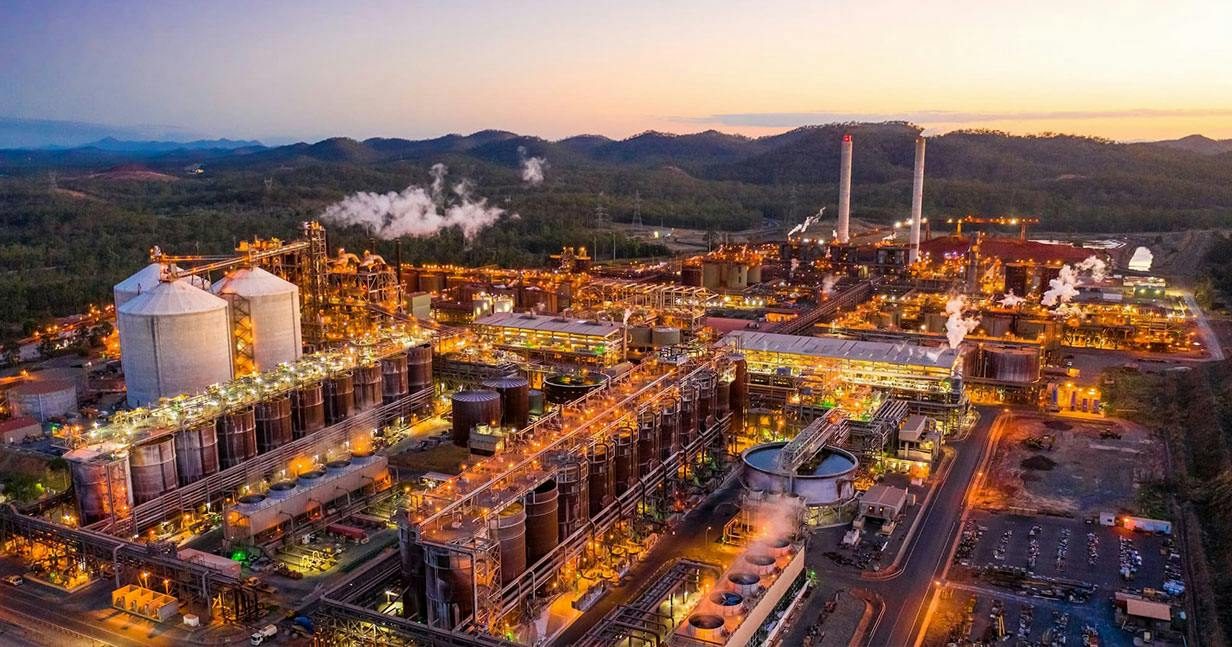
Rio Tinto and Rondo Energy have started front-end engineering and design on a 360 MWh heat battery for Rio Tinto's Yarwun alumina refinery near Gladstone, Queensland, backed by up to A$74.9 million in staged funding from the Australian Renewable Energy Agency, ARENA said on October 21, 2026. The unit would charge at 78 MW of electricity and discharge 30 MW of heat to make steam, and ARENA expects it to cut onsite emissions by around 67,000 tonnes of carbon dioxide a year.
Nothing gets built yet. ARENA's project page says Rio Tinto will complete a feasibility study first, and construction depends on a stage gate review by ARENA and a final investment decision by Rio Tinto. Rondo's release is written in the same conditional: "If progressed," the project would be delivered at Yarwun. ARENA's announcement is firmer, saying the project "is being delivered" there.
Most of the money is conditional
ARENA's funding comes in three tranches. An initial A$3.6 million pays for the engineering and design work. After that study is successfully completed, ARENA will provide up to A$38 million for deployment. It has also approved up to A$33.3 million in conditional contingency support, "which would only be made available in defined circumstances to manage specific project risks, including cost overruns and electricity costs." The project page puts the total project cost at A$125.19 million.
One of the risks the contingency covers is the price of electricity, the input a heat battery exists to buy cheaply. Without the contingency, ARENA's share comes to up to A$41.6 million, about a third of the project's cost by our arithmetic; with it, about 60%.
The partners named on the project page are Rondo's US and Australian companies and Hatch and GHD, with RTA Yarwun Pty Ltd as the lead organisation. ARENA is funding it under its Industrial Transformation Stream, whose third round is open for applications.
How the heat battery would work
The system would use resistive electric heating to store energy in refractory bricks at around 1,100°C, then discharge the stored heat as hot air through a heat recovery steam generator to make continuous process steam, per the project page. Rondo says Australia regularly has four to six hours of surplus solar electricity in the middle of the day (the midday trough of the What is the duck curve?), while refineries need heat around the clock.
The two ratings fit that window. At 78 MW, filling 360 MWh from empty takes about 4.6 hours, ignoring losses, by our arithmetic; at the 30 MW discharge rating, a full store lasts 12 hours (the gap between the two numbers is the kW vs kWh distinction at work).
The battery would replace part of Yarwun's steam supply, not all of it. Steam for the refinery's digestion process currently comes from three coal boilers and a gas-fired cogeneration plant, according to ARENA, and the project is expected to displace steam now provided by "a fossil fuel boiler." Rio Tinto's Pacific Operations managing director, Armando Torres, described the study's scope the same way in the release: "This study will help us determine whether thermal energy storage can provide a technically and economically viable alternative to fossil fuels for part of Yarwun's steam requirements."
A refinery on a shorter clock
Yarwun's output is being cut from October 2026. Rio Tinto said on November 18, 2025 that it would reduce production at the refinery by 40% from October 2026, about 1.2 million tonnes of alumina a year, to extend the operation's life until 2035. The constraint is tailings: at current production rates, Yarwun's tailings facility was expected to reach capacity by 2031, and Torres said a second facility was explored but "the scale of investment required is substantial and not currently economically viable." The cut affects around 180 roles at a refinery that employed about 725 people and produced around 3 million tonnes a year.
The heat battery's schedule sits inside that horizon. ARENA lists the project as running from October 21, 2026 to April 30, 2033, including 36 months of trial operations, so the trial is scheduled to end roughly two years before the refinery's current 2035 horizon.
ARENA frames the payoff as knowledge as much as tonnes. "Demonstrations like this will help build the evidence industry needs to make future investment decisions so the value of this project extends well beyond a single refinery," said ARENA chief executive Darren Miller. The project page lists operating data on electricity costs, grid connection and brownfield integration among the lessons it is meant to share.
The heat battery also has company at the site. In the November release Rio Tinto said it would keep prioritising decarbonisation at Yarwun, including replacing coal and gas in boilers with biofuels and delivering its ARENA-backed Hydrogen Calcination Project.
Rondo calls the project Australia's largest thermal energy storage project. By its release, the company's next unit to come online is a 100 MWh heat battery under construction for a chemical plant in Europe. In the United States, Antora has a 5 GWh carbon-block system delivering energy at a South Dakota bioprocessing plant and plans a 5.8 GWh one in Pratt, Kansas.
Outlook
The next decision point is the end of the engineering and design study, followed by ARENA's stage gate review and Rio Tinto's investment decision; none of the three documents gives a date for any of them. If the trial operations run the full 36 months and finish on ARENA's April 30, 2033 end date, they would start around May 2030, which suggests construction would need to be complete by then.
⚠ The Outlook's dates are our arithmetic from ARENA's project page, which lists an April 30, 2033 end date and 36 months of trial operations; the sequence of study, stage gate review and investment decision is from that page and Rondo's release, neither of which, nor ARENA's announcement, dates those steps.
Sources
Primary
- Demonstrating a new pathway for electrifying industrial heat at scale · Australian Renewable Energy Agency (ARENA)
Supporting
- Rio Tinto to reduce production at Yarwun Alumina Refinery to extend operational life · Rio Tinto
- Rondo Energy and Rio Tinto Advance Australia's Largest Thermal Energy Storage Project · Rondo Energy (via PR Newswire)
- Rio Tinto, Yarwun Thermal Energy Storage Industrial Demonstration Project · Australian Renewable Energy Agency (ARENA)
Copies of cited sources are retained where available. If a link no longer resolves, request a copy at contact@theduckcurve.com.