 The Duck Curve
Indiana, Hoosier Energy and AtkinsRéalis to study up to 6 GW of CANDU units
The study of up to eight reactors also weighs gas turbine plants built ahead of them, and AtkinsRéalis's NRC plan holds its construction permit application until a customer is identified.
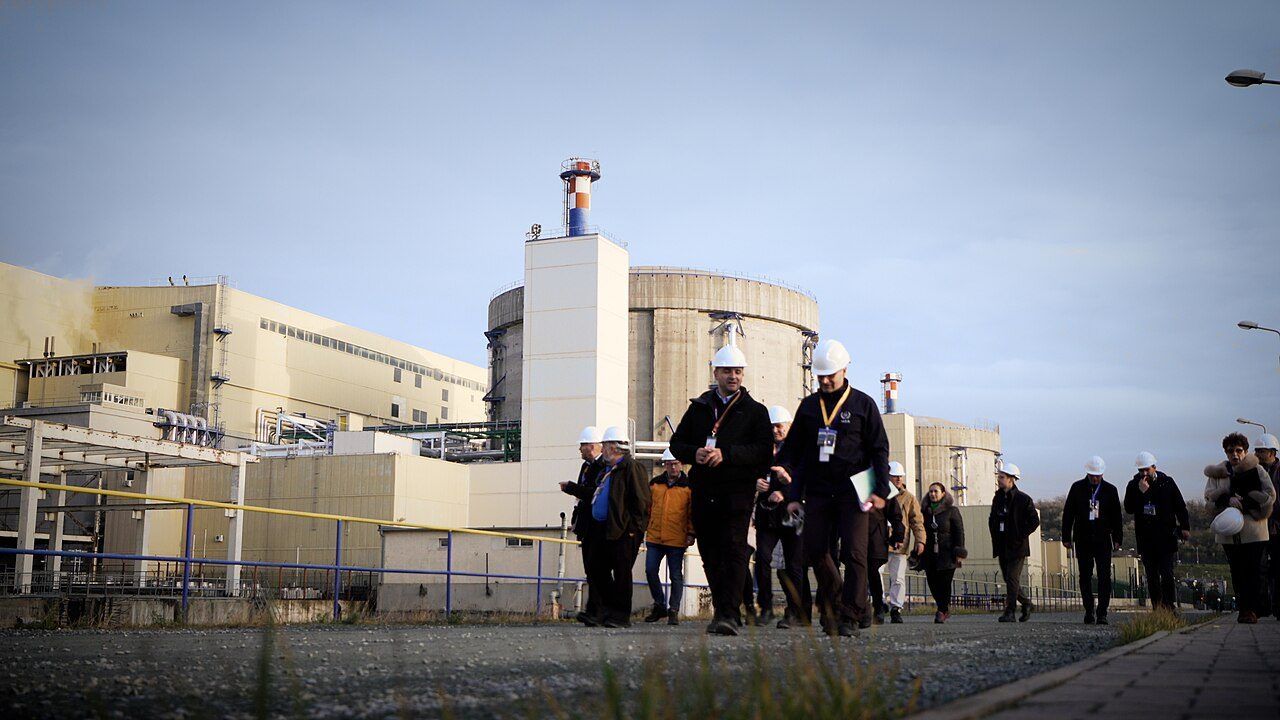
AtkinsRéalis, the State of Indiana and Hoosier Energy Rural Electric Cooperative have signed a memorandum of understanding to explore a campus of up to eight CANDU reactors that could provide up to 6.0 GW of baseload generation, AtkinsRéalis announced on October 19, 2026. In the company's words, the MOU "will facilitate initial discussions to evaluate potential deployment scenarios for CANDU nuclear technology in the state." The release names no site, cost estimate or schedule for the plant.
It was Indiana's second nuclear study of October 19. AEP, X-energy and Amazon announced a 960 MW Xe-100 feasibility study for a former coal site in Sullivan County the same day; the CANDU proposal is more than six times that by capacity, by our arithmetic. Gov. Mike Braun's public schedule put him at the Global Nuclear Energy Economic Summit in Indianapolis at 4:45 p.m. ET that day "for a nuclear technology announcement and fireside chat to discuss Indiana's nuclear and economic future."
"By exploring this technology, we're evaluating a path to deliver more affordable power while creating the kind of long-term, skilled jobs that strengthen Hoosier communities," Braun said in the release. Hoosier Energy, a not-for-profit generation and transmission cooperative whose member distribution co-ops in central and southern Indiana and southeastern Illinois serve more than 700,000 member-consumers, describes its own role modestly. "Through this MOU, Hoosier Energy is pleased to offer our expertise as part of early discussions to evaluate whether advanced nuclear energy could be an option worth considering," said President and CEO Donna Walker.
Gas first, and a long list of conditions
The first megawatts out of a nuclear memorandum may be gas-fired. The evaluation also considers building several smaller simple-cycle or combined-cycle gas turbine plants ahead of the reactors "to accelerate the power deployment," per the release, and would look at gas-to-nuclear conversion at retired or retiring generation sites. AtkinsRéalis sets the evaluation against rising US electricity demand from advanced manufacturing, artificial intelligence and data centers, new industrial development and broader electrification.
The parties will assess site selection, commercial structures and power purchase agreements, workforce development and grid integration for a program of up to 6.0 GW. The MOU itself, the company says, ties any project timeline to site selection, financing, utility or offtake arrangements, regulatory and licensing activities, environmental review, transmission and interconnection planning, community and stakeholder engagement, and other diligence and approvals. That is most of the list of things a power plant needs.
Indiana has been working on the community end of that list. On October 16, Braun announced that Spencer County was the first in the state to earn Tier 1 "Nuclear Aware" status under Indiana's Advanced Nuclear Ready Communities program. The state is also the planned home of the Navy's microreactor at Crane.
Which CANDU, and which license
Which CANDU Indiana would get is still open; the release does not name a design. Its background section describes two: the Enhanced CANDU 6 (EC6), a Generation III+ pressurized heavy water plant in the 700 MW class, and the CANDU MONARK. The EC6 is the one in front of US regulators. The NRC's project page says the agency is in pre-application activities with AtkinsRéalis, through its subsidiary Candu Technologies, on the EC6 under docket 99902172, and that the company submitted its regulatory engagement plan on June 26, 2026.
That plan gives the EC6 a target gross output of 730 MWe to 745 MWe, depending on site conditions and equipment choices. Eight of them would come to roughly 5.8 GW to 6.0 GW gross, by our arithmetic, which fits the MOU's ceiling. Each unit would sit well above the 300 MW(e) per-unit ceiling the International Atomic Energy Agency puts on a small modular reactor. CANDU also skips enrichment: it "is a heavy water reactor that uses natural uranium, eliminating the need for uranium enrichment," the plan says.
Where the EC6 is headed at the NRC depends on which document you read. The agency's page frames the engagement as preparation for "a design certification application for the Enhanced CANDU 6 (EC6)." AtkinsRéalis's plan describes a construction permit application under Part 53 or Part 50, to be developed and submitted once a customer is identified; before that point, the company intends to submit licensing topical reports and white papers. The Indiana release does not call Hoosier Energy or the state a customer.
The pre-application work has a schedule. AtkinsRéalis says the first public NRC meeting on the licensing process was held in August 2026 and that the first of seven planned topical reports, covering its quality assurance program, has been submitted. The plan's engagement table puts principal design criteria at about the fourth quarter of 2026 and licensing basis events at about the first quarter of 2027.
The EC6 also wants the advanced-reactor rate. The plan asks the NRC to treat it as "an advanced nuclear reactor eligible for the reduced hourly fee rate," and the same document says its nuclear steam plant is based on the Qinshan Phase III CANDU 6 plant in China, whose two units entered service in 2002 and 2003.
Outlook
If the engagement plan's approximate dates hold, the NRC record should show principal design criteria work for the EC6 in the fourth quarter of 2026 and licensing basis events in the first quarter of 2027. Neither would place a reactor in Indiana. The plan holds the construction permit application until a customer is identified, so the clearer sign that the Indiana study has moved past discussion would be a named site and an offtake arrangement, two of the conditions the MOU lists for any project timeline. If the parties pursue the gas turbine plants the evaluation considers, those could reach the grid first.
⚠ The Outlook extrapolates from AtkinsRéalis's June 26, 2026 regulatory engagement plan filed with the NRC (approximate engagement dates of 4Q2026 for principal design criteria and 1Q2027 for licensing basis events; a construction permit application once a customer is identified) and from the October 19, 2026 release's list of conditions for any project timeline (including site selection and utility or offtake arrangements) and its statement that the evaluation considers gas turbine plants in advance of the nuclear plants. It adds no dates or figures beyond those documents.
Sources
Primary
- AtkinsRéalis, the State of Indiana and Hoosier Energy Partner to Advance U.S. Energy Goals with Evaluation of CANDU® Nuclear Technology Deployment · AtkinsRéalis (via PR Newswire)
Supporting
- Candu Technologies, Inc. Proposed Regulatory Engagement Plan (EC6), ML26177A190 · AtkinsRéalis / Candu Technologies, Inc. (NRC ADAMS)
- AtkinsRéalis Enhanced CANDU 6 · U.S. Nuclear Regulatory Commission
- VIDEO: Gov. Braun Announces Milestone Met in Push for Affordable Energy · Office of Gov. Mike Braun (State of Indiana)
- Governor Braun Public Schedule Week of Oct. 19 · Office of Gov. Mike Braun (State of Indiana)
Copies of cited sources are retained where available. If a link no longer resolves, request a copy at contact@theduckcurve.com.