 The Duck Curve
The Nuclear Company proposes up to six AP1000s on Kentucky's Ohio River
It holds a land option but no NRC or PJM application, power buyer or federal loan; the release aims to start construction in 2028, while the project site, which the company says governs, publishes no schedule.
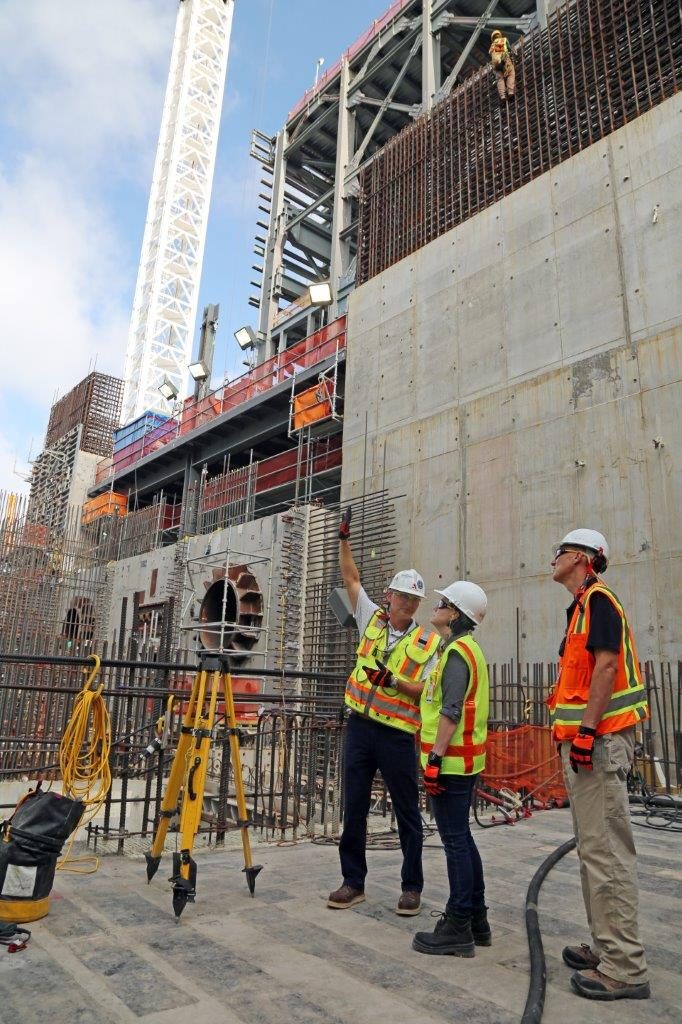
The Nuclear Company wants to put up to six Westinghouse AP1000 reactors, about 6.6 gigawatts, on one stretch of the Ohio River. The company announced Prosperity One on October 21, 2026, a proposed nuclear campus at Carrs Bottom in Lewis County, Kentucky. Per the release, it would be Kentucky's first commercial nuclear power project and, if fully constructed, the largest nuclear power campus in the United States. Planning starts with two units, the company's proposal page says, and later units would each need their own decision.
On the company's own comparison, the size claim holds. The project site says six units would have more generating capacity than any operating US nuclear station, setting about 1,100 MW per unit against Vogtle in Georgia at 4,530 MW and Palo Verde in Arizona at 3,937 MW, from Energy Information Administration net summer capacity. Vogtle's total includes the only two AP1000s running in the US, Units 3 and 4, which entered commercial operation on July 31, 2023 and April 29, 2024 (NRC renews AP1000 design certification with Vogtle-based Revision 20). Prosperity One proposes three times that many on a single riverbank.
What is in hand, and what is not
The land is the part that exists. The release says the company has site control and that Sam Howard, a lifelong Lewis County resident, owns the site and has partnered on the project; the proposal page describes an option on land at Carrs Bottom from a local landowner, with the additional land a full campus would need still being evaluated. "I have nine grandchildren, and all of them live in Lewis County. I want them to have the opportunity to stay," Howard said in the release.
Nearly everything else is ahead. The company's own October 21 update is unusually direct: "No license, grid-connection agreement or federal loan has been awarded or approved. No Nuclear Regulatory Commission or PJM application has been filed. No power buyer has been announced." The release lists the first work as site characterization, geotechnical investigations, environmental assessments, transmission interconnection planning and preparation for federal nuclear licensing, and the proposal page lists the cooling design, the owners and financing, and the grid connection point as not yet decided.
Whether construction starts in 2028 depends on which of the company's documents you read. The release says the company will engage the NRC "with the objective of obtaining the necessary approvals to begin construction in 2028." The update says "We are not publishing a construction schedule," and the reporters' page lists "A construction schedule or start date" under what the company can't say yet. That same page sets a house rule: "The news release is conformed to this site. If the two ever differ, the site wording is correct." By that rule, the date in the release yields to a site that has none. The process page shows its ten steps "without dates on purpose," with site characterization, "including about two years of on-site weather data," ahead of the license application.
The company's chief nuclear officer has been through an AP1000 build. Joe Klecha held construction and operational readiness leadership roles at Vogtle Units 3 and 4, per the release, which also says the company's services division has performed maintenance at more than 40 percent of America's current operating nuclear power facilities. On the design's lineage, the site's AP1000 page notes that Shippingport, the first full-scale US nuclear plant, upriver on the Ohio, was also a Westinghouse-built pressurized-water reactor, then adds: "That is history, not a partnership."
The county and the money
Lewis County residents were told there was no project 18 days before one arrived. The release says the county will be among Kentucky's first to request designation as a nuclear ready community from the Kentucky Nuclear Energy Development Authority, after county leaders unanimously launched the effort in July 2026, held public input meetings, and in October 2026 voted to submit the county's filing. At the public meetings on August 6 and October 3, the company's own answer says, "residents were told Lewis County did not have an active nuclear project," and none had been proposed to the county.
The designation itself approves no plant. The authority's process asks for at least two public educational meetings, one or more sites the state Cabinet for Economic Development recognizes as suitable for nuclear energy-related projects, and resolutions from the county and all its cities or a countywide ballot initiative. A designated county gets, per the authority's 2025 annual report, priority consideration in its grant program and "enhanced visibility when nuclear energy companies evaluate potential Kentucky sites." The proposal page lists Lewis County's designation as "Begun, not awarded."
There is a federal program built for projects shaped like this one. On June 23, 2026, Westinghouse said the Energy Department's Office of Energy Dominance Financing had made a conditional commitment of $17.5 billion to finance long-lead items for up to 10 AP1000 units, with Westinghouse partnering with up to five utilities or energy companies on projects of two reactors each. Westinghouse said it had signed letters of intent with seven potential partners with identified sites, without naming them. Prosperity One's two-units-first plan fits that shape, but neither the release nor the project site mentions a Westinghouse agreement or that program. The site's answer on who pays is "private investment, and possibly federal financing programs," and "Nothing has been awarded to this project."
That makes Prosperity One the inverse of the US-Korea Project Power framework, which earmarked up to $120 billion for six AP1000s and two APR1400s with no sites named (US and Korea earmark up to $120B for eight reactors, with no sites named). Here there is a site and no money. The licensing path is better marked than it was: the NRC is set to renew the AP1000 design certification on a Vogtle-based revision aimed at future applicants, and NRC staff's preliminary recommendation in a draft environmental impact statement is to license Fermi America's four Texas AP1000s (NRC draft EIS preliminarily backs Fermi America's four Texas AP1000s). Prosperity One has filed nothing with the NRC; the proposal page lists pre-application engagement as planned.
Outlook
The next markers are local and regulatory rather than financial. The county's filing goes to the authority, whose advisory board approves designations, and the process page puts early NRC engagement after the current site studies. The 2028 construction target in the release would have to fit site characterization, including the roughly two years of on-site weather data the process page describes, a license application and NRC review, PJM studies and financing ahead of it. The company's own site declines to date any of those steps, and by its own rule that is the version to go by.
⚠ The Outlook extrapolates from the company's release (2028 construction target), its project process and proposal pages (undated steps, about two years of on-site weather data before a license application, NRC pre-application engagement planned), and the Kentucky Nuclear Energy Development Authority's designation process.
Sources
Primary
- The Nuclear Company Announces Prosperity One, a 6.6 Gigawatt Nuclear Power Campus in Lewis County, Kentucky · The Nuclear Company (PR Newswire)
Supporting
- Nuclear-Ready Community Designation Process · Kentucky Nuclear Energy Development Authority
- Kentucky Nuclear Energy Development Authority 2025 Annual Report · Kentucky Nuclear Energy Development Authority
- Westinghouse Announces Department of Energy Partnership to Jumpstart Large-Scale Nuclear Supply Chain · Westinghouse Electric Company
- For Reporters · The Nuclear Company (Prosperity One project site)
- Project Process and Timeline · The Nuclear Company (Prosperity One project site)
- The AP1000 · The Nuclear Company (Prosperity One project site)
- Why now, when the county said there was no project? · The Nuclear Company (Prosperity One project site)
- Who pays to build it? · The Nuclear Company (Prosperity One project site)
- Prosperity One: Proposed Nuclear Energy Campus in Lewis County, Kentucky · The Nuclear Company (Prosperity One project site)
- The Proposal · The Nuclear Company (Prosperity One project site)
- What was announced today, and what was not · The Nuclear Company (Prosperity One project site)
Copies of cited sources are retained where available. If a link no longer resolves, request a copy at contact@theduckcurve.com.