 The Duck Curve
US and Korea earmark up to $120B for eight reactors, with no sites named
Seoul caps the money at $30 billion per two-unit plant, and a $10 billion year-end advance for reactor vessels and other long-lead items still needs a review and a National Assembly report.
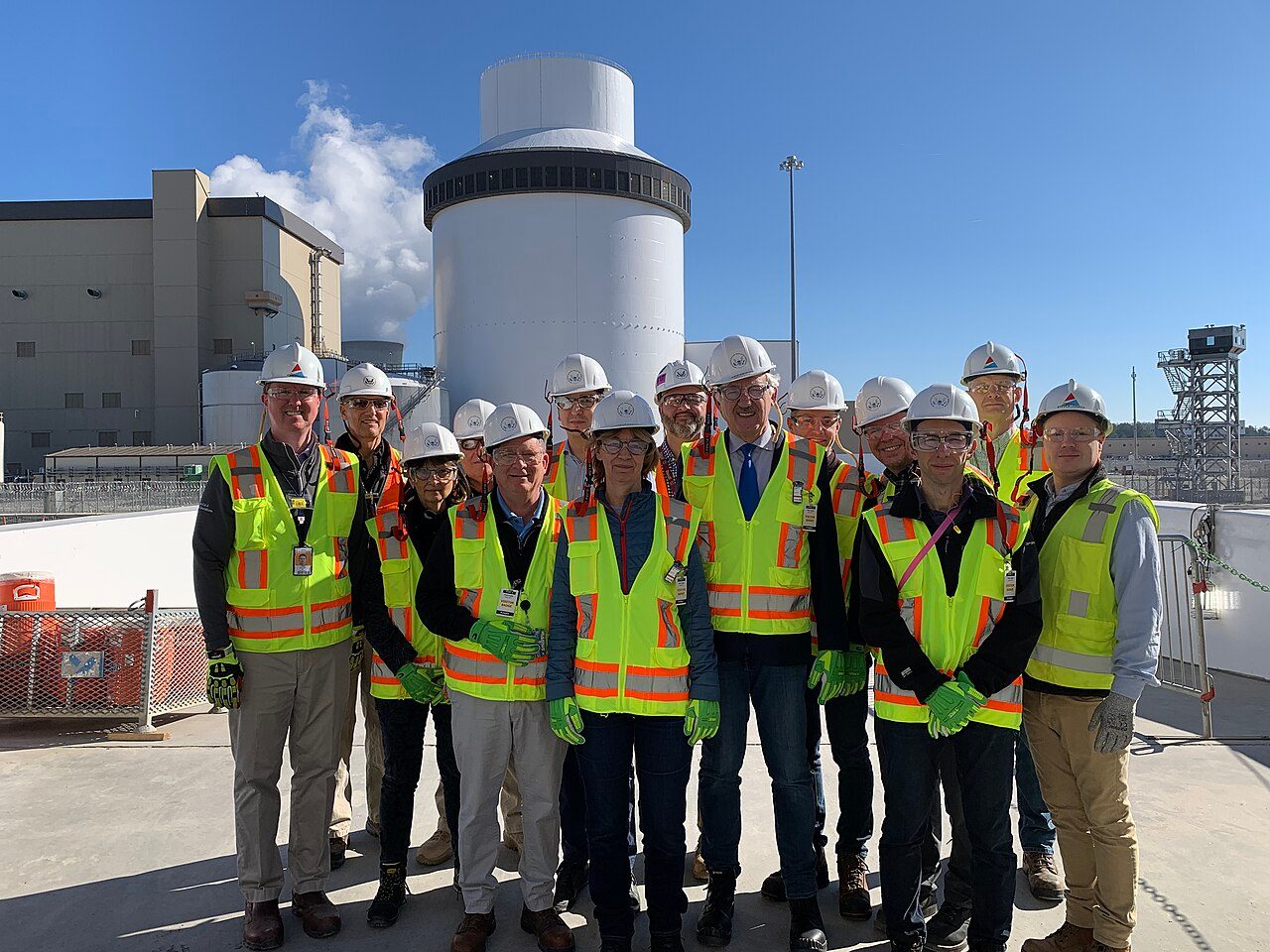
South Korea and the United States announced on September 30, 2026 (October 1 in Seoul) a framework called Project Power to build eight large reactors in the US, six Westinghouse AP1000s and two Korean APR1400s, with $120 billion of the $200 billion ceiling on Korean investment under a November 2025 strategic investment memorandum. Per the joint release and fact sheet, $100 billion of that is for construction (overnight) costs and $20 billion is contingency that counts toward the investment total, and the two governments agreed to cooperate on transferring a $10 billion advance payment by the end of 2026, "aimed primarily at the immediate purchasing of long-lead items." The release lists the signatories as including both governments, Westinghouse Electric Company, Korea Electric Power Corporation (KEPCO) and Korea Hydro & Nuclear Power (KHNP); the US Embassy in Seoul carries the same text.
The framework stops short of projects. The joint fact sheet gives the location as "United States (specific sites to be specified)" and says the parties "will develop and announce individual projects separately as sites, schedules, and commercial terms are finalized." Korea's Ministry of Economy and Finance says "no specific projects have yet been finalized," that each will go ahead only after a commercial reasonableness review and National Assembly procedures, and that the framework "is expected to be signed" by the five parties, a more tentative tense than the joint release's list of signatories. Westinghouse's shareholders, Brookfield and Cameco, both say the terms are non-binding and subject to final negotiations, and Cameco describes the plan as up to eight reactors, including up to two APR1400s. No document from either government or either company names a reactor owner, a utility or a buyer for the power. The gas plant announced alongside it, Project Star in Texas, came with a county, a developer and an operating date.
Both governments say the program is meant to contribute to the goal in the May 2025 nuclear executive order of having 10 new large reactors with complete designs under construction by 2030; eight reactors would be most of that count. Executive Order 14302, signed May 23, 2025, directs the Department of Energy to prioritize work with industry toward that goal in the same sentence as 5 gigawatts of power uprates to existing reactors, the category of projects like the 190 MW Calvert Cliffs uprate Constellation announced on September 30.
What the money buys
The money comes in pairs. Korea's trade and industry ministry, in briefing notes that go further than the joint text, caps the investment at up to $30 billion per two-unit plant, $25 billion of construction cost plus $5 billion of contingency, and says the contingency counts toward the $200 billion even if it is never spent. If a pair runs past $30 billion, the ministry says, the strategic investment fund bears no additional cost. It does not say who would.
The same notes set a build order: two AP1000s first, then two APR1400s and two AP1000s, then the last two AP1000s, with "reasonable efforts" to keep the first two stages' engineering, procurement and construction contracts within six months of each other. Cameco's account agrees on the opening move, deployment "beginning with" two AP1000s, and Brookfield's describes the six AP1000s as three two-unit plants.
The advance is the part with a date on it. Seoul's version is softer than the joint text's "agreed to cooperate": both ministries say the two countries discussed paying up to $10 billion by year-end to lock in long-lead items such as reactor vessels, steam generators and reactor coolant pumps, subject to a commercial reasonableness review and a report to the National Assembly. By our arithmetic that is half of the $20 billion annual ceiling the ministry says the binding operating agreement sets. The reactors are behind the gas plant in that process: when the government reported to the National Assembly on September 22, Encinal was the first project and the eight reactors and Alaska LNG were classed as needing further consultation, Yonhap reported. Brookfield calls the framework separate from the Department of Energy's June 2026 partnership, which includes a $17.5 billion conditional loan arrangement for long-lead items.
Westinghouse's side of the ledger
Westinghouse collects even on the two Korean reactors. Brookfield says Westinghouse benefits on the two APR1400s from an upfront payment, a guaranteed scope of work and a fuel-fabrication contract, and that the framework "provides for a cornerstone equity investment of between 5% and 10% in Westinghouse by Korea." The governments are vaguer: the joint release says "potential investment in a significant minority interest" by Korean companies "will be pursued," and the fact sheet lists that item's participants as "Korean Companies (TBD)." Cameco says it does not expect any such stake to affect its own ownership interest. Both shareholders say the reactors are to go on federal sites designated by the US government (Cameco: "expected to be deployed" there if the framework is concluded); the governments' release and fact sheet leave the sites open.
The two APR1400s need a legal exception. Cameco says the framework contemplates a one-time waiver under the 2025 settlement of Westinghouse's intellectual property dispute with KEPCO and KHNP, covering up to two APR1400s, with compensation of "approximately US$2 billion of value per APR1400 reactor" through licensing, engineering and procurement services, subcontracting and long-term fuel fabrication. Seoul tells the story as a win of its own: the ministries say the settlement had kept the APR1400 out of the US, that Korean outreach and negotiation opened the door, and that it will be the first foreign reactor design built there. Each side counts the same two reactors as its own gain.
Korean builders are already in US nuclear at a smaller scale: Samsung C&T committed up to $100 million to Kairos Power on September 21, 2026. Brookfield places this framework as the next step in an October 2025 partnership among the Commerce Department, Westinghouse, Brookfield and Cameco to fund at least $80 billion of Westinghouse reactors.
Outlook
The year-end advance is the first test with a date. If it follows the path Seoul used for Project Star, it needs the reactors to clear a commercial reasonableness review and a report to the National Assembly before December 31, and under the ministry's build order the first contracts it would feed are for a pair of AP1000s at a site not yet named. How many of the eight could be under construction by 2030 depends on sites, owners and definitive agreements that none of the September 30 documents supplies.
⚠ The Outlook extrapolates from Korea's trade and industry ministry briefing notes of October 1, 2026 (the advance's review and National Assembly conditions and the build order), the finance ministry's account of the domestic procedures Project Star completed, Yonhap's September 27, 2026 report of the September 22 National Assembly briefing, and the 2030 goal in Executive Order 14302.
Sources
Primary
- Korea and the United States Announce Historic Strategic Investment Projects (joint press release and joint fact sheet) · Government of the Republic of Korea and Government of the United States (Korean government copy, via korea.kr)
Supporting
- Executive Order 14302: Reinvigorating the Nuclear Industrial Base · Federal Register (Executive Office of the President)
- 늦어지는 대미투자 발표…산업부 "미국 내부 절차 남아" · Yonhap News Agency
- U.S. - Korea Framework Advances Deployment of Westinghouse Nuclear Technology in the United States (Exhibit 99.1) · Brookfield Asset Management Ltd. (SEC filing)
- Cameco acknowledges United States and Republic of Korea announcement of Framework for the Deployment of Nuclear Power (Exhibit 99.1) · Cameco Corporation (SEC filing)
- Korea and the United States Announce Historic Strategic Investment Projects · U.S. Embassy & Consulate in the Republic of Korea
- Korea and U.S. Announce Plans to Advance Strategic Investment Projects · Ministry of Economy and Finance, Republic of Korea (via Korea.net)
- (참고자료) 한미 전략투자 프로젝트 추진 계획 발표 · Ministry of Trade and Industry (산업통상부), Republic of Korea
Copies of cited sources are retained where available. If a link no longer resolves, request a copy at contact@theduckcurve.com.