 The Duck Curve
NRC renews AP1000 design certification with Vogtle-based Revision 20
The direct final rule takes effect December 28, 2026 unless significant adverse comments arrive by November 13, renewing a certification that was not due to expire until 2046.
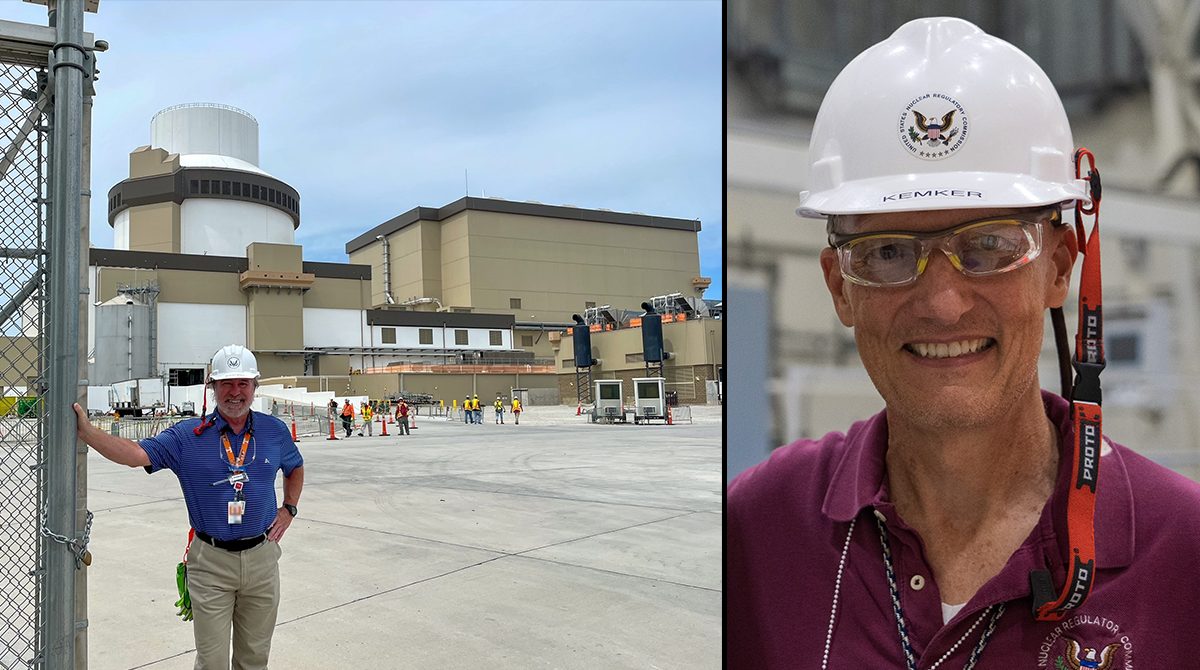
The AP1000 that Vogtle Units 3 and 4 were actually built to is about to become the AP1000 on file. The Nuclear Regulatory Commission published a direct final rule on October 14, 2026 that renews Westinghouse's AP1000 design certification and incorporates Revision 20 of its design control document, which the NRC says updates the design "to represent a current, construction-validated design." The rule takes effect December 28, 2026, unless the NRC receives significant adverse comments by November 13, 2026 under docket NRC-2026-2377. The renewed certification can be referenced for 40 years from that effective date, to December 2066 by our arithmetic.
The renewal comes nearly two decades early. The current certification expires on February 27, 2046, per the rule, and NRC rules allow a renewal request no more than 36 months before expiration, so the Commission granted an exemption from that limit in July 2026. Westinghouse's March 27, 2026 request asked for approval of Revision 20 "within the 2026 calendar year." An uncontested rule delivers it with three days to spare.
What Revision 20 carries
Vogtle's road from license to power left a long paper trail, and Revision 20 is where it lands. The NRC issued Southern Nuclear Operating Company's combined licenses for the two units on February 10, 2012. Over licensing, construction and operation, Southern Nuclear submitted over 180 license amendment requests covering design changes, construction-discovered issues and operational refinements, and made numerous further departures that did not need prior NRC approval. Unit 3 entered commercial operation on July 31, 2023 and Unit 4 on April 29, 2024. Revision 19, the version the rule has carried since December 30, 2011, predates the licenses.
That history is the NRC's case for skipping a fresh technical review. Its verification review found nothing in Revision 20 that requires additional technical review: every change was either previously reviewed and approved by the NRC or made under a process that does not require NRC approval. Because the agency considers the action non-controversial, it is using the direct final rule procedure, the route it also used for the AP1000's five-year extension in 2021. Revision 19 stays in the rule too, because several combined license holders were licensed to it, and future applicants may reference either revision.
The rule also writes Vogtle's change process into the certification. In 2018 the NRC granted Vogtle amendments that replaced the change process for Tier 2* information, the design details flagged with an asterisk in the design control document, with the ordinary Tier 2 process plus nine criteria that decide whether a license amendment is needed. Under the revised appendix, any applicant referencing the AP1000 may depart from Tier 2* information without NRC approval unless one of nine listed conditions applies, such as changing the reactor coolant pump from a canned motor to another type, or changing the steel faceplates, internal trusses, tie bars or headed studs of the steel-concrete module walls in the nuclear island or shield building. The NRC says this avoids unnecessary licensing actions for applicants referencing either revision.
What would stop it
A direct final rule runs on silence. If a significant adverse comment arrives by November 13, the NRC will publish a notice withdrawing the rule and address the comments in a later final rule on the companion proposed rule published the same day; absent significant modifications requiring republication, there would be no second comment period. The rule counts a comment as significant and adverse if it opposes the rule with a reason that requires a substantive response, proposes a change without which the rule would be ineffective or unacceptable, or causes the NRC to make a change other than an editorial one. Anyone who needs Westinghouse's proprietary or security-related material to comment has 10 days from publication to request access.
The environmental review is where the NRC found a gap. The NRC's assessment, which found no significant impact, is limited to severe accident mitigation design alternatives. Westinghouse kept its earlier cost-benefit analysis of 15 such alternatives and found them still not cost-beneficial, but did not evaluate the effect of current dollar values. The NRC revised its dollar-per-person-rem value in 2022, after reviewing Revision 19 and before Westinghouse submitted Revision 20, so the agency reran the numbers itself at $7,300 per person-rem, with previously undiscounted cost parameters inflated to 2026 dollars, and the conclusions held. Future applications relying on Revision 20 will need to inflate those cost parameters themselves; the rule writes that into the appendix.
Who it is for
The update is aimed at the next AP1000s, not the two already running. In SECY-26-0034, dated March 9, 2026, NRC staff told the Commission that "the as-built configuration and cumulative licensing changes at Vogtle have not yet been formally incorporated into a revised AP1000 Design Control Document (DCD) suitable for direct use by future applicants." Staff expected Vogtle 3 and 4 to be the reference plants for future AP1000 applications and anticipated additional interest in AP1000 construction projects once the document was revised. The same paper maps routes back for older projects, including the partly built V.C. Summer Units 2 and 3 in South Carolina, whose combined licenses the NRC terminated at the holders' request on March 6, 2019.
Candidates exist on paper. Fermi America has an application for four AP1000s in the Texas Panhandle, whose draft environmental impact statement the NRC noticed on October 9, 2026, and the US–Korea Project Power framework counts six AP1000s with no sites named. The rule itself names no pending combined license application; its stated aim is to give future applicants an updated, standardized design basis and avoid unnecessary re-review.
Sources
Primary
- AP1000 Design Certification Renewal (direct final rule and issuance of environmental assessment), FR Doc. 2026-21030 · U.S. Nuclear Regulatory Commission (Federal Register)
Supporting
- SECY-26-0034: NRC Regulatory Pathways and Licensing Readiness for Near Term Large Light-Water Reactor Deployment (ML25351A230) · U.S. Nuclear Regulatory Commission
- AP1000 Design Certification Renewal Request (DCP_NRC_260001, ML26086A409) · Westinghouse Electric Company
- AP1000 Design Certification Renewal (proposed rule and environmental assessment), FR Doc. 2026-21031 · U.S. Nuclear Regulatory Commission (Federal Register)
Copies of cited sources are retained where available. If a link no longer resolves, request a copy at contact@theduckcurve.com.