 The Duck Curve
NRC draft EIS preliminarily backs Fermi America's four Texas AP1000s
The applicant-written draft rates construction traffic on a 363-vehicle-a-day farm road LARGE and names more on-campus gas as the only reasonable alternative; comments close November 23.
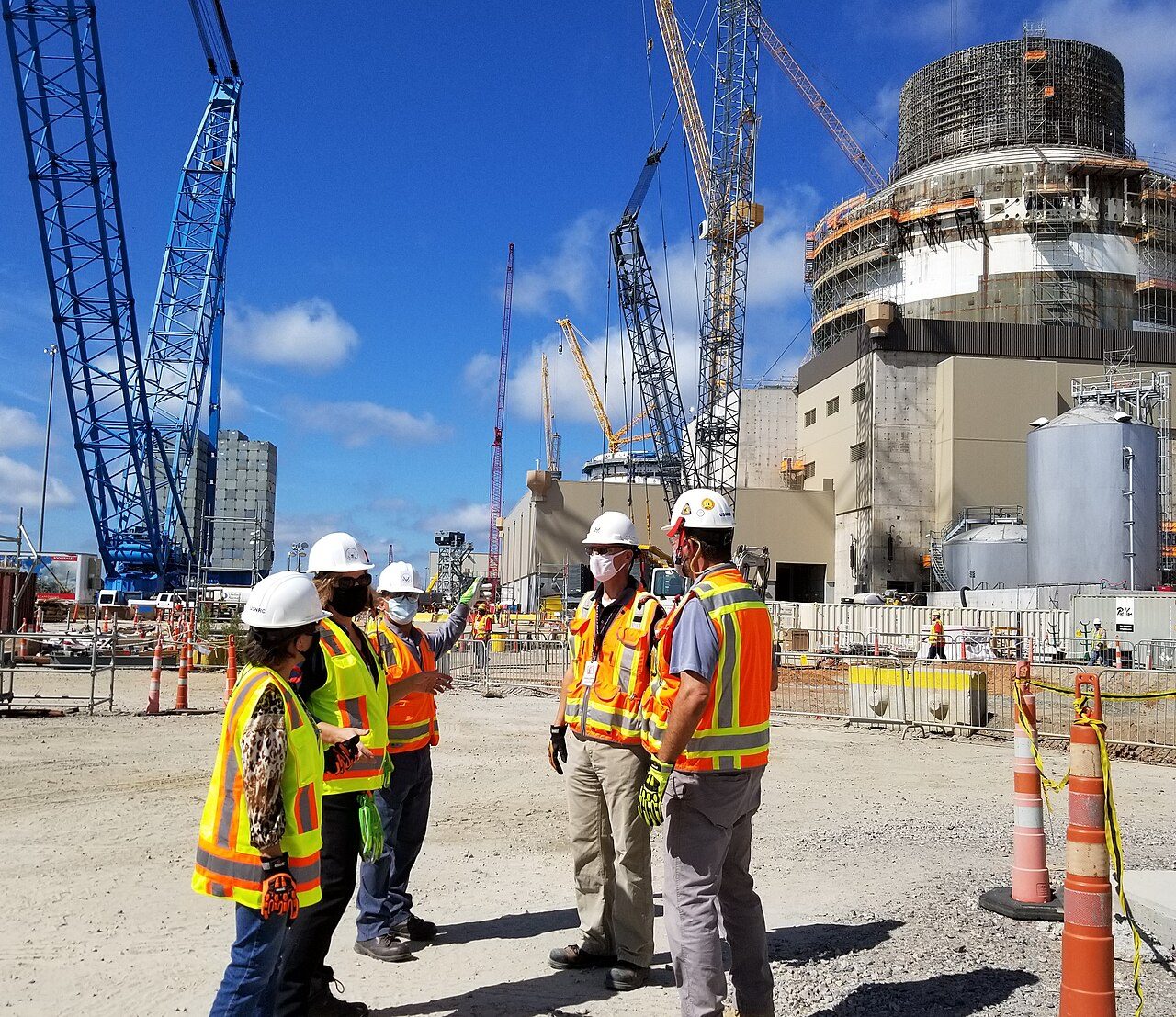
Fermi America's plan for four AP1000 reactors in the Texas Panhandle has a draft environmental verdict, and it is favorable. In a draft environmental impact statement noticed in the Federal Register on October 9, 2026, Nuclear Regulatory Commission staff's preliminary recommendation is to issue Fermi America a combined license for four AP1000 reactors, Project Matador Nuclear Units 1–4, "contingent upon successful completion of the safety review and unless safety issues mandate otherwise." The units would sit on Fermi's Project Matador campus in Carson County, next to the Department of Energy's Pantex Plant. Comments are due November 23, 2026 under docket NRC-2026-0100.
The reactors are meant to power computers, not the grid. Per the draft, the four units "would provide 4 gigawatts (GW) of power directly used to support Project Matador," a campus planned for up to an estimated 18 million square feet of hyperscale computing space. Fermi's planned buildout is 11 GW of onsite generation, which the draft sets against a projected 2030 summer capacity of 111 GW for ERCOT, the Texas grid operator: roughly 10% of it, if the campus drew that power from the grid. The draft projects Unit 1 operating in 2032 and plans for the other 3 GW from 2034 to 2038.
The draft's author is the applicant. Under a pilot for applicant-prepared environmental documents, Fermi America prepared it and NRC staff provided "guidance, feedback and oversight," then independently evaluated it and assumed responsibility for its content. The draft attributes its recommendation to a "review team" it defines as the NRC and Fermi America; the Federal Register notice attributes it to NRC staff. Fermi had filed its own environmental report with the application in June 2025 and withdrew it in December 2025 to join the pilot. In a July 21, 2026 letter, NRC staff estimated they would need about 1,000 staff hours and $175,000 in contractor support to finish the draft and final statements, not counting the work already done.
What the draft finds
Most resource areas come out SMALL in the draft's three-step scale. The exceptions are land use and air quality during construction (MODERATE) and socioeconomics, which runs from SMALL to LARGE across construction and operation; the LARGE adverse ratings are for traffic and recreation during construction. The nuclear site would convert about 881 acres to industrial use, including about 724 acres of grassland and 148 acres of cropland.
The LARGE rating lands on a farm road. FM 683, which leads to the construction entrance, carried 363 vehicles a day in 2024; the draft expects 6,600 construction workers on two 12-hour shifts, virtually all driving, and models a peak of 6,691 cars an hour against the road's capacity of 2,980 in both directions combined. It rates the transportation impact LARGE near the site. Listed mitigations include three shift changes instead of two, alternate routes, parking away from FM 683, and "purchasing houses along construction routes." Housing during construction rates MODERATE, with peak onsite employment estimated at 8,200 over a construction period of about 12 years.
Water, the usual Panhandle question, comes out SMALL. Each unit would reject heat through its own air-cooled condenser field, so the plant "would have no demand for cooling water"; total water demand for the four units is estimated at 1.4 million gallons a day. Construction water, estimated at 2.5 million gallons a day, would come from the City of Amarillo's municipal supply, and the draft's summary table expects no groundwater use during construction or operation.
The draft rejects buying grid power for the campus, citing Project Matador's demand, and counts against solar and wind the land they would need to supply 4 GW. "Based on the above criteria, the only reasonable alternative is additional natural gas-fired units located at Project Matador." Gas is already on the campus plan: the draft describes a gas plant south of the nuclear site, permitted by the Texas Commission on Environmental Quality, whose emission sources include 90 turbines in combined-cycle mode and three in simple-cycle mode, and the NRC notes that those units add higher air emission levels than the reactors would. If the campus still needs the power, a denial in the draft's telling would get it more of what it is already building; the draft's other no-action outcome is that Fermi "would have to curtail Project Matador's data center plans."
The reactors would also not cover the campus. Even with all four AP1000s, the draft says, the remaining Project Matador energy demand "would need to be met by additional nuclear and nonnuclear power generation sources that Fermi America seeks to build on the Project Matador Campus."
Where the license stands
The license itself is further off than the draft's tidy recommendation suggests. Per the NRC's project page, last updated September 23, 2026, Fermi has submitted two of the application's three parts; the third, site-specific part is targeted for December 31, 2026, and every safety-review milestone, the mandatory hearing and the Commission decision read "TBD." The same page targets the final environmental impact statement for December 2026. The July letter says the safety review's schedule will come only after Fermi submits, and staff accept, the final portion.
The environmental schedule has already slipped. The July letter planned the draft for August 2026 and comment responses for October; the project page now targets comment responses for November, and the comment window closes November 23.
Comments go to docket NRC-2026-0100, the ID in the Federal Register notice, even though the draft's own cover prints NRC-2026-2344. The project has also changed names since it was filed: Fermi submitted the application in June 2025 as the President Donald J. Trump Advanced Energy and Intelligence Campus, Units 1–4, and renamed it in February 2026 to Project Matador, a change it called "administrative in nature." The NRC's project page address still carries the old name.
The Federal Register notice schedules no public meeting, although scoping commenters had asked for one. Fermi's AP1000s at least have an address; the six in the US–Korea framework announced September 30 still have no sites named.
Outlook
If the NRC holds its December 2026 target, the final environmental impact statement would land in the same month its project page targets for the site-specific safety part, with no safety-review schedule yet set. That would leave the safety review, not the environmental one, setting the pace for any license decision. A scoping commenter already asked for a workforce housing analysis, and with housing rated MODERATE and traffic LARGE, the construction workforce looks like a likely subject of comments in this round.
⚠ The Outlook extrapolates from the NRC project page's targets (final EIS December 2026; site-specific application part December 31, 2026; safety milestones TBD, page updated September 23, 2026), the NRC's July 21, 2026 schedule letter (safety-review schedule only after the final portion is submitted and accepted), and the draft EIS's impact ratings and scoping-comment appendix; it is our reading of those documents, not an NRC forecast.
Sources
Primary
- Fermi America LLC (dba Fermi America); Project Matador Advanced Energy and Intelligence Campus AP1000 Units 1-4; Project Matador Nuclear Units 1-4; Draft Environmental Impact Statement · U.S. Nuclear Regulatory Commission (Federal Register)
Supporting
- Request to Withdraw Fermi America Combined License Application (COLA) Part 3 Environmental Report (ML25344A247) · Fermi America
- Notification of Revised Schedule for Final Applicant Environmental Impact Statement Package and Update to Project and Unit Naming Convention (ML26055A301) · Fermi America
- Project Matador AP1000 Units 1-4 COLA review: applicant-prepared NEPA document pilot project review schedule and resource estimate (ML26189A384) · U.S. Nuclear Regulatory Commission
- Fermi America Project Matador Advanced Energy and Intelligence Campus AP1000 Units 1-4, Combined License Application · U.S. Nuclear Regulatory Commission
- Environmental Impact Statement for the Combined License Application for the Project Matador Advanced Energy and Intelligence Campus AP1000 Units 1-4, Draft for Comment (ML26261A417) · U.S. Nuclear Regulatory Commission
Copies of cited sources are retained where available. If a link no longer resolves, request a copy at contact@theduckcurve.com.