 The Duck Curve
NRC issues TVA a construction permit for a 300 MW BWRX-300 at Clinch River
Construction Permit CPAR-2 is dated September 28, 2026 and sets completion between October 1, 2031 and September 30, 2032; TVA says no construction date has been announced.
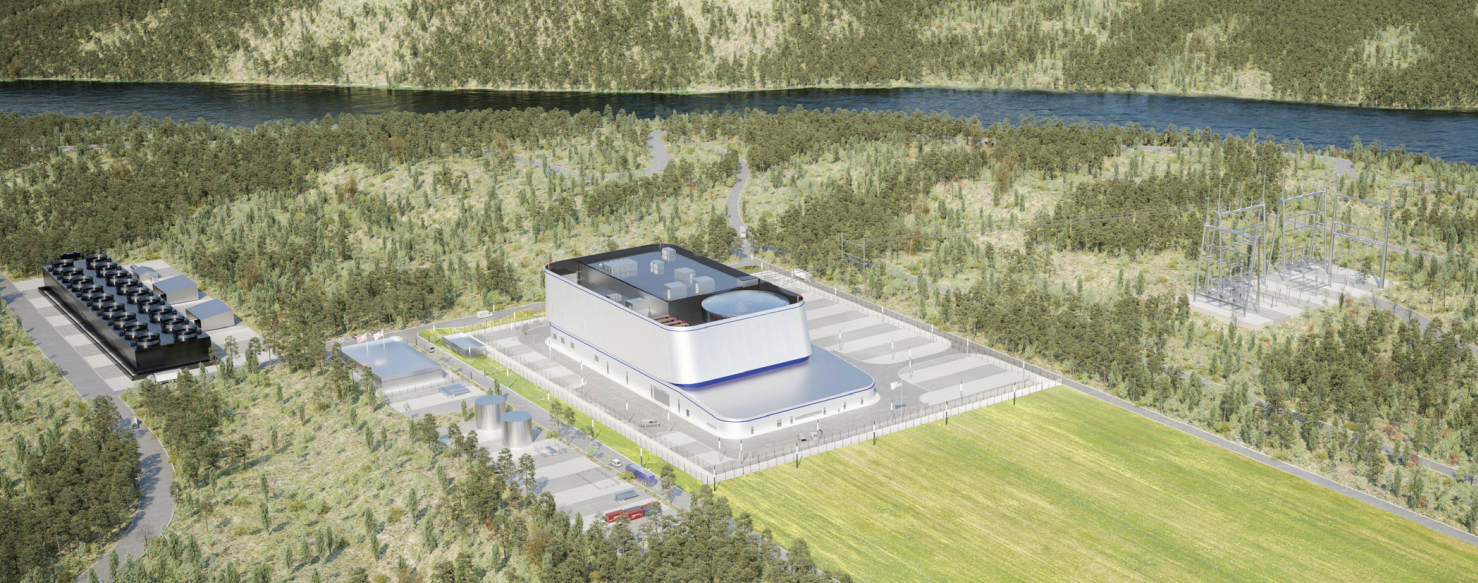
The Nuclear Regulatory Commission has issued the Tennessee Valley Authority a construction permit for Clinch River Nuclear Unit 1, a GE Vernova Hitachi BWRX-300 in Roane County, Tennessee. Construction Permit No. CPAR-2 carries a date of issuance of September 28, 2026 and the signature of Jeremy Bowen, director of the NRC's Office of Advanced Reactors; the agency announced it on September 29 as clearing the way for the nation's first commercial small modular reactor, with its review completed in 14 months.
The NRC staff's safety evaluation, issued June 25, 2026, describes the BWRX-300 as a small modular boiling light-water reactor with core heat removal by natural circulation, rated at 870 megawatts thermal and 300 megawatts electric. TVA's release says no construction date has been announced.
What the permit says
The permit sets the earliest date for completing construction at October 1, 2031 and the latest at September 30, 2032, and expires on the latter. It references Early Site Permit ESP-006, which the NRC's record of decision dates to December 19, 2019 and describes as approving a combined capacity at the site of up to 2,420 megawatts thermal and 800 megawatts electric, with the site "banked" for up to 20 years. The permit's finding D records that TVA "has not identified any safety features or components that require research and development."
Conditions include detailed geologic mapping of the excavations for safety-related structures, a one-time augmented volumetric examination of reactor isolation valve bodies during construction (Permit Condition 15-1 in the safety evaluation), and an environmental protection plan incorporated as Appendix A.
The NRC's transmittal letter to Scott Hunnewell, TVA's vice president, new nuclear program, says CPAR-2 "is effective immediately" and that a related notice will be forwarded to the Federal Register. The permit also spells out what it is not, in four prongs: a license authorizing operation will not be issued unless TVA submits the complete final safety analysis report, portions of which may be submitted and evaluated from time to time; the Commission finds the final design gives reasonable assurance that public health and safety will not be endangered by operation of the facility under procedures it approves in connection with issuing that license; the Commission finds operation will be in accordance with 10 CFR Part 51 and all applicable requirements were satisfied; and TVA submits proof of financial protection and executes an indemnity agreement under section 170 of the Act. The NRC release says a separate operating license is required before fuel load.
A 14-month review, and how the NRC counts it
Per the record of decision, TVA submitted the application by letters dated April 28 and May 20, 2025, and the NRC published its notice of acceptance for docketing in the Federal Register on July 15, 2025. The staff issued a draft supplemental environmental impact statement for comment from November 7 to December 22, 2025, the final supplement on April 6, 2026, and the safety evaluation on June 25, 2026. The NRC's Clinch River application page, last updated September 15, 2026, lists the mandatory hearing on August 13, 2026 and a construction permit decision target of "Fall 2026".
That hearing, in Oak Ridge, was the first use of what the NRC's August 5 release called its modernized mandatory hearing framework for an advanced reactor review; the same release said the agency targets construction permit decisions within 18 months as part of its modernization initiative. Chairman Ho K. Nieh said in the September 29 release: "Four months ahead of schedule is what the new NRC looks like." The agency is also rewriting its reactor rules under Executive Order 14300, a program The Duck Curve has covered.
The NRC calls Clinch River its second major reactor approval this year and does not name the first in the release. On March 4, 2026 the Commission authorized the staff to issue TerraPower's subsidiary a construction permit for the 345 MWe sodium-cooled Kemmerer Unit 1 in Wyoming, which the agency called the first commercial reactor it had approved for construction in nearly a decade. TVA's release goes further, calling Clinch River "only the second advanced reactor construction permit ever issued in the nation." The NRC's own record holds at least one earlier advanced-reactor construction permit outside that count: its Hermes 2 page records permits issued to Kairos Power on November 21, 2024 for a test reactor facility in Oak Ridge, which The Duck Curve covered when Samsung C&T agreed to provide up to $100 million of investment and in-kind engineering to Kairos Power, subject to regulatory approvals; the NRC's Kemmerer release counted commercial reactors.
The money and the fleet
TVA's release gives no cost figure for the unit. It says TVA "continues negotiations with industry partners to ensure responsible cost sharing and financial accountability throughout design and construction," and quotes interim president and CEO Mike Skaggs: "Our priority is ensuring the people of the Valley do not shoulder the costs of first-of-a-kind technology that benefits the nation and world." The Department of Energy selected TVA on December 2, 2025 for $400,000,000, half of up to $800 million in cost-shared funding across two teams; DOE says TVA plans to advance the Clinch River BWRX-300 and accelerate additional units with Indiana Michigan Power and Elementl, that Holtec Government Services plans two SMR-300 reactors at Palisades with the other $400,000,000, and that the selections will help deliver new nuclear generation in the early 2030s.
GE Vernova Hitachi's own release calls the permit the first issued in the United States for a BWRX-300 and places it in a North American sequence: Ontario Power Generation's licence to construct at Darlington in April 2025, OPG's licence-to-operate application in March 2026, and, per GE Vernova Hitachi, the first part of a construction permit application Blue Energy submitted in September 2026 for a BWRX-300 at a gas-plus-nuclear project in Texas. The Canadian Nuclear Safety Commission's Darlington page says the licence to construct is valid until March 31, 2035, that the first of its three regulatory hold points was removed on March 30, 2026 after the reactor building foundation commitments were verified, and that OPG applied on March 25, 2026 for a 20-year licence to operate, with the hearing date to be announced.
The design is the one Studsvik picked for four units in Sweden, as The Duck Curve reported on September 3, 2026.
Outlook
The permit's dates bound the next step. DOE's "early 2030s" for new generation from its selections overlaps the completion window of October 1, 2031 to September 30, 2032, but an operating license must still be applied for and granted before fuel load, and neither document says when TVA will file. Darlington offers the nearer test of how long a BWRX-300 licence-to-operate review takes: OPG filed on March 25, 2026, and the CNSC's page, modified August 25, 2026, says the hearing will be announced at a later date. The permit covers Unit 1 alone; the early site permit's 800 MWe envelope leaves 500 MWe of room by The Duck Curve's subtraction, and nothing in the documents cited here says TVA has applied for a second unit.
⚠ The Outlook extrapolates from the completion window and operating-license limitation in Construction Permit CPAR-2, the early site permit envelope in the NRC's record of decision, DOE's December 2, 2025 'early 2030s' statement, and the CNSC's Darlington page; it does not predict when TVA will start construction.
Sources
Primary
- Tennessee Valley Authority, Docket No. 50-615, Clinch River Nuclear Unit 1, Construction Permit No. CPAR-2 · U.S. Nuclear Regulatory Commission
Supporting
- Energy Department Selects TVA and Holtec to Advance Deployment of U.S. Small Modular Reactors · U.S. Department of Energy
- NRC Issues First Commercial Reactor Construction Approval in 10 Years For TerraPower in Wyoming (No. 26-028) · U.S. Nuclear Regulatory Commission, Office of Public Affairs
- Safety Evaluation Related to the Tennessee Valley Authority Construction Permit Application for Clinch River Nuclear Unit 1, Docket No. 50-615 · U.S. Nuclear Regulatory Commission, Office of Advanced Reactors
- NRC Debuts Modernized Hearing Process for Nation's First Advanced Reactor Construction Permit Review (No. 26-075) · U.S. Nuclear Regulatory Commission, Office of Public Affairs
- Darlington New Nuclear Project (CNSC facility page) · Canadian Nuclear Safety Commission
- Hermes 2 – Kairos Application (NRC application status page) · U.S. Nuclear Regulatory Commission
- Clinch River Nuclear Site Application (NRC application status page) · U.S. Nuclear Regulatory Commission
- Tennessee Valley Authority - Issuance of Construction Permit for Clinch River Nuclear Unit 1 at the Clinch River Nuclear Site (letter to Scott Hunnewell) · U.S. Nuclear Regulatory Commission
- Clinch River Nuclear Site Unit 1 Construction Permit Record of Decision · U.S. Nuclear Regulatory Commission
- NRC Approves Construction of Nation's First Small Modular Reactor (No. 26-079) · U.S. Nuclear Regulatory Commission, Office of Public Affairs
- NRC issues first U.S. construction permit for a BWRX-300 small modular reactor at Tennessee Valley Authority's Clinch River site · GE Vernova Hitachi Nuclear Energy
- TVA First U.S. Utility to Receive Construction Permit for BWRX-300 Advanced Nuclear Reactor · Tennessee Valley Authority via PR Newswire
Copies of every cited source are retained. If a link no longer resolves, request a copy at contact@theduckcurve.com.