 The Duck Curve
Terrestrial asks NRC to rule IMSR turbine side is not nuclear construction
The report tests part of a wider position: Terrestrial's annual report warns regulators may not exclude the TEF from operating-license requirements, severely limiting its pursuit of new markets with novel applications.
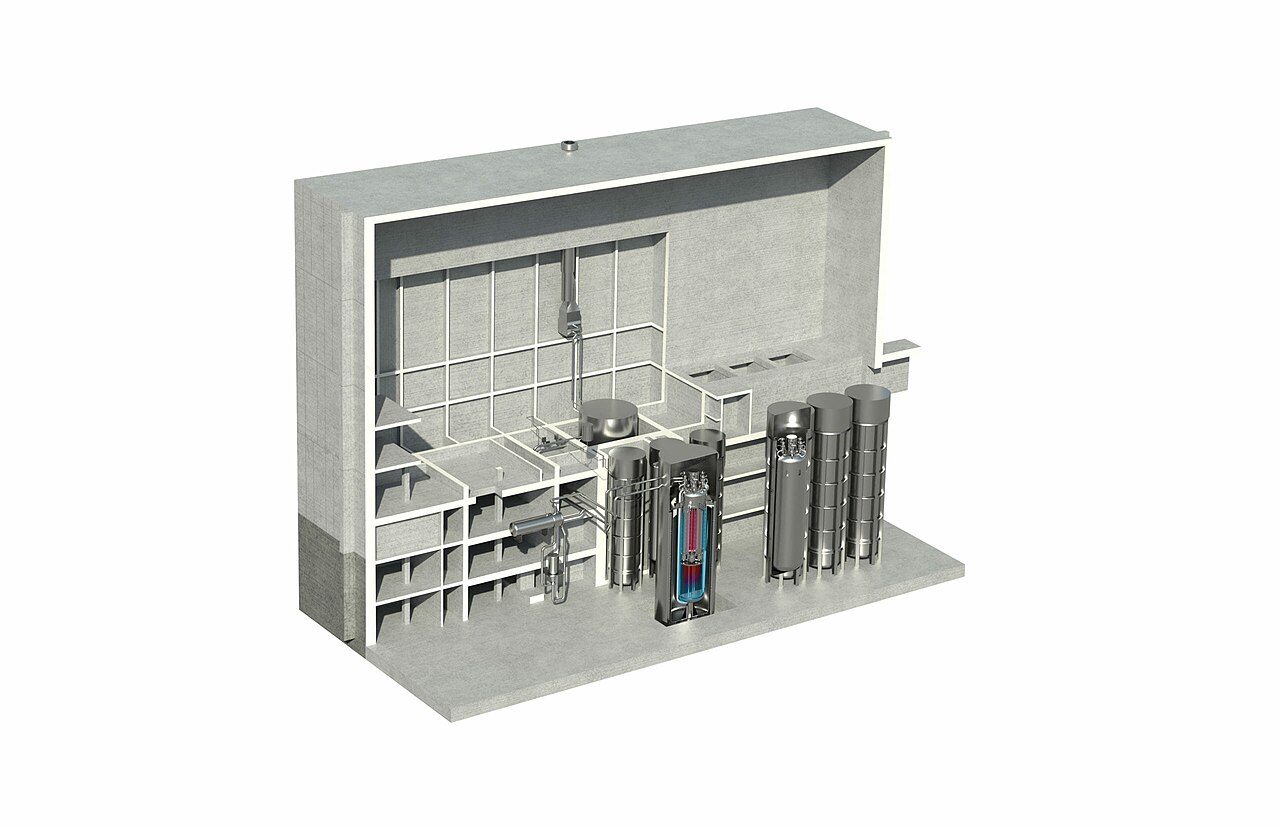
Terrestrial Energy wants the turbine half of its molten salt reactor plant treated as an ordinary industrial build. The Charlotte company said on October 8, 2026 that it has submitted a Thermal and Electric Facility (TEF) topical report to the Nuclear Regulatory Commission, asking the agency to confirm that "building the TEF is not nuclear construction under 10 CFR 50.10(a)(1)." The TEF houses the generators, turbines and steam supply systems of the Integral Molten Salt Reactor (IMSR) plant. If the NRC agrees, Terrestrial says, the TEF could be customized for each site and built and operated ahead of the plant's nuclear construction permit and operating license.
The IMSR plant is designed in two parts: a Nuclear Facility of standardized, modular nuclear systems, and the TEF, which holds the non-nuclear heat transfer, steam supply and electric systems. CEO Simon Irish said in the release that with NRC approval, "only the nuclear portion of the plant would follow the nuclear licensing timeline." The release adds that the TEF could enter commercial service first, using an auxiliary heat source such as natural gas as a bridge to nuclear power.
What the rule counts as construction
The regulation turns on what a structure is for, not what it is made of. Section 50.10 defines construction as pile driving, foundations, concrete, and in-place assembly, erection, fabrication or testing for a list of systems. Safety-related structures, systems and components (SSCs) head that list, but it also reaches SSCs "whose failure could prevent safety-related SSCs from fulfilling their safety-related function" and SSCs "whose failure could cause a reactor scram or actuation of a safety-related system."
By our reading, those two prongs, along with the one covering SSCs "relied upon to mitigate accidents or transients or used in plant emergency operating procedures," are the ones most likely to reach a turbine hall, and the report's central claims are aimed at them. Terrestrial says the submission shows the IMSR's nuclear systems do not rely on the TEF for safe operation, and that any failure originating in the TEF is isolated from them. The report draws on elements of the company's postulated initiating events (PIE) methodology, its method for identifying events that could challenge the plant's safe operation.
The same section already lets some work proceed without a permit. Its exclusions include site clearing and grading, excavation, support buildings, transmission lines, and fabrication of components away from their final location. Turbines and generators assembled in place appear on neither list, so the question for the NRC is whether the TEF's systems meet any of the definition's prongs.
What rides on the answer
Terrestrial has told investors for months that it believes the TEF sits outside nuclear regulation. Its annual report for 2025, filed March 30, 2026, says the company believes TEF systems "fall outside the scope of nuclear regulation," and its risk factors base that view on the company's understanding of nuclear regulatory requirements following its completed Vendor Design Review with Canada's regulator, the CNSC. The filing gives the generic TEF configuration as 390 MW of electricity.
The same filing lists the opposite outcome as a risk: "There is no assurance that nuclear regulators will accept the exclusion of the Thermal and Electric Facility from the operating license requirements for the IMSR Plant." If that is not the case, the filing says, the company's "pursuit of new markets with novel applications will be severely limited and will likely exclude the use of natural gas for initial thermal energy supply and as back-up during full operation of the IMSR Plant." The October 8 report puts one part of that position formally to the NRC: whether building the TEF counts as nuclear construction.
That construction case leans on an earlier report whose status the company and the agency describe differently. The TEF submission incorporates elements of what the release calls Terrestrial's "NRC-approved" PIE methodology, and Terrestrial announced on May 12, 2026 that the NRC had issued a safety evaluation approving its PIE topical report. The NRC's IMSR pre-application page, last updated September 15, 2026, still shows that report as "Under Review," while listing Terrestrial's principal design criteria topical report as "Approved for Use." The approval Terrestrial sought was for the method alone: its December 27, 2024 cover letter said approval of the final event list and each event's classification would be requested in a future license application. Approved topical reports can be referenced in later applications without re-evaluation, the October 8 release notes.
The TEF report is the company's third topical report submission of 2026, it says, after a graphite qualification methodology report submitted on September 10. Terrestrial is still listed among the NRC's pre-application projects and says it is working toward a first commercial IMSR deployment in the early 2030s. For a sense of the nuclear timeline the TEF would sidestep, the NRC completed its review of TVA's Clinch River construction permit in 14 months, by the agency's count. The wider field is tracked on our Advanced reactors in the US: SMRs and microreactors page.
Sources
Primary
- Terrestrial Energy Submits Topical Report to NRC to Confirm IMSR Plant's Thermal and Electric Facility Can Be Built and Operated Ahead of Nuclear Licensing · Terrestrial Energy Inc. (via Business Wire)
Supporting
- Submittal of Topical Report on Postulated Initiating Events for the IMSR400 - Revision A (ML25006A144) · Terrestrial Energy USA (NRC ADAMS)
- Terrestrial Energy Inc. Form 10-K for fiscal year 2025 · Terrestrial Energy Inc. (SEC EDGAR)
- NRC Issues Safety Evaluation Report Approving Terrestrial Energy's IMSR Postulated Initiating Events Topical Report · Terrestrial Energy Inc. (via Business Wire)
- Terrestrial Energy Submits Graphite Topical Report to NRC, Advancing IMSR Plant Regulatory Program · Terrestrial Energy Inc. (via Business Wire)
- Integral Molten Salt Reactor (IMSR) pre-application activities · U.S. Nuclear Regulatory Commission
- 10 CFR 50.10 License required; limited work authorization · eCFR (Office of the Federal Register)
Copies of cited sources are retained where available. If a link no longer resolves, request a copy at contact@theduckcurve.com.