 The Duck Curve
Five states ask NRC to withdraw, re-propose uranium ISR groundwater rule
Attorneys general say the proposal weakens a 2021 staff draft in at least twelve respects, ten at industry's request; Cameco wants its one-year monitoring period kept.
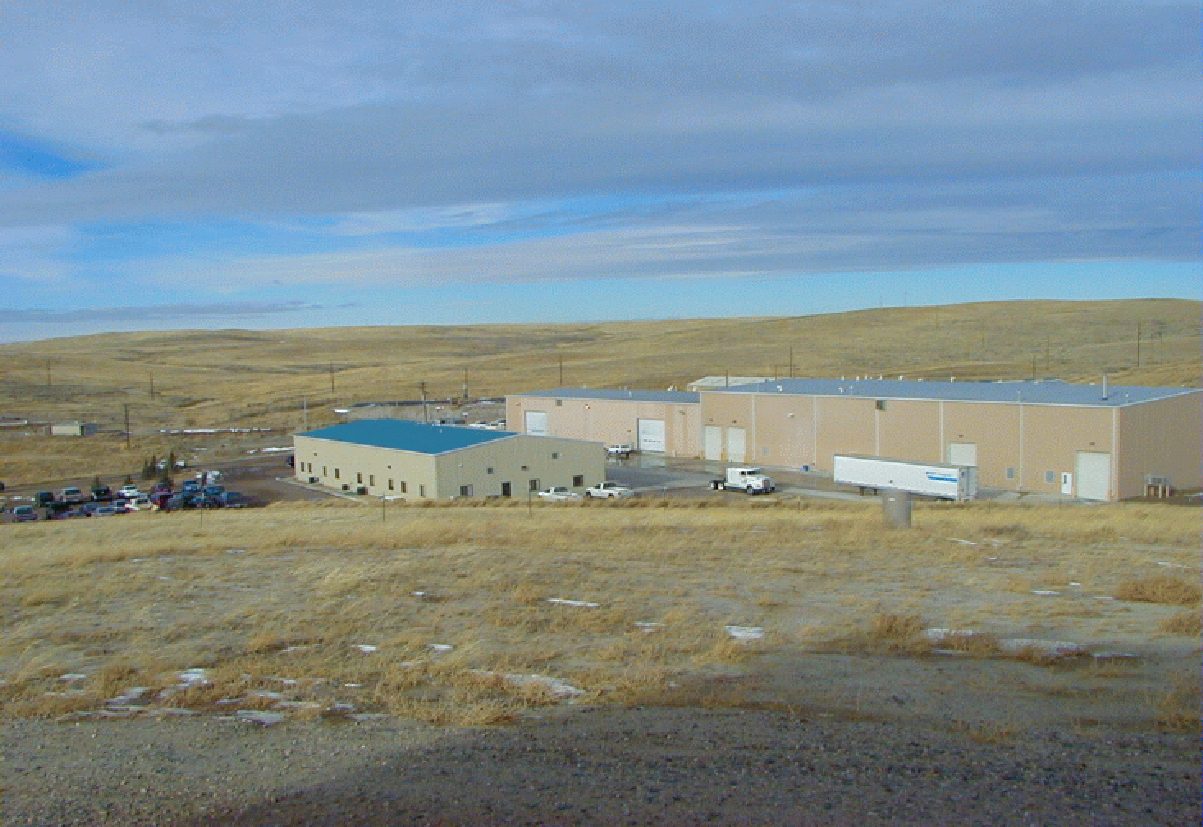
Five state attorneys general have asked the Nuclear Regulatory Commission to withdraw and re-propose its groundwater rule for uranium in-situ recovery (ISR) sites. In comments filed October 13, 2026, New Mexico, California, Colorado, Illinois and Massachusetts say the rule "proposes a materially weakened version of the 2021 staff proposal: it is altered in at least twelve respects, ten of them at the written request of three industry commenters." They also ask that its decommissioning-timeliness amendments, which reach reactors as well as materials licensees, be withdrawn in their entirety. The comment period on docket NRC-2025-1204 closed the same day, and the regulations.gov docket listed 52 comments as posted on October 14.
The rule, published in the Federal Register on September 10 at 91 FR 57728, followed the September 1 announcement covered in NRC proposes groundwater rule for uranium in-situ recovery sites. That post left open whether the 2021 draft's three years of post-restoration monitoring would survive. They did not: proposed Criterion 14(f) would require a year of quarterly sampling at each approved point-of-compliance well, which the notice describes as codifying the current practice of a minimum of one year. Its environmental finding goes further: "The NRC is not proposing to change any technical criteria, and accordingly, there would be no change to any environmental impact." The states' comment is, at bottom, an argument with that sentence.
New Mexico had asked on September 17 for a comment period of not less than 90 days and a public meeting; the coalition says the NRC denied the request by email on September 24 and held no public meeting during the comment period.
Twelve changes, ten requests
The first change on the states' list is one the 2021 staff flagged themselves. Their draft, SECY-21-0067, required quarterly sampling "for three years," and its preamble, the states note, called that "the only notable substantive change in the proposed rule when compared to current NRC licensing practice." The 2021 draft's one point-of-compliance well per acre is gone from the rule text and, the states say, survives only in draft NUREG-1569 guidance. The new text declares drilling and well installation for site characterization not to be construction, where the 2021 draft barred production, injection and monitoring wells in the wellfield before a license, and, by the states' reading, drops "tubing, or packer" from the mechanical-integrity test.
Three of the changes, the states say, adopt industry's proposed language nearly word for word. One is the excursion-sampling frequency, "twice per month, with a minimum of 10 days between sampling events," which the published text applies at the compliance wells in the aquifers around the production unit during ISR operations and wellfield restoration. The requests, the states say, came in three industry letters sent in October 2025. "The Notice discloses none of this."
On the monitoring period, the states cite a 2007 U.S. Geological Survey report published by the NRC's research office and the Highland A-wellfield at Smith Ranch-Highland in Wyoming, where they say stabilization took five years. "The 2021 staff proposed three. The 2026 Rule now proposes only one."
Industry: keep the year, lengthen the clock
Uranium producers want the year kept. Cameco's Power Resources subsidiary in Glenrock, Wyoming lists one year of post-restoration monitoring among the elements that "should be retained in the final rule," and says the draft, if finalized as proposed, "will make it harder for Cameco to restart our U.S. mines, instead of supporting a restart decision." The company's Wyoming and Nebraska mines have been in care and maintenance since 2016, the letter says. Crow Butte Resources, another Cameco company in Nebraska, urges the NRC to keep one year in the final rule "and through any EPA concurrence process."
The per-acre well moved from the rule to the guidance, and both sides followed it there. Cameco and the National Mining Association object that draft NUREG-1569 expects one point-of-compliance well per acre in the production unit; the NMA says current practice is one group of compliance wells per four acres, so the guidance would roughly quadruple well density there. The states object to the same guidance from the other side, noting that the NRC's draft regulatory analysis computes costs for a wellfield with "20 point of compliance wells in the production unit at one well per acre."
The decommissioning clock drew the same split. The proposal would move the period of no principal activities that obliges a licensee to notify the NRC from 24 months to 36 for Part 30 licensees and 48 for Parts 40, 70 and 72. The NMA, the Wyoming Mining Association and both Cameco letters call 48 months helpful or a step in the right direction, but say uranium downturns have run longer; the NMA and WMA cite the one from 1986 to 2004, roughly 18 years. The states say the change "doubles the period that a uranium recovery site may sit idle before decommissioning must begin, while removing the public-health finding that governs extensions." Add notice, a pending request and an extension of up to 36 months, they argue, and the wait before decommissioning must begin could reach seven years or more. The Organization of Agreement States, noting that its members typically write those rules as one regulation, asked the NRC to consider a single consistent timeline.
Reactors and the exemption route
For power reactors, the rule keeps the 60-year deadline to finish decommissioning but drops the requirement that later completion be approved "only when necessary to protect public health and safety," sending requests through the specific-exemption provisions with a new special circumstance. The Nuclear Energy Institute supports that route, saying it "will resolve the industry's existing concerns with the practicality of applying the extension process currently described in § 50.82."
New York, where Indian Point is being decommissioned, opposes it and wants the NRC to require power reactor sites to be decommissioned as soon as technically feasible, citing sites finished in roughly 10 years or less.
The commenters do not quote the same new standard, partly because the proposal carries two. New Section 50.12(a)(2)(vi) allows the extension where it "will not adversely affect site safety for the duration of the extension period"; the parallel Section 53.080(b)(6) says "public health and safety" in the same place, as does the preamble for both. New York quotes the first wording. The states quote the second and flag the mismatch in a footnote. The change of test, they argue, means a licensee no longer has to show the public is better protected if the site waits, only that it is no worse off.
Outlook
The next step is a final rule that responds to these comments; the NRC's tracker estimated March 31, 2027 for it, as our September 4 report noted. If the one-year period stays, the notice itself says that could necessitate revisiting the July 2020 memorandum of understanding with EPA. None of the 52 comments posted by October 14 lists EPA as its submitter, so whatever EPA thinks is likely to surface outside this docket.
⚠ The Outlook extrapolates from the NRC rulemaking tracker's March 31, 2027 final-rule estimate as reported in our September 4 post, the proposed rule's statement that one-year monitoring could necessitate revisiting the July 2020 EPA memorandum of understanding, and the submitter list of the comments posted to docket NRC-2025-1204 as of October 14, 2026.
Sources
Primary
- Comments of the Attorneys General of New Mexico, California, Colorado, Illinois, and Massachusetts on In Situ Recovery Monitoring and Decommissioning Timeliness (NRC-2025-1204-0056) · Attorneys General of New Mexico, California, Colorado, Illinois and Massachusetts (via regulations.gov)
Supporting
- In Situ Recovery Monitoring and Decommissioning Timeliness (proposed rule, 91 FR 57728) · Federal Register (Nuclear Regulatory Commission)
- New Mexico request to extend the public comment period and hold a public meeting (NRC-2025-1204-0014) · New Mexico Attorney General (via regulations.gov)
- Wyoming Mining Association comments on the ISR proposed rule (NRC-2025-1204-0021) · Wyoming Mining Association (via regulations.gov)
- Crow Butte Resources (Cameco) comments on the ISR proposed rule (NRC-2025-1204-0053) · Crow Butte Resources, Inc. (Cameco) (via regulations.gov)
- Power Resources, Inc. (Cameco) comments on the ISR proposed rule (NRC-2025-1204-0052) · Power Resources, Inc. (Cameco) (via regulations.gov)
- National Mining Association comments on the ISR proposed rule (NRC-2025-1204-0055) · National Mining Association (via regulations.gov)
- Organization of Agreement States Executive Board comments (NRC-2025-1204-0032) · Organization of Agreement States (via regulations.gov)
- Nuclear Energy Institute comments on the proposed rule (NRC-2025-1204-0045) · Nuclear Energy Institute (via regulations.gov)
- State of New York comments on the proposed rule (NRC-2025-1204-0047) · State of New York / NYSERDA (via regulations.gov)
- Docket NRC-2025-1204: comments · Regulations.gov
Copies of cited sources are retained where available. If a link no longer resolves, request a copy at contact@theduckcurve.com.