 The Duck Curve
NRC proposes groundwater rule for uranium in-situ recovery sites
The agency's own rule tracker describes the proposal as reducing post-restoration monitoring; the text is not yet in the Federal Register, and the 30-day comment clock starts when it is.
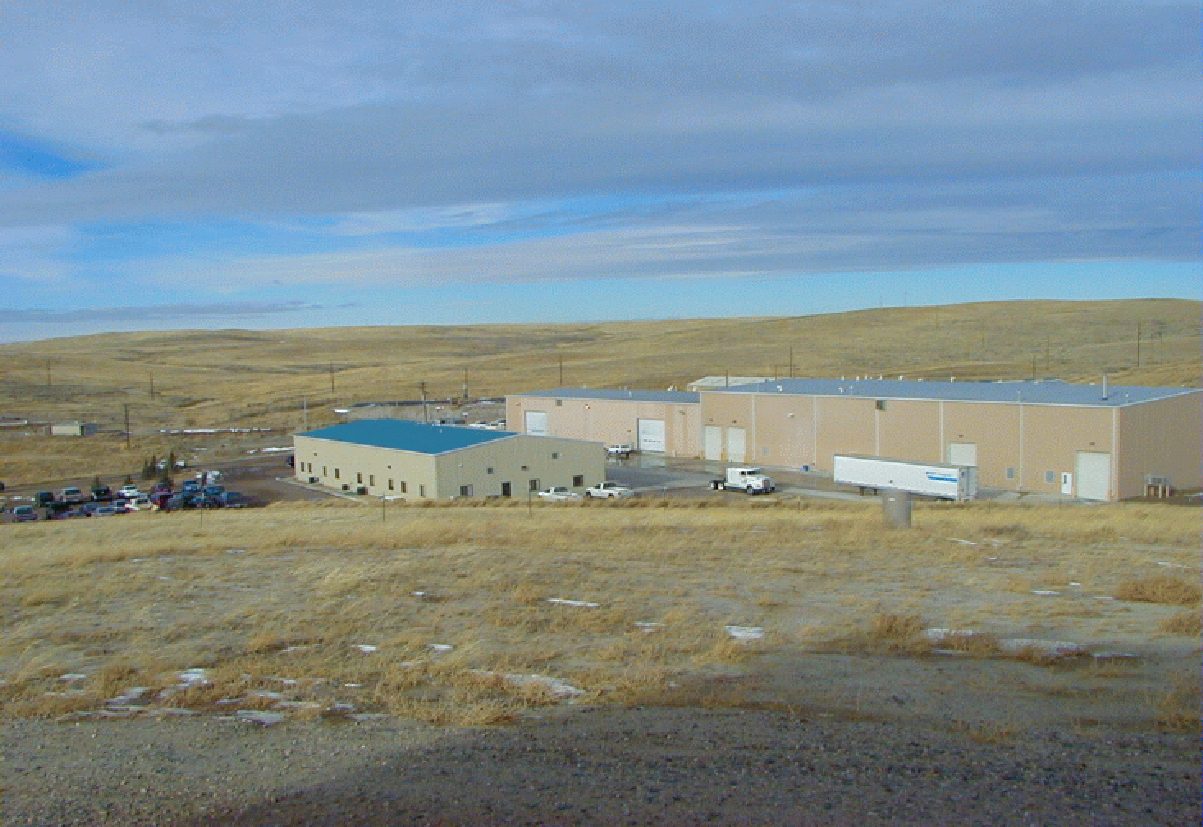
The Nuclear Regulatory Commission proposed a rule on September 1, 2026 that would set what it calls risk-informed criteria for protecting drinking water near uranium in-situ recovery facilities and, in the same package, ease the process for extending decommissioning timelines at reactors and materials facilities, according to the agency's announcement. The proposal sits in docket NRC-2025-1204, and the public will have 30 days to comment once the rule appears in the Federal Register, which as of September 4 it had not. The NRC's own rulemaking tracker lists the entry as "In Situ Recovery Monitoring and Decommissioning Timeliness" and says the rule would "reduce post-restoration monitoring," a phrase the release does not use.
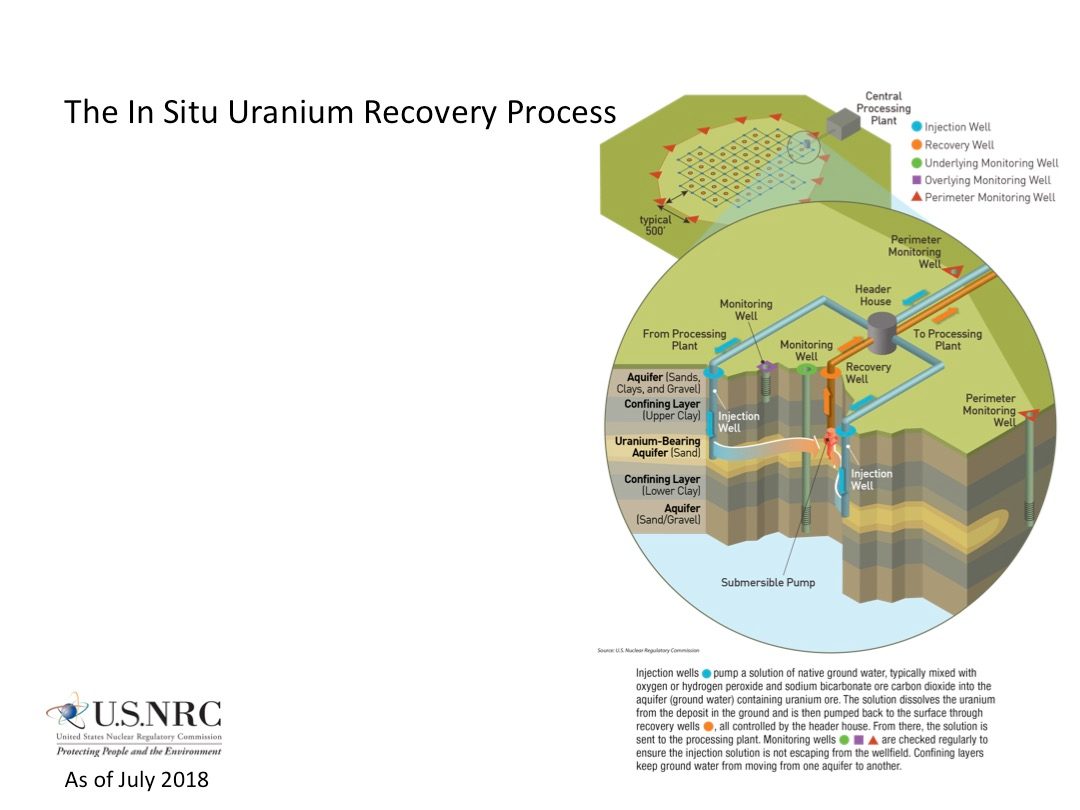
In-situ recovery extracts uranium without digging. A solution called lixiviant, typically water mixed with oxygen or hydrogen peroxide and sodium carbonate or carbon dioxide, is injected through wells into the ore body, pumped back up through recovery wells, and stripped of its uranium at a processing plant, per the NRC's description of the method. That page, last updated August 27, 2026, says about 14 such facilities exist in the United States, of which the NRC directly regulates three in Western states, with the rest licensed by Agreement States. The September 1 release puts the count at approximately 16.
The release describes two distinct areas. On groundwater, the rule "would establish risk-informed criteria for protecting drinking water from radiological and non-radiological contamination near ISR facilities." On decommissioning, it would streamline the process for extending timelines, cutting what the release calls redundant administrative steps, to reduce costs for applicants while avoiding premature license terminations. Executive Director for Operations Mike King described the groundwater half as "putting a framework into place establishing clear, enforceable standards for groundwater safety near uranium recovery sites."
What the rule tracker adds
The tracking data behind the NRC's Rules and Petitions page fills in what the release leaves out. The entry, RIN 3150-AL48, says the rule would codify risk-informed groundwater protection standards for ISR facilities and reduce post-restoration monitoring, and would risk-inform decommissioning timeliness rules and "increase licensing flexibility to allow site-specific extensions for both reactors and materials facilities." The tracker dates the rulemaking's initiation to August 25, 2025, estimates Federal Register publication of the proposed rule on September 24, 2026 and a final rule on March 31, 2027, and scores the project 20 out of 20 on the NRC's priority scale. Its status field reads "Unfunded," and the page notes that estimated dates are subject to change.
The schedule comes from Executive Order 14300, signed May 23, 2025 and published in the Federal Register on May 29, which directs the NRC to "undertake a review and wholesale revision of its regulations and guidance documents," with proposed rules within 9 months of the order and final rules within 18 months. Nine months from May 23, 2025 was February 23, 2026, more than six months before this proposal was announced; eighteen months is November 23, 2026, and the tracker's estimated final-rule date is four months past that.
Twenty years of starting and stopping
The groundwater half has been in motion, on and off, since 2006. The NRC initiated a rulemaking that year "to provide regulatory consistency and improve the efficiency of the ISR licensing process but placed this rulemaking on hold in 2010," as the agency put it in a January 31, 2019 request for comment on whether to resume. The National Mining Association's account, in an October 29, 2025 letter now in the new docket, is that the NRC deferred in 2010 because the Environmental Protection Agency announced its own generally applicable ISR standards, and that EPA withdrew its proposal in 2018.
On October 22, 2020, the Commission approved resuming the rulemaking, choosing staff's Option 3 to write risk-informed, ISR-specific requirements and to clarify how alternate concentration limits apply to ISR facilities. "In light of the diminished domestic ISR activity," the staff requirements memorandum says, "the rulemaking should be narrowly targeted and its costs should be included in fee relief." Staff were to deliver a proposed rule within nine months.
Per the NMA letter, staff released a prepublication version on July 23, 2021 that was never formally proposed and that the Commission never acted to approve; the Wyoming Mining Association's October 16, 2025 letter identifies it as SECY-21-0067. The new docket, opened under a new RIN on August 25, 2025 per the tracker, is the third start.
What the industry asked for
As of September 4, the regulations.gov docket holds exactly three documents, all letters to then-Chairman David Wright posted November 19, 2025: from the Wyoming Mining Association (October 16), from Cameco Resources (October 23), and from the NMA (October 29). The WMA letter says NMA met with the commissioners during the week of September 22, 2025, meetings that made clear the rulemaking would be part of the agency's EO 14300 work, and that WMA had been informed there was "a brief window of opportunity" for the industry to restate support for a narrowly focused rule.
Among the concerns the NMA's letter summarizes about the 2021 draft, two carry numbers. Its Criterion 14(f)(1)(ii) would have required at least three years of quarterly post-restoration monitoring at the point of compliance, against what the association calls the existing practice of at least one year, and its Criterion 14(b)(3)(i) would have required one point-of-compliance well per acre in the production unit and the aquifers above and below it, which the NMA says would quadruple existing practice. The 2021 approach, the letter argues, "adds unnecessary regulatory burdens that would impede domestic uranium production." Cameco Resources, which operates the Smith Ranch-Highland and North Butte projects in Wyoming, made the same point on well density, asked that transitions into groundwater restoration, cessation of restoration, and stability monitoring not require agency approval, and wrote that "Only one clear set of rules with one regulator should apply to any given project." Its letter says wellfields at both sites were undergoing restoration as of October 2025, with approximately 32 million pounds of resources left to produce.
The rule arrives as domestic output grows off a small base. US uranium concentrate production more than tripled in 2025 to 2.1 million pounds, per Energy Information Administration data covered in The Duck Curve's August 28 report, while US-origin material was 7% of deliveries to reactor owners. The WMA letter describes Wyoming and Texas as the largest ISR producers in the country.
Outlook
The Federal Register text will settle the question the release leaves open and the tracker abstract points at: whether the 2021 draft's three-year post-restoration monitoring period survived, or whether "reduce post-restoration monitoring" means the one-year practice the NMA describes is being codified. If the tracker's September 24 estimate holds, comments would close in late October 2026. The March 31, 2027 final-rule estimate already sits past the executive order's November 23, 2026 mark. And because the NRC directly regulates only three ISR sites, the rule's practical reach will depend on how Agreement States adopt compatible requirements, the consistency the 2020 memorandum set as the goal.
⚠ The Outlook extrapolates from the NRC rulemaking tracker's estimated dates and abstract, the October 2025 industry letters in docket NRC-2025-1204, Executive Order 14300's 9- and 18-month deadlines, the 2020 staff requirements memorandum, and the NRC's count of directly regulated ISR sites.
Sources
Primary
- NRC Proposes Rule That Will Protect Drinking Water Near Uranium In-Situ Recovery Sites (No. 26-076) · U.S. Nuclear Regulatory Commission
Supporting
- Ground Water Protection at Uranium In Situ Recovery Facilities (request for comment) · Federal Register (NRC)
- Staff Requirements - SECY-19-0123 - Regulatory Options for Uranium In Situ Recovery Facilities · U.S. Nuclear Regulatory Commission
- Executive Order 14300: Ordering the Reform of the Nuclear Regulatory Commission · Federal Register
- Wyoming Mining Association Observations on the Proposed ISR Rulemaking · Wyoming Mining Association (via regulations.gov docket NRC-2025-1204)
- Power Resources dba Cameco Resources: Observation on the Proposed ISR Rulemaking · Cameco Resources (via regulations.gov docket NRC-2025-1204)
- NMA letter to Chairman Wright: Upcoming NRC Rulemaking on Groundwater Protection at Uranium in Situ Recovery Facilities · National Mining Association (via regulations.gov docket NRC-2025-1204)
- U.S. uranium production more than tripled in 2025 and was the highest since 2017 · US Energy Information Administration
- In Situ Recovery Facilities · U.S. Nuclear Regulatory Commission
- NRC Rules and Petitions · U.S. Nuclear Regulatory Commission
- NRC rulemaking tracking data export (Rules and Petitions) · U.S. Nuclear Regulatory Commission
Copies of cited sources are retained where available. If a link no longer resolves, request a copy at contact@theduckcurve.com.