 The Duck Curve
US uranium output more than tripled in 2025 as enrichment plants line up
Domestic mines produced 2.1 million pounds of yellowcake while US reactor owners bought 46.9 million; at the NRC, Global Laser Enrichment's Paducah and Orano's Oak Ridge applications now share one hearing rulebook.
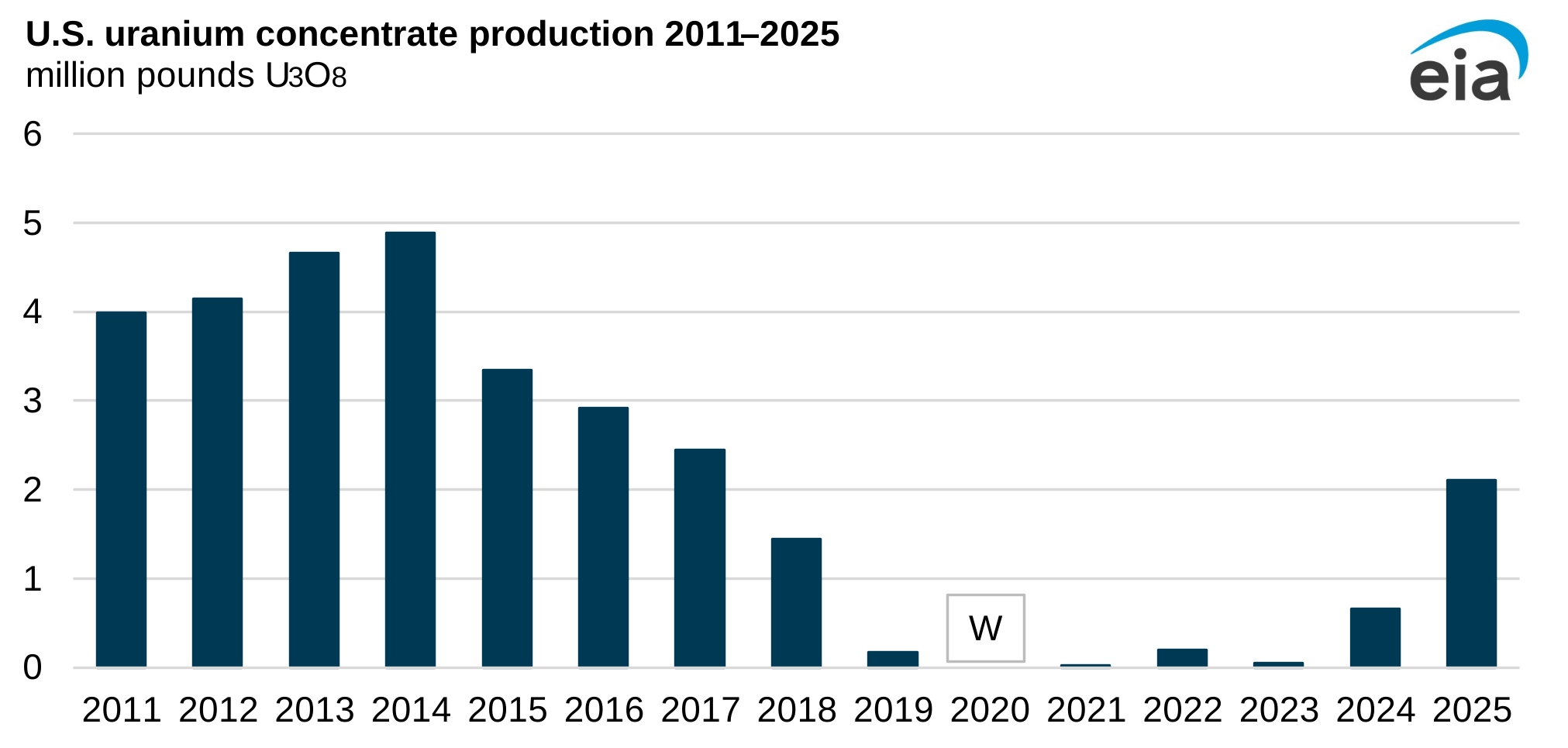
US uranium concentrate production more than tripled in 2025, to 2.1 million pounds of triuranium octoxide (U3O8), the most since 2017, according to Energy Information Administration data published August 28, 2026. The same day, the Federal Register carried an August 26 Nuclear Regulatory Commission order that put the license proceeding for Global Laser Enrichment's planned Paducah, Kentucky enrichment plant on the same hearing procedures as Orano's proposed Project IKE facility in Oak Ridge, Tennessee. The mining end of the US nuclear fuel chain is growing again, and the enrichment end has two new plants in line at the regulator.
What the EIA numbers show
Yellowcake, the powdered concentrate that mills extract from mined uranium ore, is the first product in the fuel chain; it moves on to conversion, enrichment, and fabrication into reactor fuel. EIA's data shows activity picking up at that first step: exploration drilling covered 1,824 holes and more than 1.0 million feet in 2025, up from 1,324 holes and 0.6 million feet in 2024, and development drilling to measure known deposits reached 3,708 holes and 1.30 million feet, up from 2,462 holes the year before.
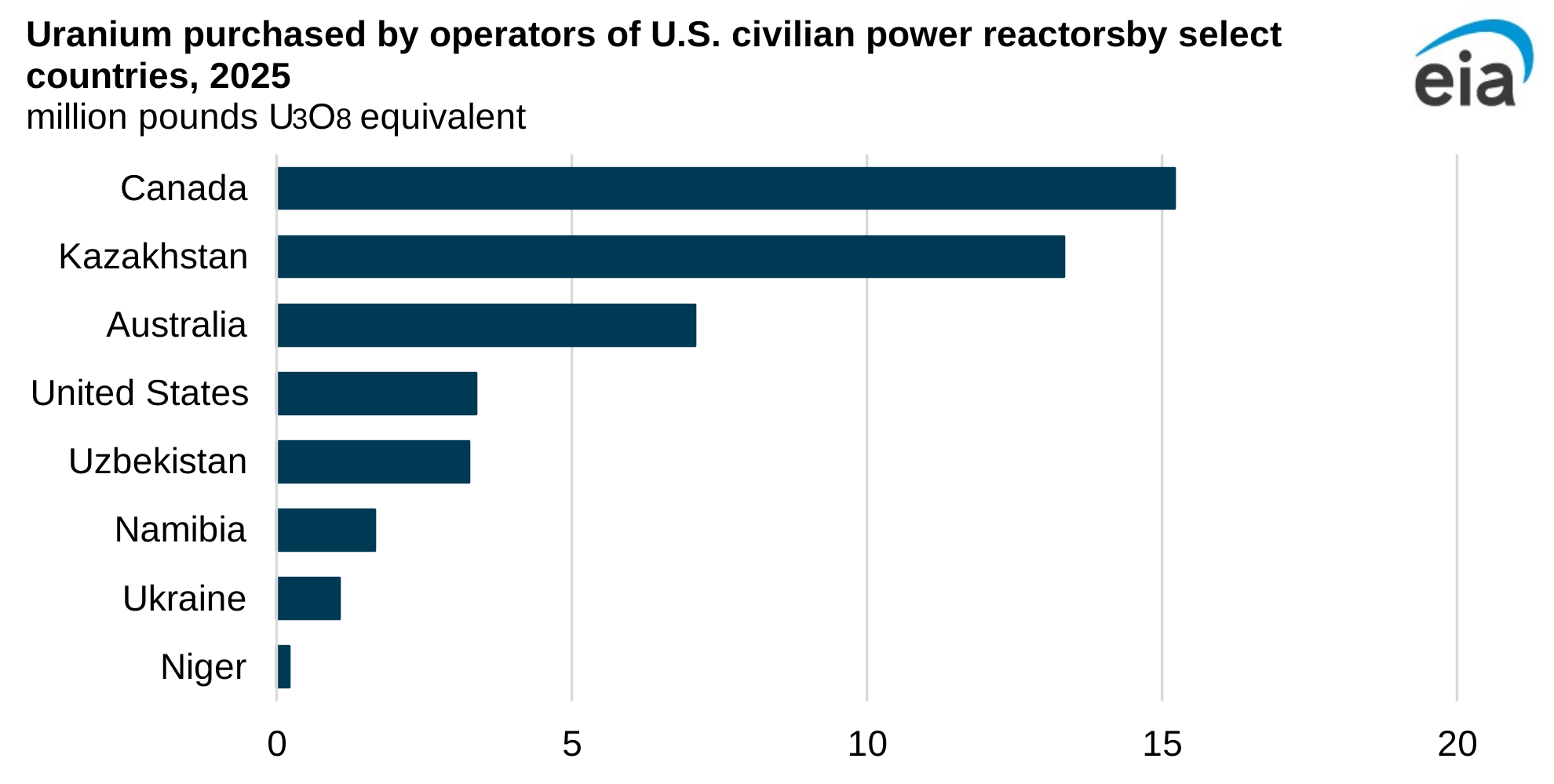
The base remains small. Owners and operators of US nuclear plants purchased 46.9 million pounds of U3O8 equivalent in 2025, per EIA, down from 55.9 million pounds in 2024, at a weighted-average price of $58.46 per pound, 11% above 2024's $52.71. Foreign-origin material dominated deliveries, with Canada at 32%, Kazakhstan at 28%, and Australia at 15%; US-origin material accounted for 7% of total deliveries. A tripling that leaves domestic supply at 7% of deliveries is a statement about the starting point as much as the trajectory.
Two enrichment plants, one hearing rulebook
Enrichment is where the bigger licensing news sits. The NRC noticed Global Laser Enrichment's application on March 4, 2026: a license to possess and use special nuclear material to build and operate a laser-based uranium enrichment facility in McCracken County, Kentucky. Orano Enrichment USA, a subsidiary of Orano SA, the French nuclear fuel company majority-owned by the French state, applied on March 27, 2026 to build Project IKE, a centrifuge plant in Oak Ridge, Tennessee that would re-enrich depleted uranium hexafluoride tails and enrich natural-grade UF6 to a maximum of 8 weight-percent uranium-235, per the NRC's August 12 hearing notice. Orano's own license application and the NRC's earlier scoping notice put the ceiling at up to 10 weight-percent.
The August 26 order, CLI-26-12, grants no license and decides no contested issue. Acting on its own motion, the Commission scrapped the uncontested mandatory hearing it had originally scheduled for GLE, adopted the procedures it set for Orano's proceeding on August 7, reopened the contested proceeding an Atomic Safety and Licensing Board had closed on July 9, and terminated the uncontested hearing that board established on July 13. A pending appeal the Kentucky Resources Council filed on August 3 is unaffected, the order notes. Orano, for its part, has until September 21, 2026 to file the security-plan portion of its application under a temporary exemption NRC staff granted in May. The order's practical meaning: both dockets are active, and new US enrichment applications now run on one procedural template.
The industrial policy behind it
Washington has been assembling machinery for the fuel cycle all year. On July 6, 2026, the Department of Energy published the approved "Nuclear Fuel Cycle Consortium" voluntary agreement under section 708 of the Defense Production Act, signed by the Secretary of Energy after consultation with the Attorney General and the chairman of the Federal Trade Commission. The notice ties the consortium to Executive Order 14302, which it says charges DOE with developing "a resilient, secure, and sustainable nuclear fuel supply chain" for national security and energy independence.
The fuel cycle joins a pattern The Duck Curve has been tracking across energy hardware. August 26 alone produced the GLE order, Executive Order 14420's national emergency over foreign-made grid equipment, and the Army's selection of five microreactor vendors with up to $2.2 billion in milestone funding. Energy security as practiced still has room for allies: the Oak Ridge applicant is a subsidiary of a company majority-owned by the French state, a different sort of foreign involvement from the adversary-linked equipment the bulk-power order screens for.
Outlook
If 2025's realized prices hold (the $58.46 weighted average ran 11% above 2024), the jump in exploration and development drilling reads as producers positioning for more growth off the same small base. The nearer markers are procedural: Orano's September 21 security-plan deadline, the Kentucky Resources Council appeal, and whether either enrichment proceeding draws a contested hearing now that both run under the same rules.
Corrected October 10, 2026: added that Orano's license application and the NRC's June 11, 2026 scoping notice put Project IKE's maximum enrichment at up to 10 weight-percent uranium-235; the article had given only the August hearing notice's 8 weight-percent.
⚠ The Outlook extrapolates from EIA's 2025 production, drilling, and price figures and from deadlines and procedural posture in the cited NRC Federal Register notices.
Sources
Primary
- U.S. uranium production more than tripled in 2025 and was the highest since 2017 · US Energy Information Administration
- Global Laser Enrichment, LLC; Paducah Laser Enrichment Facility; Order (CLI-26-12) · Nuclear Regulatory Commission via Federal Register
Supporting
- Orano Enrichment USA, LLC; Uranium Enrichment Facility; Notice of Intent To Conduct Scoping Process and Prepare Environmental Impact Statement · Nuclear Regulatory Commission via Federal Register
- Orano Enrichment USA License Application, Chapter 1 (General Information), Rev. 2 (ML26182A172) · Orano Enrichment USA via NRC ADAMS
- Implementing Voluntary Agreements Under the Defense Production Act (Nuclear Fuel Cycle Consortium) · Department of Energy via Federal Register
- Orano Enrichment USA LLC (Project IKE Enrichment Facility); Notice of Receipt of Application for License; Notice of Hearing and Commission Order (CLI-26-11) · Nuclear Regulatory Commission via Federal Register
Copies of cited sources are retained where available. If a link no longer resolves, request a copy at contact@theduckcurve.com.