 The Duck Curve
Five US microreactor designs went critical in the summer of 2026
Fueled cores are now real at Idaho National Laboratory, the Nevada National Security Site, and the Utah San Rafael Energy Lab; the deployment pipeline runs through the Army's Janus program, a Space Force delivery target of 2028 per Radiant, and the data-center reactor Aalo says it is building at INL.
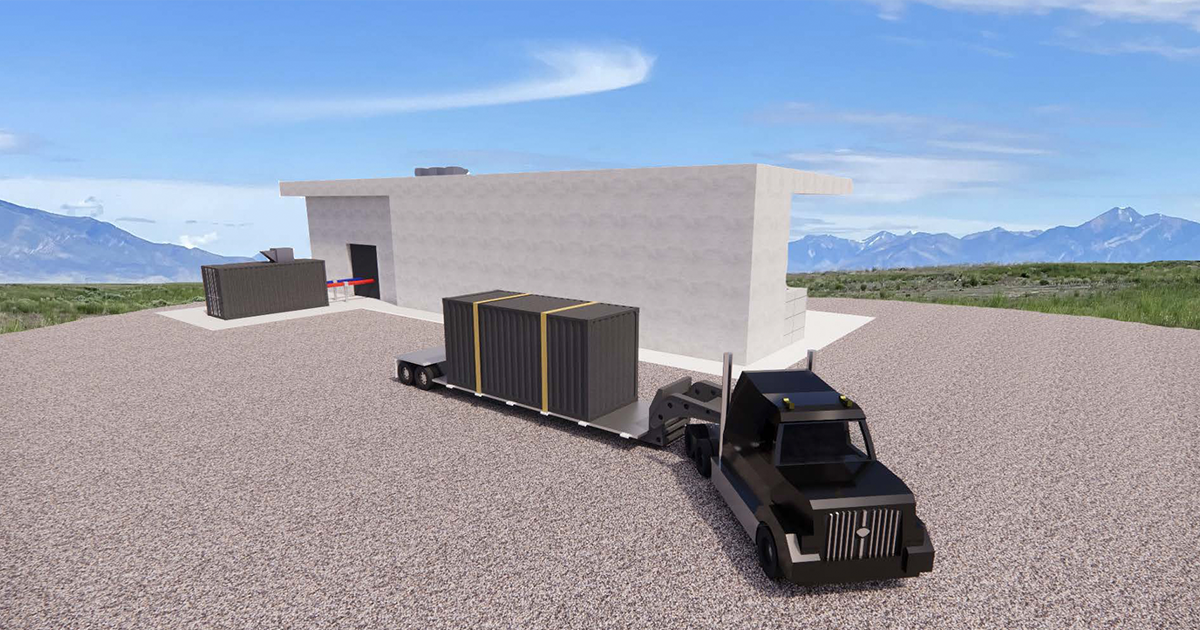
Between early June and August 24, 2026, five US microreactor designs went critical in zero-power tests. Antares Nuclear's Mark-0 and Valar Atomics' Ward 250 went critical in June under the Department of Energy's Reactor Pilot Program; Deployable Energy's Unity followed at Idaho National Laboratory on June 30, DOE announced on July 1; Aalo Atomics' Critical Test Reactor reached criticality in the early morning of July 4, the company announced; and Westinghouse completed zero-power criticality testing of its eVinci design on August 24 at the Nevada National Security Site, the company said the next day.
The thesis of this survey is simple: in roughly a year, US microreactors crossed from paper designs to fueled hardware, and nearly every watt, dollar, and permit involved runs through the federal government. The criticality tests all ran under DOE authorization, four at DOE-complex sites and one at the Utah San Rafael Energy Lab, the largest deployment contract is the Army's, Radiant's first commercial delivery is targeted at a Space Force base, and the regulator for the Army fleet will be the Army itself. The commercial, NRC-licensed market these machines are ultimately pitched at, powering data centers and remote loads, is still entirely ahead of them. No nuclear microreactor supplies power to a commercial grid in the United States today, per AP.
The criticality sprint, June to August 2026
The sprint was ordered from the top. Executive Order 14301 of May 2025 directed DOE to authorize at least three test reactors to reach criticality by July 4, 2026, and the department selected 11 projects for its Reactor Pilot Program on August 12, 2025, including Aalo Atomics, Antares Nuclear, Last Energy, Oklo, Radiant Industries, and Valar Atomics. The structure matters: each company bears all costs of designing, building, operating, and decommissioning its test reactor, and DOE says authorization under the Atomic Energy Act unlocks private funding and offers a fast-tracked approach to later commercial licensing. This is DOE acting as landlord and regulator, not as funder.
The deadline was met with days to spare. Antares Nuclear's Mark-0 reached criticality at INL on June 4 and Valar Atomics' Ward 250 followed on June 18 at the Utah San Rafael Energy Lab in Emery County, the second Reactor Pilot Program project to reach the milestone and, per POWER magazine's account, the first outside the national laboratory system. DOE's July 1 release calls the United States "the first country in history to achieve criticality in three unique advanced microreactor designs in a single month," and notes Unity's demonstration ran under the Nuclear Energy Launch Pad initiative, which DOE describes as the next evolution of the Reactor Pilot Program, managed by the National Reactor Innovation Center at INL. Aalo made it four: its Critical Test Reactor went critical at 12:20 a.m. Mountain time on July 4, per the company's announcement. POWER's account describes the design, graphite-moderated and sodium-cooled with a core of 13 uranium dioxide assemblies enriched to 4.95 percent, and reports Energy Secretary Chris Wright saying the department had surpassed the executive order's ask of three and delivered four. Westinghouse's eVinci test came on August 24 at the National Criticality Experiments Research Center, an NNSA facility in Nevada, in partnership with Los Alamos National Laboratory and INL; the company says the test validated the models and core design assumptions behind its heat-pipe, TRISO-fueled design, which is meant to run around the clock for eight years without refueling.
The summer's fueled-core count did not stop at five. A sixth reactor, outside this survey's microreactor class, went critical on August 5: Oklo's Groves Isotope Test Reactor, at the company's Lockhart, Texas site, DOE announced. DOE calls Groves the fifth DOE-authorized advanced reactor criticality of the summer; POWER's report counts it as the fifth under the Reactor Pilot Program proper (the eVinci test, run at a federal NNSA site outside the program, is not in that tally) and the first under the program on private land. Authorized to a maximum of 100 watts, Groves is a test bed for the isotope-production business Oklo built on its 2024 acquisition of Atomic Alchemy, not a power reactor, which is why it does not join the five above.
One caveat belongs next to every one of these milestones: a zero-power criticality is a physics checkpoint, a fueled core brought to a self-sustaining chain reaction at negligible power. It confirms the neutronics before power operation, which remains a separate, later step for each of the five.
One reactor is on a truck
The step after criticality is a full-power run, and exactly one company is attempting it this year. Radiant Industries received TRISO fuel for its Kaleidos microreactor at INL's DOME test bed in early July 2026, World Nuclear News reported, with the fuel fabricated to Radiant's specifications by Standard Nuclear. The reactor itself left Radiant's El Segundo, California factory by truck for Idaho, the company announced in a post carrying both an August 12 date and an August 13 dateline; World Nuclear News' account gives the departure as August 12. Kaleidos is a 1 MWe transportable design; the test campaign runs five phases from zero-power criticality up to full power, capped by a minimum of 150 continuous hours without operator assistance, with completion targeted for the third quarter of 2026. Radiant says the data feeds directly into its NRC license application.
DOME is the venue that makes this possible: a former reactor containment structure at INL repurposed as what DOE calls the world's first microreactor test bed, able to host experiments up to 20 megawatts thermal, one at a time. DOE conditionally selected two experiments for it on July 1, 2025: Radiant's Kaleidos development unit and a scaled eVinci test reactor from Westinghouse.
Pele, the program that started the class
The Pentagon's Project Pele predates the criticality sprint and remains the field's most complete end-to-end exercise. BWXT announced on December 2, 2025 that it had shipped a full core of TRISO fuel from its Lynchburg, Virginia plant to INL, where the transportable high-temperature gas-cooled reactor it is building for the Army and the Department of War's Strategic Capabilities Office will be assembled and tested, with formal system testing planned to begin as early as 2027. The whole system fits in four standard shipping containers. DOE's project page says the prototype will feed 1 to 5 megawatts of electrical power into INL's microgrid and operate at the lab for a minimum of three years. Jeff Waksman, the Army's principal deputy assistant secretary, calls Pele "a transformational leap toward Gen-IV nuclear power."
DOE authorization now, NRC licensing later
Every milestone above happened outside the Nuclear Regulatory Commission's licensing process. The test reactors run under DOE authorization; the Army's deployment program goes further. Under the Janus Program, covered in The Duck Curve's August 27, 2026 report, the Army selected Antares, BWXT, General Atomics, Radiant, and Westinghouse to build contractor-owned reactors at five bases, with up to a combined $2.2 billion in milestone-based funding across fiscal 2027 through 2031 and an expectation of more than 20 reactors across installations. The Army's Fort Drum announcement describes the class: under 20 megawatts of electricity on less than five acres. The first Janus reactor, due to operate by September 30, 2028 under Executive Order 14299, will be regulated by the Army rather than the NRC, per AP, an arrangement whose critics, including the University of Texas at Austin's Alan Kuperman, call a subsidy for reactors that lack private customers.
The NRC door is being worked in parallel, more slowly. Oklo announced on May 6, 2026 that the NRC approved the principal design criteria topical report for its Aurora plant in Idaho, in what the company says was less than half the traditional review time; Oklo says it filed the first custom combined license application for an advanced reactor. The NRC lists pre-application activities with microreactor developer Last Energy, running since May 2025 toward a future application. Radiant's Part 70 application for its Oak Ridge, Tennessee fuel and manufacturing campus, which the company calls the only one of its kind currently under NRC review, is on what Radiant describes as an accelerated eight-month timeline targeting approval by the fourth quarter of 2026. And two of the summer 2026 test campaigns are explicitly staged as NRC on-ramps: Radiant's DOME data feeds its license application, and the Army says it is aligning Janus processes with the NRC's so vendors can pursue commercial licenses later, per AP.
The customer list wears a uniform
Add up the confirmed buyers of US microreactors as of late August 2026 and the pattern is stark: the Army (up to $2.2 billion, five bases, more than 20 reactors expected), the Space Force (Radiant's first commercial Kaleidos is targeted for delivery to Buckley Space Force Base by 2028, per Radiant's announcement), and the Department of War's Strategic Capabilities Office (Pele). The commercial demand story is data centers, and it is still prospective: Aalo is building what it calls Project Ascension, a second reactor at INL intended to power an on-site data center in 2027, per its criticality announcement, on the way to a planned 50 MWe Pod built from its 10 MWe reactors. Aspiration is not a purchase order, and the gap between the two is where the field's next two years will be decided.
The supply chain underneath is similarly young and similarly concentrated. Most of the designs above run on TRISO fuel, and the fuel shipments in this survey came from two fabricators: BWXT, which made Pele's core, and Standard Nuclear, which made Radiant's. Upstream of fabrication sits enrichment, where capacity is expanding but from a small base; US uranium production more than tripled in 2025 and two enrichment plant applications are pending before the NRC, as The Duck Curve reported on August 28, 2026.
Outlook
If Radiant's third-quarter target holds, Kaleidos would finish its 150-hour full-power run within weeks, giving the class its first sustained power demonstration of a commercial design; DOME hosts one experiment at a time, so a slip also delays the queue behind it, where Westinghouse's eVinci test unit is the other selected experiment. The 2027 to 2028 window is when criticality claims either convert into kilowatt-hours or visibly fail to: AP has reported Antares' pilot milestone could allow electricity production at INL in 2027, BWXT plans Pele system testing as early as 2027, and the Army's first Janus reactor carries a September 30, 2028 deadline. The larger conversion to watch is regulatory and commercial at once. Waksman's own stated bar for Janus is vendors selling reliable, affordable reactors to buyers beyond the military, and the filings that would signal it, Oklo's combined license application, Last Energy's future application, and the NRC application Radiant says its DOME data feeds, all sit in front of a regulator none of the summer 2026 milestones needed. The pattern across the sources points one way: federal programs paid for the field's first fueled cores, and what they have not yet produced is a commercial customer.
Corrected August 28, 2026: an earlier version of this survey omitted the summer's sixth fueled-core criticality, Oklo's Groves Isotope Test Reactor, the fifth under the Reactor Pilot Program.
⚠ The Outlook extrapolates from dated targets stated in the cited DOE, Army, Radiant, BWXT, and AP sources and from The Duck Curve's earlier Janus coverage; every timeline named there is a company or agency target, not an achieved result.
Sources
Primary
- Department of Energy Announces Initial Selections for New Reactor Pilot Program · U.S. Department of Energy
- BWXT Delivers Full Core of TRISO Nuclear Fuel for Project Pele Microreactor · BWX Technologies
- Oklo's NRC Principal Design Criteria Topical Report Approved for Aurora Powerhouse in Idaho · Oklo Inc.
- U.S. Department of Energy Meets President Trump's Goal, Delivers Third Advanced Reactor Criticality · U.S. Department of Energy
- Aalo Achieves Criticality · Aalo Atomics
- Office of Nuclear Energy Celebrates Fifth Advanced Reactor Criticality · U.S. Department of Energy, Office of Nuclear Energy
- Kaleidos Has Left the Building · Radiant Industries
- Westinghouse eVinci Microreactor Achieves Zero-Power Criticality · Westinghouse Electric Company
Supporting
- TRISO fuel delivered for Kaleidos reactor experiment · World Nuclear News
- Aalo Atomics' Test Reactor Reaches Criticality at INL, Fourth DOE-Authorized Advanced Reactor by July 4 · POWER magazine
- Oklo's Groves Becomes Fifth DOE Pilot Reactor to Reach Criticality, First on Private Land · POWER magazine
- Kaleidos microreactor begins journey to Idaho · World Nuclear News
- Army reaches agreement with private industry for nuclear micro-reactors · U.S. Army Communication and Outreach Office (army.mil)
- Army selects Fort Drum for Janus Program microreactor · Fort Drum Garrison Public Affairs (army.mil)
- Army to spend $2B to build nuclear microreactors at 5 bases as US seeks to ramp up nuclear power · The Associated Press
- Department of Defense Breaks Ground on Project Pele Microreactor · US Department of Energy, Office of Nuclear Energy
- Last Energy | Pre-Application Activities · U.S. Nuclear Regulatory Commission
- Demonstration of Microreactor Experiments (DOME) · US Department of Energy, Office of Nuclear Energy
Copies of cited sources are retained where available. If a link no longer resolves, request a copy at contact@theduckcurve.com.