 The Duck Curve
Bangladesh's first power reactor, Rooppur 1, reaches criticality
The 1,200 MW Russian-built unit started its chain reaction on October 11, three days after a regulator licence; two more licences come before any power reaches the grid.
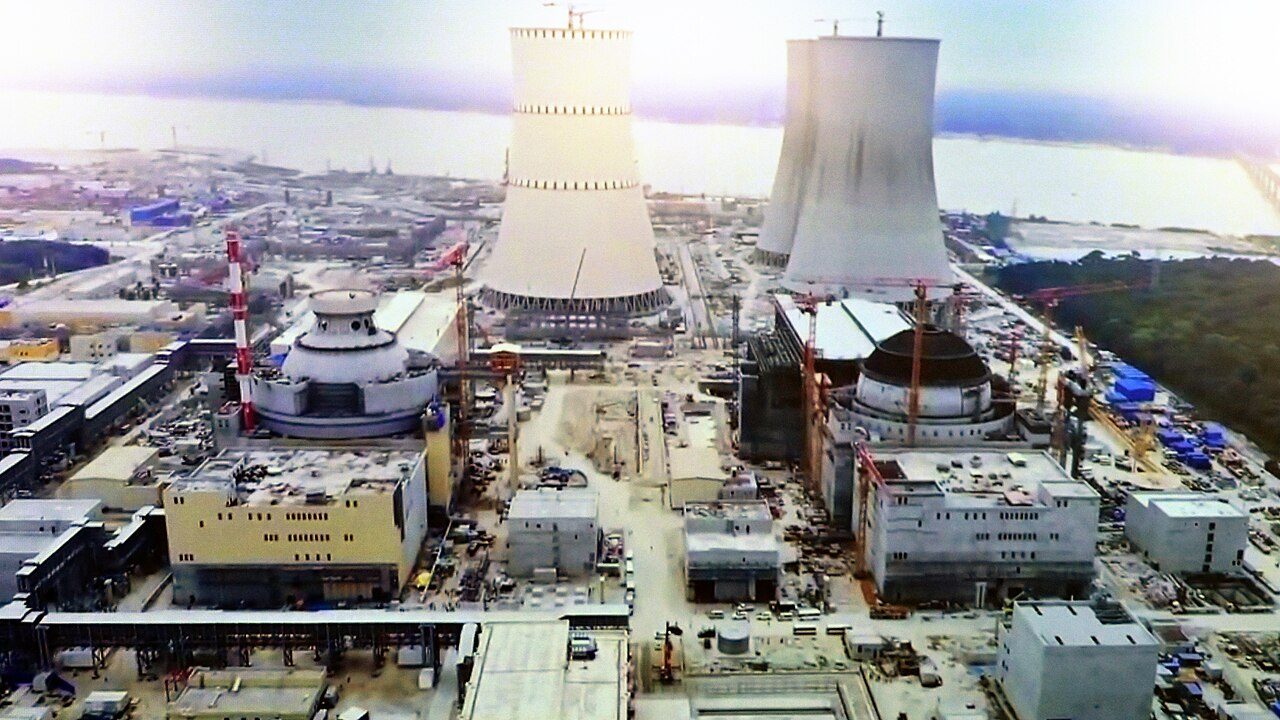
Bangladesh's first nuclear power reactor has a chain reaction going. Unit 1 of the Rooppur Nuclear Power Plant, a 1,200 MW VVER-1200 being built in Pabna by Rosatom subsidiary Atomstroyexport, reached criticality at 3:34 p.m. local time on October 11, 2026, the project announced on its official Facebook page on October 12. Criticality means a self-sustaining fission chain reaction in the core. It does not mean electricity: the unit has yet to generate any.
"We successfully started the process while every parameter performed according to design," Md Anwar Hossain, secretary of the Ministry of Science and Technology, told The Daily Star. The project's own statement lays out what comes next: scheduled tests and safety checks, then a test of the reactor at minimum controllable power, and, if the later tests pass, grid supply advanced step by step.
The people running the plant are treating it as the end of a long wait, and they mean long. "This brings to an end the long wait following the beginning of Bangladesh's journey towards the peaceful use of nuclear energy in 1961. This is a major milestone for the country's science sector," Md Zahedul Hasan, managing director of the state-owned operator Nuclear Power Plant Company Bangladesh, told Prothom Alo. Construction of Unit 1 itself began in November 2017, according to World Nuclear News.
Two valves and two more licences
The regulator's go-ahead came three days before the reaction. The Bangladesh Atomic Energy Regulatory Authority (BAERA) approved Unit 1's B-2 licence on Thursday, October 8, once tests of the unit's automatic pressure relief valves (PORV/POSV) were complete, The Daily Star reported. Two of those valves had failed to perform during commissioning, and project officials said Russian experts helped resolve the pressure-testing issues.
The valves cost the schedule its September date. The fission start had originally been planned for September, plant sources told Prothom Alo, and slipped after defects turned up in safety-valve tests; BAERA approved the reaction after reviewing two rounds of high-pressure valve tests. Unit 1 had held an operating licence since April 16, and loading of its 163 fuel assemblies finished in May, per World Nuclear News.
B-2 is not the last licence. "After the successful completion of the B-2 stage, we will approve C and D licences one after another. Only then will it be possible to supply power to the grid," BAERA chairman Md Mahmudul Hasan told The Daily Star.
When the grid sees power
Two calendars are in circulation, and Rosatom's is the earlier one. Meeting Bangladesh's science and technology minister, Fakir Mahbub Anam, Rosatom director general Alexey Likhachev put the unit's power start-up in the 20s of November, according to Strana Rosatom, the corporation's in-house publication, on October 9.
Sources at the plant gave Prothom Alo the steps in between. Tests after the start of the reaction could take 30 to 40 days, after which reactor output rises gradually; electricity can go to the national grid once output reaches 30 percent of capacity, when the plant is expected to supply 300 MW, potentially in December. Trial operations could run seven to eight months after the initial start-up. By our arithmetic, 30 to 40 days from October 11 ends between November 10 and November 20, which is about where Rosatom's date begins.
The stakes are national in scale. The two units, 2,400 MW together, could meet up to 10 percent of the country's demand, according to The Financial Express. By cost, Rooppur is the largest single project in Bangladesh's history, Prothom Alo reports: the total is now expected to reach Tk 1.39 trillion, and the project deadline has been extended twice, from December 2025 to June 2028. Construction of Unit 2 began in July 2018, per World Nuclear News. Once Unit 1's electricity reaches the grid, Bangladesh will become the world's 33rd country to generate nuclear power, by Prothom Alo's count.
Sources
Primary
- রূপপুর পারমাণবিক বিদ্যুৎ কেন্দ্রে সফলভাবে ক্রিটিক্যালিটি অর্জন (Criticality successfully achieved at Rooppur Nuclear Power Plant) · Rooppur Nuclear Power Plant (official Facebook page)
Supporting
- Authorities approve Rooppur Unit-1 to begin fission · The Daily Star
- Алексей Лихачев назвал дату энергопуска первого блока АЭС «Руппур» · Strana Rosatom
- Bangladesh enters nuclear era as fission starts at Rooppur unit-1 · The Financial Express (Bangladesh)
- Rooppur nuclear power plant begins fission, moves closer to electricity generation · Prothom Alo
- Bangladesh's Rooppur 1 achieves criticality · World Nuclear News
- Rooppur unit-1 begins nuclear fission reaction · The Daily Star
Copies of cited sources are retained where available. If a link no longer resolves, request a copy at contact@theduckcurve.com.