 The Duck Curve
DOE clears MARVEL microreactor's final safety analysis for dry criticality
The test reactor's sodium-potassium coolant system reached INL's TREAT facility in mid-September, and INL anticipates a dry, near-zero-power criticality in December 2026.
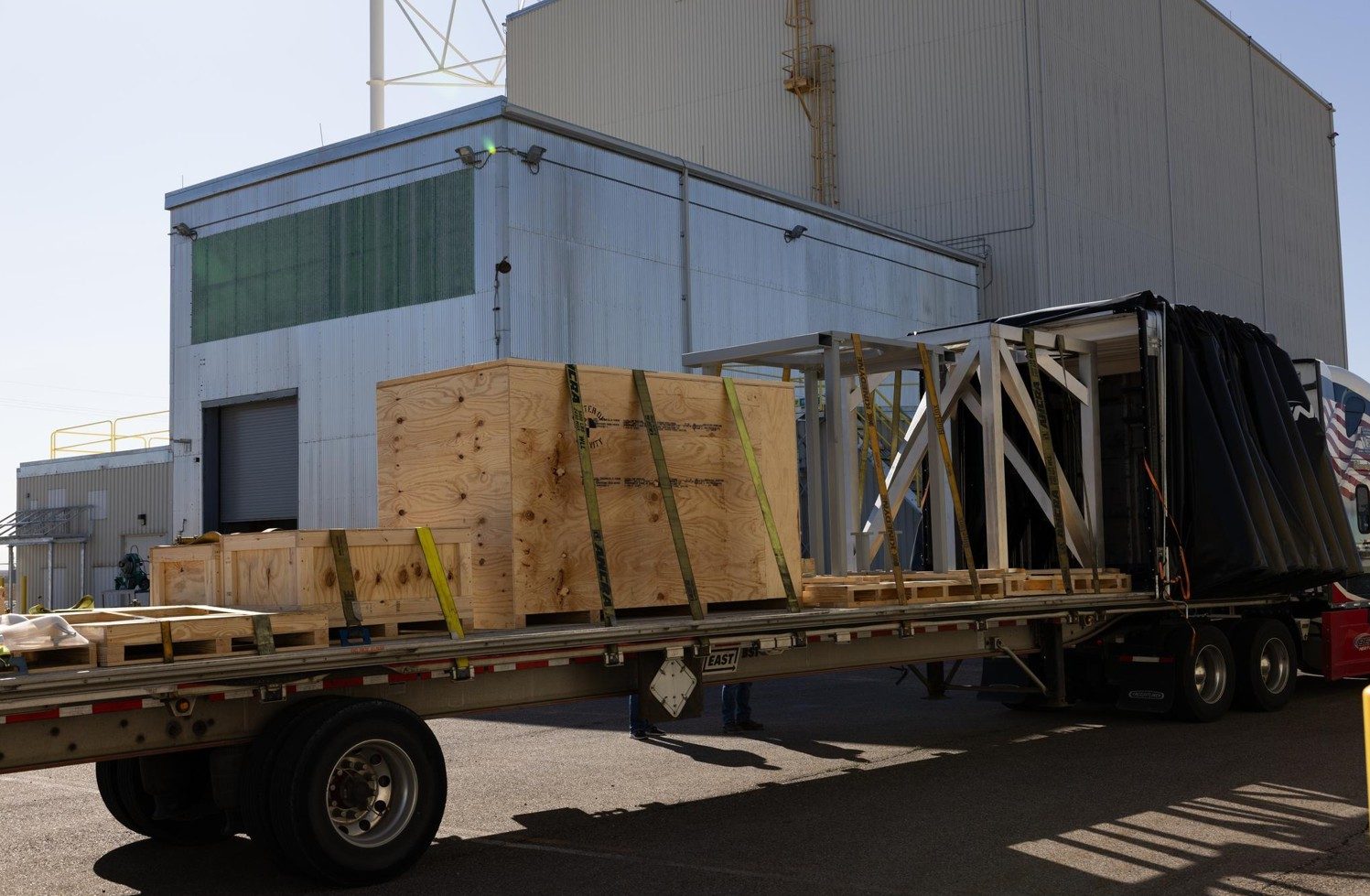
The Department of Energy's Idaho Operations Office has approved the final documented safety analysis for MARVEL, the test microreactor Idaho National Laboratory leads for DOE, authorizing a dry criticality configuration run at near-zero power. INL announced the approval on October 6, 2026 and said the reactor's primary coolant system arrived at its Transient Reactor Test Facility (TREAT) in mid-September, with initial startup tests planned for winter 2026–27 and criticality anticipated in December 2026.
The approved configuration will generate data "intended to serve as a national benchmark for reactor physics," INL says. The approval came just before the coolant system arrived, though the lab gives no exact date.
The first configuration runs without coolant. Dry criticality, per INL, is "the critical condition achieved with near-zero power generation, so no coolant is needed or present." The coolant matters for what comes after: during full-power operation the coolant system carries heat away from the core in a sodium-potassium alloy that stays liquid at room temperature and moves heat at high reactor temperatures without pressurization, the release says. INL plans to integrate the system with the reactor's other systems before criticality.
Battelle Energy Alliance, which manages INL for DOE, awarded Carolina Fabricators Inc. of South Carolina the contract to build the system, INL said in February 2025, describing a component that "will be the most complex fabrication of the MARVEL project."
A safety case offered as a template
The final document follows a preliminary one. On March 11, 2026, INL announced that the same DOE office had approved MARVEL's preliminary documented safety analysis, which laid out the dry initial criticality configuration, built on a 2024 version, and used what INL calls a risk-informed methodology. That release said MARVEL's approach had already influenced other DOE-authorized reactor projects, naming Pele, the Molten Chloride Reactor Experiment and VALKRE.
The lab says it is willing to share the finished document. "Based on DOE guidance, we are also very open to sharing this approved document with key stakeholders in the hopes that it can serve as a template for industry," said Abdalla Abou-Jaoude, the MARVEL lead. Doug Gerstner, an INL nuclear safety engineer, said the approval "validates the risk-informed methodology we developed." INL ties the approval to broader DOE goals under recent executive orders to accelerate the review and deployment of advanced reactors.
The authorization is DOE's own, the same route behind the zero-power tests The Duck Curve tallied in its survey of the summer 2026 criticalities, all of which ran under DOE authorization. Westinghouse has since run a further eVinci zero-power test at 663°C in Nevada, on September 3. MARVEL differs from those machines in one respect its builders state plainly: the design "is not intended to be a commercial product," according to INL's MARVEL project page.
The schedule and the would-be users
A December criticality would arrive ahead of INL's published schedule. The project page still says "Dry initial criticality is anticipated in 2027 with transition to full power operations in 2028," and the February 2025 release said MARVEL would be installed at INL's Materials and Fuels Complex, home to TREAT, in 2027. The October release sets no date for full-power operation.
That later stage is where MARVEL's would-be users come in. INL's documents disagree on its size: the project page rates MARVEL at 85 kilowatts of thermal energy and approximately 10 kW of electricity, while the March release says about 20 kW and INL's December 4, 2025 release says up to 20 kW. The December release named five teams as the first potential end users: Amazon Web Services, which proposes coupling MARVEL with a modular data center; DCX USA and Arizona State University, which propose powering a data center for artificial intelligence; GE Vernova, for remote and autonomous reactor operations; Radiation Detection Technologies, for advanced sensors; and Shepherd Power, NOV and ConocoPhillips, for pilot-scale desalination of oil and gas produced water using reactor heat. Selection may lead to a demonstration, INL said, and final agreements were anticipated to be announced in 2026.
The AI data center on that list would draw on a reactor rated at about 10 kW or up to 20 kW of electricity, depending on which INL document one reads.
Sources
Primary
- MARVEL reactor gets federal safety approval as its primary vessel arrives in Idaho · Idaho National Laboratory
Supporting
- National lab, South Carolina company partner to build coolant system for microreactor demonstration · Idaho National Laboratory
- Idaho National Laboratory announces initial selections for first MARVEL experiments · Idaho National Laboratory
- DOE approves safety documentation for MARVEL microreactor initial criticality · Idaho National Laboratory
- MARVEL Microreactor · Idaho National Laboratory
Copies of cited sources are retained where available. If a link no longer resolves, request a copy at contact@theduckcurve.com.