 The Duck Curve
EU sees China hybrid exports cut by over half; Beijing says they can grow
The joint statement from the October 9 Beijing talks gives the understanding one sentence and no volume; Šefčovič says the final decision lies at the European Council, which meets October 15–16.
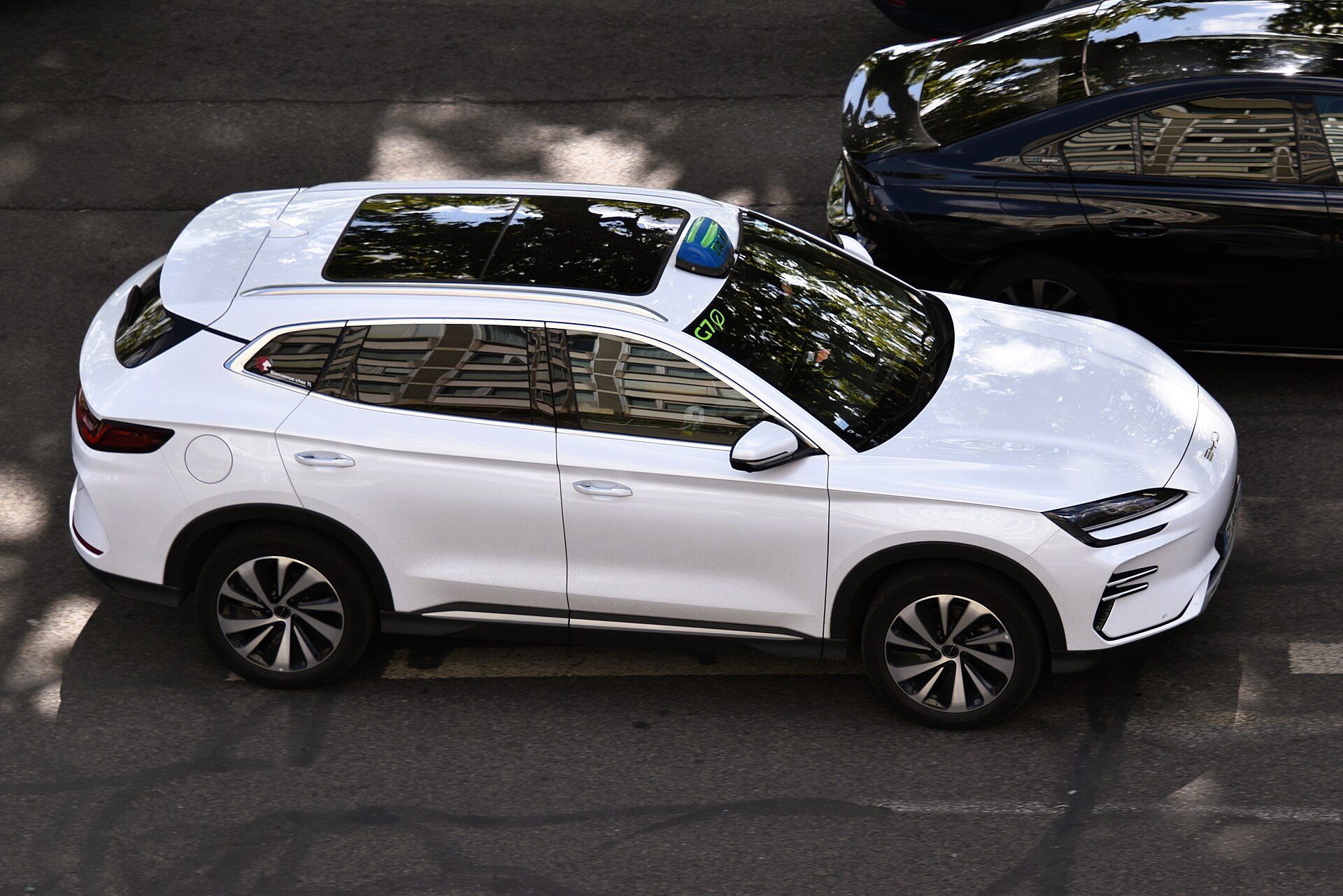
The European Union and China have reached a "shared understanding to moderate China's exports of hybrids and plug-in hybrids to the EU," EU trade commissioner Maroš Šefčovič said in Beijing on October 9, one he said "opens the prospect of cutting China's exports by more than a half" (Šefčovič's remarks). China's Ministry of Commerce describes the same arrangement differently: an October 12 statement from its spokesperson says it was set upward from the 2025 level of 302,000 vehicles, ensuring Chinese carmakers room to export and stable growth. Nothing is settled yet. Commission President Ursula von der Leyen will assess the outcome and discuss next steps with leaders at the upcoming European Council, and "that is where the final decision lies," Šefčovič said. The European Council meets in Brussels on October 15–16.
On hybrids, the agreed text runs to one sentence. The joint statement from the second EU-China Trade and Investment Consultations, held October 8–9 by Šefčovič and Commerce Minister Wang Wentao, says: "Following intensive consultations, both sides have reached an understanding on trade in hybrid vehicles in a WTO compliant manner." It gives no volume, no period and no mechanism, and on volume Šefčovič's remarks add only the "more than a half."
Beijing's version carries the numbers. The ministry's spokesperson cites Eurostat data showing the EU imported 107,000 hybrids from China in 2024 and 302,000 in 2025, and lists three principles. The arrangement builds upward from the 2025 figure. It must be non-discriminatory: no measure will single out Chinese products, and the quota China receives will be no lower than that of any other source of EU imports. And it must comply with WTO rules, with China reserving every right under them, including recourse to dispute settlement and a claim for trade compensation. The word "quota" appears only on the Chinese side; neither Commission document uses it.
The two governments appear to be using different yardsticks. The Commission does not say what the "more than a half" is measured against; Beijing sets its arrangement against 2025. If Beijing's upward arrangement means at least 302,000 vehicles a year, and both sides are counting the same vehicles over the same period, a cut of more than half works only from a baseline more than twice that figure, by our arithmetic. Šefčovič told reporters that "by this step we are actually preventing several millions of car exports from China to the European Union," AP reported, without a time frame attached.
Hybrids sit outside the EU's existing trade defence on Chinese cars. In October 2024 the Commission imposed five-year countervailing duties on battery electric vehicles from China: 17.0% for BYD, 18.8% for Geely, 35.3% for SAIC, 20.7% for other cooperating companies and 7.8% for Tesla. Hybrids were not covered. Imports of them from China nearly tripled between 2024 and 2025, by the ministry's Eurostat figures.
Battery electric cars stay on their own track. The joint statement says the two sides "recalled the guidance document on the price undertakings of the BEVs anti-subsidy case, and will continue the procedures relating to corporate price undertakings and reviews." The Chinese ministry says the case reached a "soft landing" in January 2026, when the EU issued that guidance. AP's account described the possible cut as covering Chinese "electric and plug-in hybrid vehicle imports"; the Commission's statement names hybrids and plug-in hybrids only.
Hybrids were the first of three items on Šefčovič's list. The second was an understanding on lower Chinese most-favoured-nation tariffs for a series of EU products, which he said "range from car parts to olive oil and footwear, totalling almost 4 billion euros in current export value, which would bring at least 225 million euros in duty savings." The third covers rare earths and permanent magnets; in the joint statement's words, "China is willing to continue facilitating export licenses for the supply of rare earths and permanent magnets to the EU through the fast-track mechanism." Šefčovič called the package a first step in rebalancing trade and added: "And where the dialogue cannot deliver, the EU will use its tools to ensure a rebalancing." The ministers meet by video conference in January 2027, and the third round of consultations is set for March 2027.
Europe's carmakers welcomed it. Sigrid de Vries, head of the European Automobile Manufacturers' Association, told AP the deal appears to avert further instability and "can help facilitate the transition to a new era of Chinese presence in the European market in an orderly way and this is in the long-term interests of all parties."
Beijing is also trimming its own support for the same exports. From April 1, 2027, China's export VAT rebate on new energy vehicles, plug-in hybrids included, falls from 13% to 9% (China cuts EV export VAT rebate from 13% to 9% from April 2027).
Sources
Primary
- Joint Statement at the second meeting of the EU-China Trade and Investment Consultations · European Commission
- Press remarks by Commissioner Šefčovič at the second meeting of the EU-China Trade and Investment Consultations · European Commission
Supporting
- EU imposes duties on unfairly subsidised electric vehicles from China while discussions on price undertakings continue · European Commission
- EU and China strike interim trade deal that could cut Chinese hybrid exports, EU envoy says (AP) · Associated Press via KSAT
- MOFCOM spokesperson answers questions on the China-EU hybrid and electric vehicle consultation consensus · Ministry of Commerce of China
- European Council, 15-16 October 2026 · Council of the EU (Irish Presidency)
Copies of cited sources are retained where available. If a link no longer resolves, request a copy at contact@theduckcurve.com.