 The Duck Curve
Utilities sought a record $4.5B for a third quarter, PowerLines says
The quarter brings 2026 requests to $23.1 billion yet was the year's smallest so far, and the largest filing, Jersey Central's $700 million, is built to stay off residential bills until 2028.
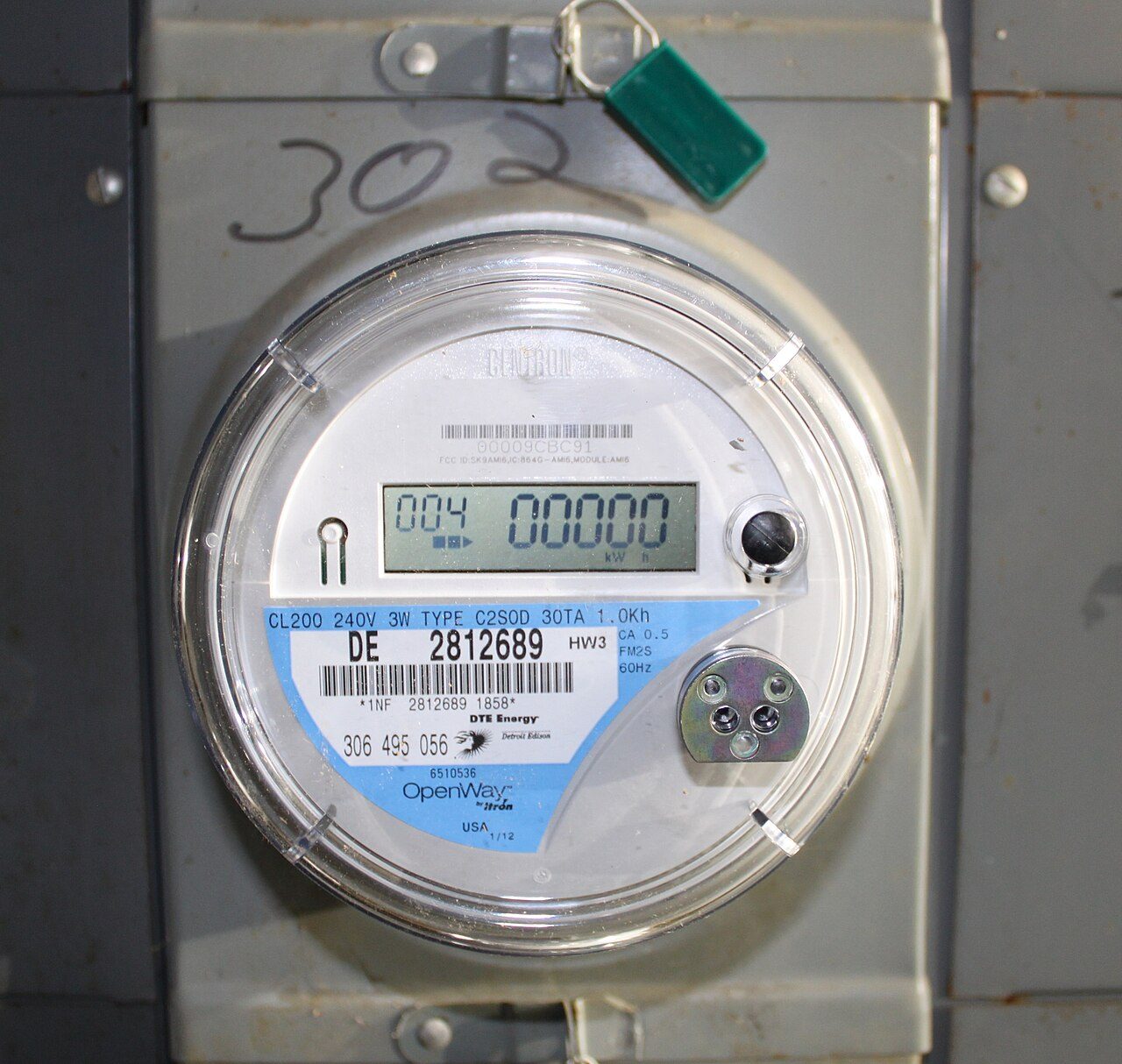
Electric and gas utilities asked regulators for $4.5 billion in rate increases in the third quarter of 2026, the highest third quarter on record, according to the latest edition of the nonprofit PowerLines' quarterly Utility Bills Are Rising index. That brings 2026 requests to $23.1 billion, and PowerLines says the proposed increases "could lead to higher costs for more than 45.5 million customers."
The record is for a third quarter, and it was the smallest quarter of the year. PowerLines counted $9.4 billion in requests in the first quarter and a record $9.2 billion in the second, for $18.6 billion in the first half. By our arithmetic, July through September came in at less than half of either earlier quarter. The year is still large: PowerLines put the whole of 2025 at a record $31 billion, and 2026 has reached $23.1 billion with a quarter left.
These are requests, not bills. Each row in the report's appendix is a filing from July, August or September 2026, listed with the utility, its region, its customer count, whether it is electric or gas, and the amount requested, sourced to the state commission or to Halcyon. PowerLines describes itself as a nonpartisan consumer education nonprofit that aims to modernize utility regulation to lower bills, and the report doubles as an argument: governors have the authority to appoint public utility commissioners in 36 states, it notes, and the question for elected officials is no longer whether they have the tools to act but "whether they will use them."
Most of the money is for electricity, though the headline total folds in gas and the report never splits the two. Count the appendix's labels and 46 of the 64 listed filings are electric, and all nine listed at $0.2 billion or more are electric. The largest gas requests in the appendix round to $0.1 billion each: MidAmerican Energy in Iowa, Spire Missouri and Northwest Natural Gas in Oregon.
Where the money is
Utilities in the South asked for the most, $2.2 billion, bringing the region to $9 billion in requests so far in 2026, per PowerLines. The Northeast followed at $0.9 billion, the Midwest at $0.8 billion and the West at $0.6 billion. The West also had the most customers attached, 20.8 million of the 45.5 million, and the two biggest Western customer counts in the appendix belong to gas filings by SoCalGas (5.9 million) and Pacific Gas & Electric (4.6 million), each listed at $0.0 billion.
The single largest request, $700 million by PowerLines' figure, came from Jersey Central Power & Light in New Jersey. According to FirstEnergy's release on the filing, it combines a $253 million increase in base distribution rates with recovery of $476 million in previously deferred storm costs through a separate charge starting in January 2028 and spread over 10 years; the two pieces sum to $729 million. Proposed offsets would keep residential customers from feeling the base delivery change in 2027. If approved, the company says, residential customers would see a total bill increase of about 8.8%, or $14.23 a month for a typical household using 767 kWh. PowerLines puts it at about $170 a year, and notes that New Jersey regulators are under a directive from the governor to consider pausing new rate increases, which does not bar the utility from filing new requests.
The other large asks in the appendix are electric: Dominion Energy Virginia and Indiana Michigan Power at $0.5 billion each, Oklahoma Gas & Electric at $0.4 billion and CenterPoint Energy in Texas at $0.3 billion. Dominion appears twice, with a separate $0.2 billion request in July. PowerLines says its $500 million request is for distribution system upgrades and would add $3.46 a month for residential customers, in a state where it says average monthly residential bills have already risen more than $50 in five years.
PowerLines ties the filings to spending. Investor-owned utilities plan at least $1.4 trillion in capital expenditures through 2030, the report says, and it expects that "this pace of rate requests is likely to continue, and potentially accelerate, in coming quarters as utilities' CapEx spending shows up in rate requests." The utility side reads the same spending differently. Dani Marx, a spokesperson for the Edison Electric Institute, told Utility Dive in an email that utilities are focused on reliability and affordability. "Importantly, every rate request gets rigorous review by state regulators," Marx wrote. The two filings PowerLines singles out fit both readings: by FirstEnergy's figures nearly two-thirds of Jersey Central's request is deferred storm costs, and Dominion's is for distribution upgrades.
What reaches bills this winter
Commissions decide requests on their own schedules, and the quarter's largest one is built to stay off residential bills until 2028. For this winter, the nearer number is the National Energy Assistance Directors Association's winter heating report, dated September 14, 2026. NEADA projects households will spend an average of $1,030 on heating, up $82 or 8.7% from the prior winter, with electric heating up 9.0%, natural gas 5.8%, propane 8.7% and heating oil 31.3%. It says expectations of a warmer winter from El Niño are moderating the increase across all fuels.
NEADA's longer view is harsher on electric heat than on gas: since the winter of 2021-22, it says, the cost of heating with electricity rose 35.7%, against 16.9% for natural gas. In Massachusetts, what a heat pump household pays for winter distribution depends on the rate it signs up for: households enrolled in National Grid's optional heat pump rate pay $0.02476 per kWh for base distribution from November 1, 2026 through April 30, 2027, against $0.06777 on the default rate, as The Duck Curve reported on October 4.
NEADA keeps its own, broader tally: more than 275 electric and gas utilities have raised rates, won approval for increases or proposed them since 2025, which it says could add more than $101 billion to customers' bills through 2028. That count includes approved increases, so it is not comparable with PowerLines' requests-only index. Both groups point at elected officials. NEADA wants Congress to raise funding for the Low Income Home Energy Assistance Program from $4 billion to $7 billion; PowerLines founder Charles Hua, in the release accompanying the October 7 report, said "the question is how elected officials will respond in this crucial moment."
Sources
Primary
- Utility Bills Are Rising: Q3 2026 · PowerLines
Supporting
- New PowerLines-Ipsos Poll Finds a Majority of Americans Report Rising Utility Bills as Utilities File $9.4 Billion in Rate Increase Requests in Q1 2026 · PowerLines
- Utilities Request $18.6 Billion in Rate Increases in First Half of 2026 · PowerLines
- Winter Heating Report: Winter Heating Prices Projected to Increase by 8.7 Percent · National Energy Assistance Directors Association
- Utilities Request $23.1 Billion in Rate Increases Through Third Quarter of 2026 · PowerLines
- JCP&L Rate Proposal Delays Bill Impact for Residential Customers Until 2028 While Supporting Reliability Investments · FirstEnergy
- US electric, gas utility rate requests spike to $4.5B in Q3: PowerLines · Utility Dive
Copies of cited sources are retained where available. If a link no longer resolves, request a copy at contact@theduckcurve.com.