 The Duck Curve
Massachusetts adds winter transmission discount to two heat pump rates
National Grid's approved charge is $0.00477 per kWh from November 2026 through February 2027 against a $0.05464 default; Unitil's $0.01499 against $0.04201 is one it says it plans to replace with revised rates for January 1, 2027.
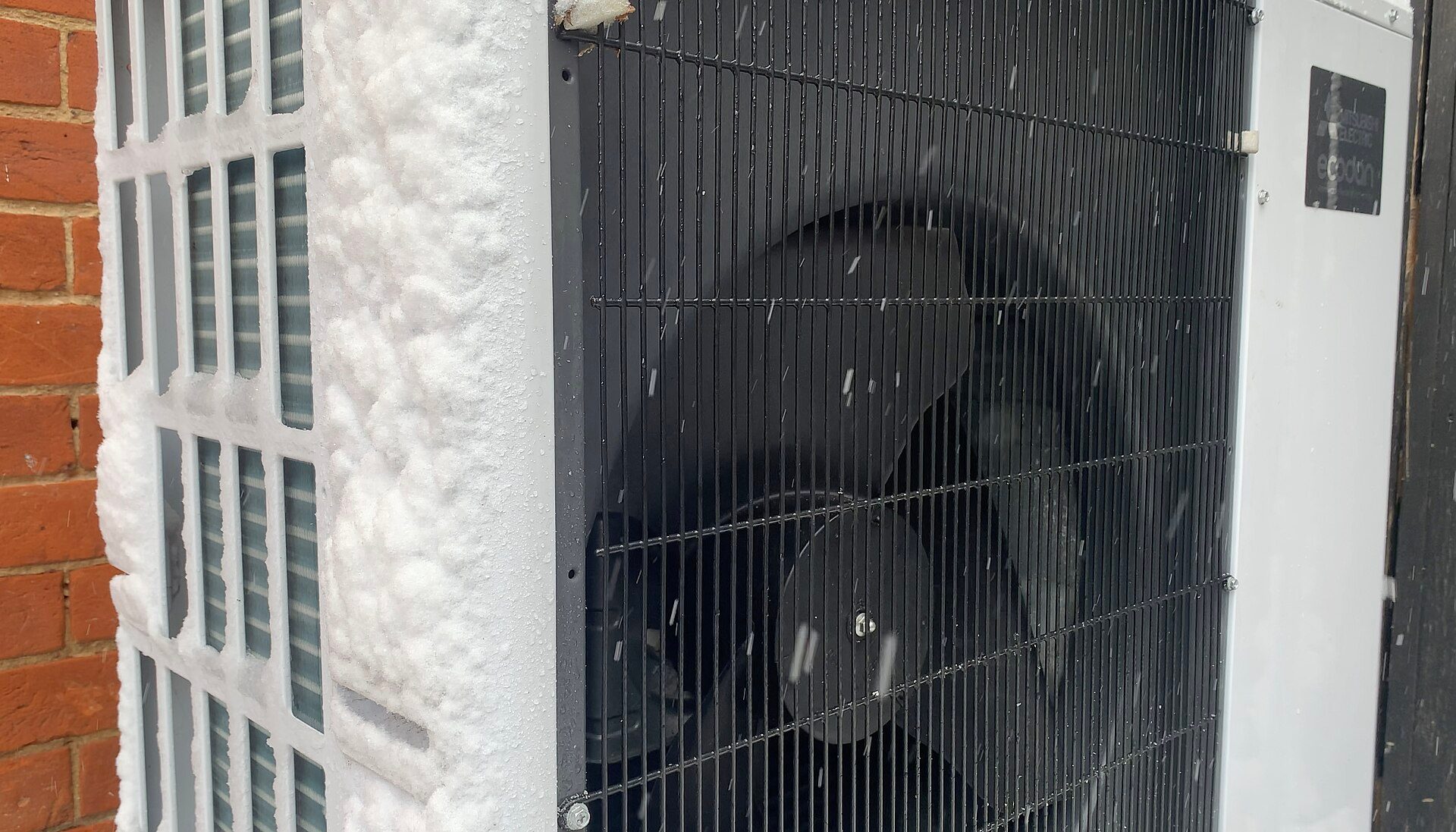
Massachusetts households enrolled in National Grid's and Unitil's optional heat pump rates will pay a discounted transmission charge for the first time in the 2026-2027 heating season. The Department of Public Utilities stamp-approved National Grid's compliance filing in D.P.U. 26-71 on July 29, 2026 and Unitil's revised heat pump tariffs in D.P.U. 26-72 on July 31, 2026, both for the heating season that begins November 1, 2026. National Grid's filing sets its heat pump transmission service charge at $0.00477 per kWh for November 2026 through February 2027, against a default net transmission charge of $0.05464 per kWh. Unitil's stamped rate summary carries $0.01499 per kWh for November through April against $0.04201 for May through October, a rate Unitil's June 15, 2026 cover letter says the company plans to replace for January 1, 2027, when its transmission rates change.
Both filings answer the Department's June 1, 2026 order in D.P.U. 25-08-A, which directed the two companies to file proposed winter transmission charges for their heat pump rates by June 15, 2026, "consistent with the design of winter transmission charges approved for NSTAR Electric's heat pump rates in NSTAR Electric Company, D.P.U. 25-55 (2025)." NSTAR Electric does business as Eversource; per the order, its 2025 heat pump rates included "a revenue-neutral redesign of transmission charges," while National Grid's and Unitil's, approved in 2024, did not. The order defines the 2026-2027 heating season as November 1, 2026 through April 30, 2027 and tells the two companies to calculate the winter transmission charges "using the same method used to derive their winter base distribution charges, including" the same forecast summer and winter annual usage and seasonal adjustment factors behind those base distribution rates. The Department describes the heat pump rates as "designed to be revenue neutral" and says they "will not increase costs to other customers beyond the cost to serve those customers."
The rate is optional. The order records that before the 2025-2026 heating season the Companies, its collective term for Eversource, National Grid and Unitil, "implemented automatic enrollment for Mass Save heat pump rebate participants and self-enrollment processes for other heat pump customers," "resulting in the enrollment of approximately 140,000 customers across the Companies," meaning all three. It directs them to continue automatic enrollment, to apply the rate by the next billing cycle after a customer enrolls unless a future proceeding directs otherwise, and to present opt-out information on their heat pump rate webpages. Canary Media, reporting the approvals on September 17, 2026, puts the Massachusetts households in line for the two utilities' added winter savings at more than 65,000, a two-company figure separate from the order's count.
What National Grid and Unitil filed
National Grid's June 15, 2026 cover letter explains why its first-winter number is so low. Its transmission cost recovery period runs March 2026 through February 2027, so the charge is calculated over the four remaining winter months to stay revenue neutral against the calendar-year transmission costs approved in D.P.U. 26-02. From March 1, 2027, the letter says, the charge will be calculated on six months of winter and six of summer; it calls that figure the normalized charge, $0.01998 per kWh, shown in Exhibit 1 beside the $0.00477, and bases its bill exhibits on it.
Exhibit 2, based on the normalized charge per the cover letter, shows a 9% monthly reduction for an illustrative R-1 heat pump rate customer with a 3-ton heat pump: $57.27 on a 1,652 kWh November bill, against a typical R-1 bill at the same usage. Exhibit 3 stacks the transmission charge on the heat pump base distribution rate National Grid has proposed in D.P.U. 26-84, its performance-based ratemaking adjustment filing for October 1, 2026, and shows a 20% reduction, $126.68 on the same November bill. That second figure is conditional: the docket's two newest filings, both dated September 10, 2026, are National Grid's reply brief and the Attorney General's letter in lieu of a reply brief, and no order appeared on it as of September 17, 2026.
Unitil's June 15, 2026 filing derives its winter charge from the seasonal factor it uses for distribution. On the June 1, 2026 rates its rate calculation schedule works from, the winter heat pump adjustment factor is 2.80, the ratio of the $0.10176 summer distribution energy charge to the $0.03633 winter heat pump distribution charge; applied to forecast winter sales, that factor lands the winter transmission charge at $0.01499 per kWh. Its bill impact schedule, computed at that rate across a full November-to-April season, shows a heat pump rate customer on basic service using 12,383 kWh a year paying $4,652.57 instead of $4,901.67, a $249.10 reduction (5.1% of the annual bill), all of it in winter, where the reduction is 7.2%. The filing's cover letter says those rates "will only be in effect" for November and December and that the company plans to file revised rates for effect January 1, 2027, when its transmission rates change; the stamped rate summary, on sheets effective August 1, 2026, carries the $0.01499 for November through April with no December end. A July 29, 2026 hearing officer memorandum determined that "no further process is necessary at this time"; Unitil filed tariff sheets limited to the transmission change on July 30, 2026 and the Department stamped them on July 31, 2026.
What else the order did
The order is narrower than the proposal that started the inquiry. It renders the Department of Energy Resources' January 31, 2025 petition two ways, both cited to the petition's first two pages: the procedural background says DOER asked for an optional seasonal heat pump rate with "seasonally differentiated volumetric delivery rates, inclusive of each Company's base distribution charge and all reconciling mechanisms," and the summary of DOER's proposal says "applicable reconciling mechanisms." Either way the Department declined: it says reconciling mechanism charges "generally recover operations and maintenance costs or costs associated with policy programs," found "not clear and convincing information" that seasonalizing any of them other than transmission fits cost-causation principles, and declined to order it "at this time."
The order also has all three companies tell customers the rates are temporary. It directs them to communicate, in outreach materials and at in-person events, that the heat pump rates "are intended to be temporary until more advanced rate designs become available following the deployment of advanced metering infrastructure," and calls rate structures that use those meters the Department's "ultimate priority," pointing to DOER's April 8, 2026 petition for a time-varying rates investigation, D.P.U. 26-62.
New reporting comes with the rate. The order's summary lists four items all three companies must report: enrolled heat pump customers living in designated equity communities, total enrollment, a narrative on marketing and outreach lessons with attention to income-eligible households, equity communities and environmental justice populations, and a narrative on their work with stakeholders, including community-based organizations, to raise awareness of the rates. Separately, National Grid and Unitil must coordinate with the Mass Save program administrators on customer data, and all three must report in their annual revenue decoupling filings the billed revenue from heat pump customers against what those customers would have been billed had they not enrolled.
Sources
Primary
- D.P.U. 25-08-A, Order on Seasonal Heat Pump Rates (June 1, 2026) · Massachusetts Department of Public Utilities
- D.P.U. 26-72: Unitil Schedule CJG-2 (Bill Impact) · Massachusetts Department of Public Utilities
- D.P.U. 26-72: Unitil Schedule CJG-1 (Rate Calculation) · Massachusetts Department of Public Utilities
- D.P.U. 26-72: Unitil compliance filing cover letter, June 15, 2026 · Massachusetts Department of Public Utilities
- D.P.U. 26-71: National Grid Exhibits 1-3 (rate design and illustrative bill impacts), updated copies filed July 6, 2026 · Massachusetts Department of Public Utilities
- D.P.U. 26-71: National Grid compliance filing cover letter of June 15, 2026, stamp-approved July 29, 2026 · Massachusetts Department of Public Utilities
- D.P.U. 26-72: Unitil revised proposed tariffs of July 30, 2026, stamp-approved July 31, 2026 (HP-RES, HP-RES LI and Summary of Electric Service Rates M.D.P.U. 312-26-G) · Massachusetts Department of Public Utilities
Supporting
- D.P.U. 26-72: Hearing Officer Memorandum RE: Heat Pump Rate Tariffs (July 29, 2026) · Massachusetts Department of Public Utilities
- D.P.U. 26-84: Letter in Lieu of a Reply Brief of the Office of the Attorney General, September 10, 2026 · Massachusetts Office of the Attorney General
- D.P.U. 26-84: National Grid reply brief transmittal, September 10, 2026 · Massachusetts Department of Public Utilities
- Massachusetts ups winter energy discounts for homes with heat pumps · Canary Media
Copies of every cited source are retained. If a link no longer resolves, request a copy at contact@theduckcurve.com.