 The Duck Curve
Entergy seeks approval for 350 MW of Google-backed batteries in Arkansas
The $550.6 million Driver and Jones Mill projects would reuse existing grid connections, and the same day regulators sent Entergy questions about the Google contract meant to pay for them.
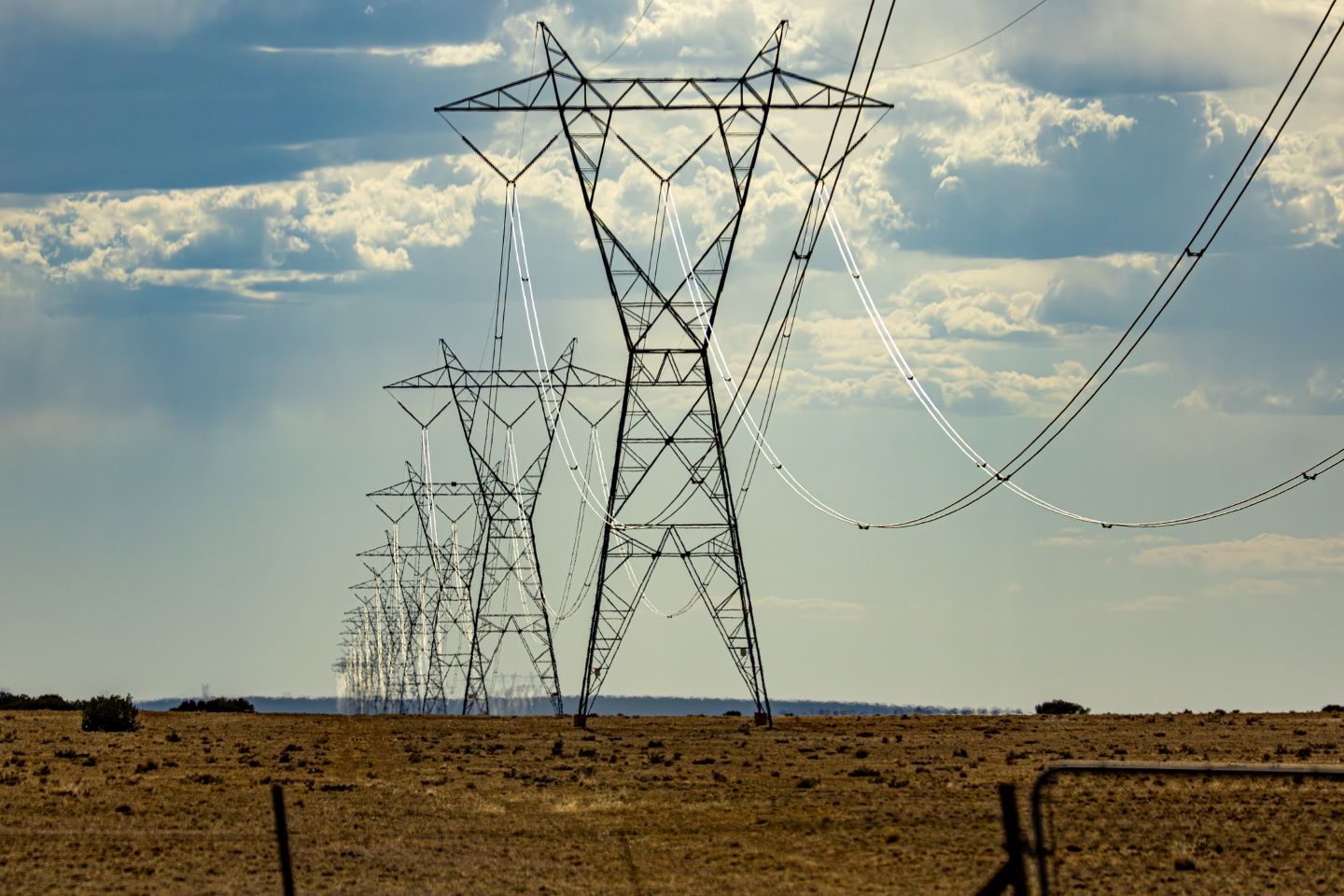
Entergy Arkansas wants to build 350 MW of four-hour batteries to help support Google's expanding West Memphis data center campus, and says they will serve all of its customers while costing the rest of them nothing. Its application, filed October 29, 2026 with the Arkansas Public Service Commission in docket 26-073-U, seeks certificates for the 250 MW Driver battery at Entergy's Driver Solar site in Mississippi County and the 100 MW Jones Mill battery beside the Arklahoma substation in Hot Spring County. Entergy estimates the pair at $550.6 million, $389.4 million for Driver and $161.2 million for Jones Mill, and its current schedule puts both in service on June 1, 2028.
Each battery can discharge at its rated output for four hours: Driver stores 1,000 MWh and Jones Mill 400 MWh, both in lithium iron phosphate cells. Entergy's October 19 announcement gave only those energy figures, leaving the power ratings, and so the duration, to the filing (kW vs kWh).
The money runs through an amended electric service agreement with Google, filed October 19 in docket 25-055-P. Google makes contributions in aid of construction covering the projects' financing costs during construction, and commits to revenues that "fully cover the revenue requirement for the Projects during the term of the Amended Agreement – meaning that the Projects will effectively be no-cost resources for all other customers," the application says. Entergy wants the costs recovered through its formula rate plan, with Google's revenues as the offset. Finance director David Hunt's testimony calculates the bill impact at zero dollars across all customer classes, plus a fuel-cost reduction of $0.04 a month on a typical 1,000 kWh residential bill in 2029, the first full year of operation.
Google's backing has limits. It covers actual costs up to 30 percent above the estimates, with anything beyond that left to negotiation, and it bears 100 percent of the risk if the projects do not qualify for the federal tax credit, according to testimony from Kristin Dalrymple, Entergy Arkansas's vice president of business operations and strategy. Entergy expects each project to qualify for a 40 percent investment tax credit. Entergy also argues the batteries pay their way without Google: the application says they would yield $561 million in net capacity and energy benefits relative to other supply options even without Google's support, a figure Entergy Services supply planning manager Wyatt Ellertson gives as a 2026-dollar net present value over 2026 to 2048.
The batteries themselves are not new picks. They came out of a request for proposals Entergy issued in May 2025, and Entergy Arkansas's chief executive approved their selection on November 7, 2025, Dalrymple testified. What the Google contract adds is a payer.
Connections already in place
Entergy's testimony says neither battery needs transmission upgrades, and the company counts on that for its June 2028 date. Driver would sit behind Driver Solar's existing 250 MW interconnection, with the two operated so their combined output at the point of interconnection does not exceed 250 MW, according to testimony from Brad Cullipher, Entergy Arkansas's senior manager of integrated planning. Solar output varies, so the battery would use the connection when the plant is producing less than the limit. On paper the site gains 250 MW of batteries and no megawatts of grid connection.
Cullipher testified that this configuration makes MISO's surplus interconnection service "specifically suited" to Driver, and Entergy will request it in the fourth quarter of 2026. MISO's review then asks whether the battery can be added behind the existing connection without a material adverse impact on the transmission system; if MISO finds one, the project must go through MISO's standard process or withdraw. Avoiding that study, which Cullipher described as experiencing significant delays, is how Entergy plans to hold June 2028 (the wider backlog is on our interconnection reference page, and the mechanics in What is an interconnection queue?).
Jones Mill would take over rights from a unit on its way out. Entergy holds 547 MW of interconnection service at the Arklahoma substation for Lake Catherine Unit 4; 447 MW of it is to go to the Ironwood combustion turbine Entergy is building at the Lake Catherine site when that unit deactivates and Ironwood enters service, and Entergy plans to move the remainder to Jones Mill under MISO's replacement process. MISO studies whether the battery would have a material adverse impact on the transmission system once Unit 4 is removed; if it finds one, Jones Mill must go through MISO's standard study process as a new generator. Entergy says its own stability and short circuit analyses found no violations. MISO and Entergy signed an agreement for the replacement on September 25, 2026, and MISO aims to post a final study report on December 23, 2026.
A contract with open questions
The contract behind the zero-bill-impact claim is still before the commission. On October 29, the day Entergy filed for the batteries, the commission issued Order No. 14 in the Google contract docket. It asks how Entergy's application complies with the commission's Order No. 11 recommendations: that a special rate contract's terms cannot be filed entirely under seal, and that the total cost of facilities tied to it, the total dollar amounts and nature of the customer's contributions, the full ratemaking treatment, the term of years and any opt-out provisions must be disclosed in the application. It also asks what Entergy's rate impact measure test shows with Driver and Jones Mill removed. Answers are due as supplemental testimony by noon on November 9.
The contract gets its hearing before the battery case reaches its 180-day mark. Order No. 13 sets the contract's public evidentiary hearing for January 4, 2027, more than three months before April 27, 2027, which by our count is 180 days from the battery filing, the outer limit Entergy asked for under the state's siting law. The same order cites the 90-day period Act 373 of 2025 sets for an order on the contract, and schedules staff and intervenor testimony for November 16.
Order No. 14 also asks whether a contract between Entergy and Google on the Big Island solar purchase power agreement is enforceable, given that the commission has not approved Entergy's application for that agreement. The commission denied Big Island in September and on October 22 granted rehearing "solely for the purpose of further consideration." Dalrymple's charts of capacity against peak load in the battery case still plot Big Island Solar among Entergy's resources.
Outlook
The batteries' zero-bill-impact case rests on Google revenues under the amended agreement, so changes the commission requires in the contract docket would carry into the battery case. Entergy's November 9 answer on the rate impact measure test without Driver and Jones Mill may show how much of the contract's case for other customers depends on them. On the grid side, MISO's reviews of both batteries are still ahead: Entergy plans to file Driver's surplus request in the fourth quarter, and MISO aims to finish Jones Mill's replacement study December 23. If either review finds a material adverse impact on the transmission system, that battery faces MISO's standard study process, the path Entergy's testimony says it is avoiding to hold the June 2028 date.
⚠ The Outlook extrapolates from Entergy Arkansas's October 29, 2026 application and the Hunt and Cullipher testimony in docket 26-073-U, and from the commission's Orders No. 13 and 14 in docket 25-055-P.
Sources
Primary
- Application of Entergy Arkansas, LLC for Certificates of Environmental Compatibility and Public Need for the Driver BESS and Jones Mill BESS, Docket 26-073-U · Entergy Arkansas (filed with the Arkansas Public Service Commission)
Supporting
- Order No. 13, Docket 25-055-P (procedural schedule) · Arkansas Public Service Commission
- Direct Testimony of David E. Hunt, Docket 26-073-U · Entergy Arkansas (filed with the Arkansas Public Service Commission)
- Direct Testimony of Wyatt Ellertson, Docket 26-073-U · Entergy Services (filed with the Arkansas Public Service Commission on behalf of Entergy Arkansas)
- Order No. 14, Docket 25-055-P (questions on the amended Google special rate contract) · Arkansas Public Service Commission
- Direct Testimony of Brad T. Cullipher, Docket 26-073-U · Entergy Arkansas (filed with the Arkansas Public Service Commission)
- Direct Testimony of Kristin R. Dalrymple, Docket 26-073-U · Entergy Arkansas (filed with the Arkansas Public Service Commission)
Copies of cited sources are retained where available. If a link no longer resolves, request a copy at contact@theduckcurve.com.