 The Duck Curve
NiSource tolls a 600 MW, 2,400 MWh battery alongside Microsoft deal
GenCo expects to pay AGP Group about $2.2 billion over roughly 20.5 years for the MISO battery, the only resource NiSource has named for a Microsoft agreement that grows its pool by about 1,100 MW.
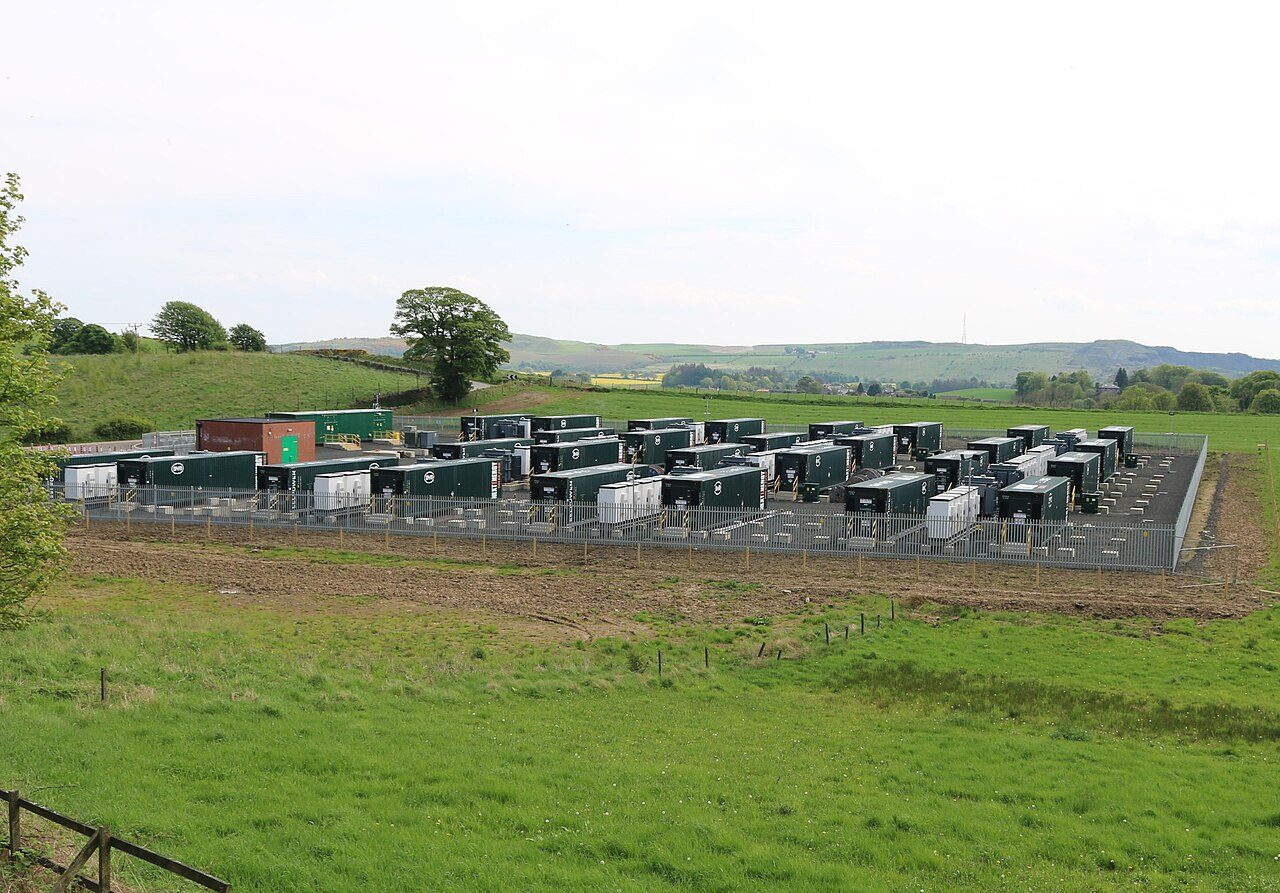
NiSource's generation subsidiary, GenCo, has contracted a 600 MW, 2,400 MWh battery in the MISO market in connection with a new 20-year agreement to serve Microsoft's northwest Indiana data center campus. NiSource announced the Microsoft agreement on October 16, 2026: Microsoft is expected to begin taking electric service under a 20-year term starting in 2028, and the GenCo-owned pool portfolio will be increased by approximately 1,100 MW. A Form 8-K filed the same day says GenCo signed the battery's tolling agreement on October 15 with Atlas Storage 1 LLC, an indirect subsidiary of AGP Capital Holdings Pte. Ltd. (AGP Group).
The battery is the only resource NiSource has named in connection with the Microsoft agreement. Its ratings make it a four-hour battery (600 MW of power, 2,400 MWh of energy), the duration Wood Mackenzie found cheaper than new open-cycle gas peakers in every market where it modeled both.
How the toll works
AGP Group will develop, construct, own and operate the stand-alone battery, interconnected to the MISO transmission system, per the 8-K. GenCo will supply, at its expense, the electricity used to power it, will have the right to instruct dispatch, and will receive the economic benefits of its capacity, discharged energy, energy storage services, ancillary services and (if applicable) environmental attributes, including revenue from selling them into MISO markets. A battery makes no electricity of its own; under the toll, GenCo pays for what fills it.
In return GenCo pays regular storage payments based on a fixed rate (subject to certain adjustments) and the project's actual power capacity, expected to total approximately $2.2 billion over a delivery term of approximately twenty and a half years. That term starts at commercial operation of the project's first phase, expected by December 1, 2027. By our arithmetic, $2.2 billion across 600 MW and 20.5 years is roughly $15 per kilowatt-month, assuming the full 600 MW and before the adjustments. The toll is expected to be accounted for as a finance lease, and GenCo holds an exclusive and irrevocable option to buy the project at specified intervals during and at the end of the term. The release describes a "GenCo-owned pool portfolio" growing by about 1,100 MW; the battery joining the pool will be AGP Group's unless GenCo exercises that option.
The toll is not yet in force. It takes effect only if AGP Group signs an engineering, procurement and construction contract and an interconnection agreement reasonably satisfactory to it, in each case by January 31, 2027, and NiSource lists the receipt, timing and terms of required regulatory approval among the factors that could change the outcome.
A pool, not a power plant
NiSource has not said what stands behind the roughly 1,100 MW: the release names no resource other than the battery and does not say whether the battery counts toward that figure. It says Microsoft fully funds all generation and transmission required to serve its load, and that the battery "will be added to GenCo's pool resource assets designed to serve multiple large-load customers." NiSource says further operational and financial details will come on its third-quarter earnings call, which it has scheduled for October 28, 2026.
That pool is a different arrangement from the resources built for Amazon's contract. On June 17, 2026 the Indiana Utility Regulatory Commission (IURC) declined certificate jurisdiction over the resources GenCo is building for Amazon: two 1,300 MW combined cycle gas turbine facilities at the Schahfer Generating Station and a 400 MW battery at NIPSCO's former Mitchell Generation Station in Lake County. GenCo's president testified that 3,000 MW of capacity was needed to serve Amazon's anticipated 2,400 MW of load, with all costs paid by Amazon. The Citizens Action Coalition argued it was unreasonable to meet 87% of the capacity and 100% of the energy of that load with a large gas complex; the commission approved the request.
The pool works more like a portfolio than a power plant. As NiSource's first-quarter 10-Q describes it, NIPSCO and its affiliates own or contract for the assets, with NIPSCO selecting and dispatching them to meet committed demand "without direct involvement or approval from specific customers." It may include assets GenCo develops or contracts for, as well as capacity agreements, energy storage agreements and market capacity purchases. The initial pool assets the filing lists are a GenCo-built 100 MW battery expected in 2028, energy storage agreements including the 167 MW Tipton battery project, which GenCo intends to convert to a build-transfer agreement, and other capacity purchase agreements. Amazon's added capacity under contract amendments that would take its commitment to 2,800 MW by the end of 2032 is also expected to be served from the pool. The batteries are the pool's named pieces; the capacity purchases beside them are not itemized.
The ratepayer pitch
NiSource sells the deal on savings for NIPSCO's existing customers. The agreement builds on the previously disclosed $1.4 billion in expected savings "over the life of data center customer contracts," lifting the total to approximately $1.75 billion, "equating to as much as $140 per customer annually," according to the release. "Microsoft has always been committed to paying our own way and identifying long-term solutions like this one to ensure that our data centers don't increase electricity prices for other ratepayers," said Jeff Riles, Microsoft's senior director of energy markets. It is the same frame We Energies used for its Oracle deal at Point Beach, which both companies say is expected to save We Energies customers approximately $300 million in fuel costs (Oracle deal expected to absorb about $300 million of Point Beach fuel costs).
Microsoft is not the pool's first customer: an Alphabet subsidiary's contract is also served from it, per the first-quarter filing. The application for NIPSCO's special contract with that subsidiary, filed with a GenCo power purchase agreement, was approved by the IURC in July 2026 "as filed, without change," per NiSource's second-quarter 10-Q, and an Amazon amendment for incremental service filed that month awaits an order expected in the fourth quarter. The release gives no filing date for a Microsoft contract.
MISO has a proposal for this kind of pairing too: its Large Load Addition Resource Study, which would study a load of at least 200 MW together with new generation in the same local resource zone, awaits a FERC ruling, as our interconnection queue tracker records.
Sources
Primary
- NiSource announces long-term agreement with Microsoft expected to increase customer savings and support Indiana's economic growth · NiSource
- NiSource Inc. Form 8-K (Item 2.03): Battery Storage System Tolling Agreement with Atlas Storage 1 LLC · NiSource Inc. (SEC EDGAR)
Supporting
- NiSource Inc. Form 10-Q for the quarter ended March 31, 2026 · NiSource Inc. (SEC EDGAR)
- IURC Order, Cause No. 46362 (NIPSCO Generation LLC declination of CPCN jurisdiction) · Indiana Utility Regulatory Commission
- NiSource Inc. Form 10-Q for the quarter ended June 30, 2026 · NiSource Inc. (SEC EDGAR)
- NiSource to release third quarter 2026 financial results and host conference call on October 28 · NiSource
Copies of cited sources are retained where available. If a link no longer resolves, request a copy at contact@theduckcurve.com.