 The Duck Curve
NERC data center standards pass final ballot as Google, Meta, AWS vote no
The CLO standards for sites of 50 MW or more at 100 kV now go to NERC's board and then FERC; the operating-data and instructions standard drew the most no votes, and minimum ride-through waits for later.
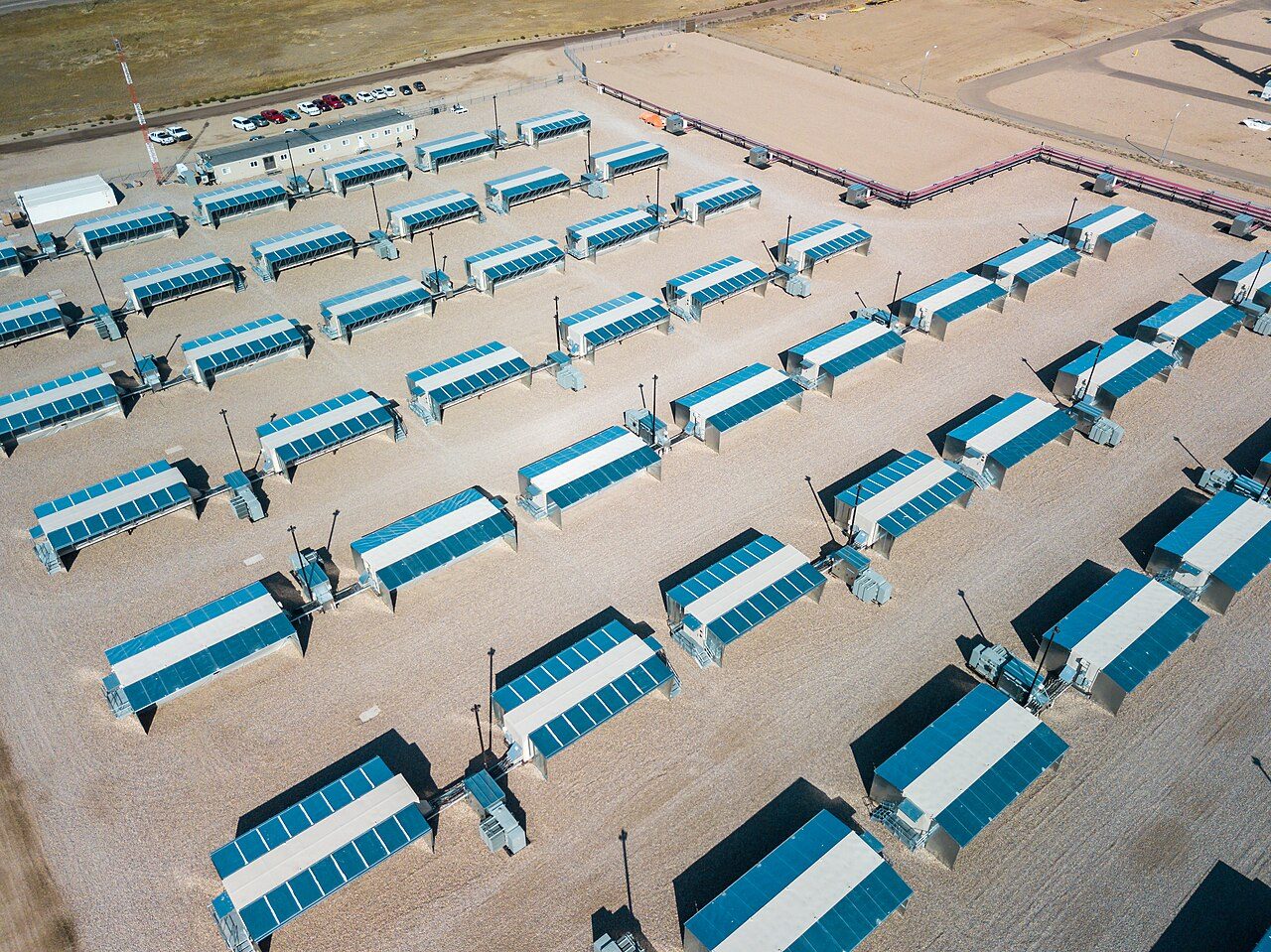
NERC's first reliability standards written for data centers and crypto miners have cleared their final industry ballot, and the ballot segment where Google, Meta and Amazon Web Services vote said no. Three new standards, CLO-001-1, CLO-002-1 and CLO-003-1, would apply to computational load sites with at least 50 MW of total connected load supplied through equipment connected at 100 kV or above. The final ballot closed on October 14, 2026, and NERC announced on October 15 that the standards go next to its Board of Trustees for adoption, then to the Federal Energy Regulatory Commission for approval in the United States. A FERC order of July 16 gives NERC until December 31, 2026 to file them.
Who voted which way
The margins were comfortable and nearly static. Per NERC's ballot results, which its announcement does not report, the standards passed on a weighted segment value of 82.33 for CLO-001-1, 78.13 for CLO-002-1 and 82.69 for CLO-003-1. Conforming edits to the FAC-001 and FAC-002 interconnection standards drew 95.51. Those numbers barely moved from the initial ballot that closed September 18 (81.58, 77.93 and 82.4), which fits a final round where, under NERC's ballot notice, earlier votes carry over unless a voter changes them.
The opposition sat in one place. Segment 7 of the ballot pool has 21 members, among them Google, Meta, Microsoft, Amazon Web Services, the Data Center Coalition, data center developers and the bitcoin miner Hut 8. Fourteen voted no on CLO-002-1 and two voted yes. Among those voting no on all three standards were Google, Meta, Amazon Web Services, Vantage, STACK and the coalition. Microsoft voted for CLO-001-1 and CLO-003-1 and against CLO-002-1. The two yes votes on all three came from Aligned Data Centers and Hut 8, whose Alberta mining site is pictured above in 2018.
It did not matter much arithmetically. Segment 7 carries a weight of 1 in a tally whose segment weights sum to 7.2, and Segments 1, 3, 5 and 6, the four largest, voted yes at rates above 90% on all three. The companies the rules are written for were outvoted by the rest of the ballot pool.
What the three standards require
CLO-001-1 changes most for the data center owner. It must hand its planners steady-state, dynamics and short-circuit models of the site, built to data requirements that must cover "Parameters, settings, and capabilities related to cessation, tripping, Ride-through, and post-Disturbance recovery," and show within 365 days of going into service that the models' site-specific settings match the equipment it installed. Transmission owners and distribution providers must document interconnection requirements for these sites, and planners must study each new connection and each existing site seeking a "qualified change," a term every planning coordinator must define and publish for its own area.
CLO-002-1 drew the most no votes, and its requirement R8 is the one data center commenters asked to narrow. Each computational load operator "shall comply with each Operating Instruction issued by its Transmission Operator(s), Balancing Authority, or Reliability Coordinator unless such action cannot be physically implemented or it would violate safety, equipment, regulatory, or statutory requirements." The Data Center Coalition asked for R8 to excuse an operator where compliance "would require action by a party it has no contractual or operational authority to compel, would require capability the installed equipment does not possess, or is barred by an agreement executed before the effective date of the CLO-002 standard." Its concern was multi-tenant data centers whose operator does not control its tenants' load. The drafting team replied that the existing exception and notification path already apply, and the final text keeps only the original exceptions. NERC's project FAQ adds that "nothing in the Project 2026-02 standards changes the service priority agreed upon for Computational Load Sites."
CLO-003-1 puts disturbance recorders on the sites: breaker-status sequence-of-events records, fault recording at a minimum of 64 samples per cycle on the high side of the main power transformer or at the common point of connection, and continuous dynamic disturbance recording, all synchronized to within one millisecond of UTC. Where a utility or generator owns that transformer, the fault and disturbance recording duty falls on it rather than the data center.
None of it bites soon. Under the CLO-001-1 implementation plan, the standard takes effect on the first day of the first calendar quarter after regulatory approval, with obligations phased in at three, six and nine months. The CLO-003-1 plan gives sites already in service when it takes effect 36 months to meet its recording requirements; its own worked example, with an effective date of April 1, 2027, lands on April 1, 2030.
The part still missing
The package does not set the rule the July 22 event in northern Virginia was about. NERC's FAQ says Project 2026-02 is not setting industry-wide minimum voltage and frequency ride-through performance requirements; work on them is under way in the Large Loads Working Group, whose roadmap ranks a ride-through standards request as high priority. Interconnection requirements under CLO-001-1, which transmission owners and distribution providers write with planners' needs in mind, can still include ride-through criteria, per the FAQ.
That gap is what PJM is trying to fill on its own. After about 3,800 MW of data center load in Dominion's zone switched to backup power on July 22, PJM proposed its own voltage and frequency envelope for large loads and said in September that it plans to file at FERC in November. The thresholds line up even if the rules do not: NERC's standards start at 50 MW, as does the PJM large-load registry FERC accepted on October 9, though PJM counts a site's cumulative peak and NERC counts total connected load at 100 kV or above.
NERC moved its own line before the ballot. Its third-quarter action plan update says it raised the registration thresholds from the 20 MW and 60 kV of its April proposal after comments, and that the board approved the Rules of Procedure changes creating the Computational Load Owner and Operator registrations on October 8.
Outlook
NERC's announcement gives no board date, but its project FAQ says that in December 2026 it "will seek Board approval" of the standards and "submit them to FERC by December 31," and the standards' own development timeline lists board adoption for the fourth quarter of 2026. The ride-through question moves on a separate clock: NERC's update scheduled the Large Loads Working Group's request on disturbance performance for computational loads for endorsement by the Reliability and Security Technical Committee on October 20 and, if endorsed, for the Standards Committee on October 21. With Segment 7 voting heavily against all three of the first standards, a ride-through standard that asks more of the equipment inside the fence could meet a firmer no from the same members, and PJM's planned November filing may put a ride-through envelope in PJM's rules before NERC has one.
⚠ The Outlook extrapolates from NERC's project FAQ, which says NERC will seek Board approval of the standards in December 2026 and file them with FERC by December 31, 2026, CLO-001-1's development timeline (board adoption listed for Q4 2026), the October 20 and 21 committee dates in NERC's Q3 2026 Large Loads Action Plan update, the Segment 7 vote counts in NERC's ballot results, and PJM's planned November FERC filing as reported in our September 10 post.
Sources
Primary
- NERC's Computational Loads Standards Pass Final Ballot, Advance to Board Adoption · North American Electric Reliability Corporation (NERC)
Supporting
- Ballot Results: 2026-02 Computational Loads CLO-001-1 IN 1 ST · North American Electric Reliability Corporation (NERC)
- Ballot Results: 2026-02 Computational Loads CLO-003-1 IN 1 ST · North American Electric Reliability Corporation (NERC)
- Ballot Results: 2026-02 Computational Loads CLO-002-1 IN 1 ST · North American Electric Reliability Corporation (NERC)
- CLO-001-1 Computational Load Interconnection, Studies, & Modeling Data (final draft) · North American Electric Reliability Corporation (NERC)
- Consideration of Comments, CLO-002-1, Project 2026-02 · North American Electric Reliability Corporation (NERC)
- FAQ: Computational Loads, Registry Criteria and Project 2026-02 Standards (October 2026) · North American Electric Reliability Corporation (NERC)
- Implementation Plan, CLO-001-1, FAC-001-5, FAC-002-5 · North American Electric Reliability Corporation (NERC)
- Implementation Plan, CLO-003-1 · North American Electric Reliability Corporation (NERC)
- Standards Announcement: Project 2026-02 Computational Loads, Final Ballots Open through October 14, 2026 · North American Electric Reliability Corporation (NERC)
- CLO-002-1 Computational Load Operational Data and Communications (final draft) · North American Electric Reliability Corporation (NERC)
- CLO-003-1 Computational Load Protection Coordination & Disturbance Monitoring (final draft) · North American Electric Reliability Corporation (NERC)
- Ballot Results: 2026-02 Computational Loads CLO-003-1 FN 2 ST · North American Electric Reliability Corporation (NERC)
- Ballot Results: 2026-02 Computational Loads CLO-002-1 FN 2 ST · North American Electric Reliability Corporation (NERC)
- Ballot Results: 2026-02 Computational Loads CLO-001-1 FN 2 ST · North American Electric Reliability Corporation (NERC)
- Large Loads Action Plan: Q3 2026 Update · North American Electric Reliability Corporation (NERC)
Copies of cited sources are retained where available. If a link no longer resolves, request a copy at contact@theduckcurve.com.