 The Duck Curve
WoodMac: four-hour storage undercuts gas peakers wherever both were modeled
For US projects coming online in 2026, a WoodMac spokesperson told Utility Dive four-hour storage is 65% to 75% cheaper than new open-cycle gas peakers, depending on state carbon pricing.
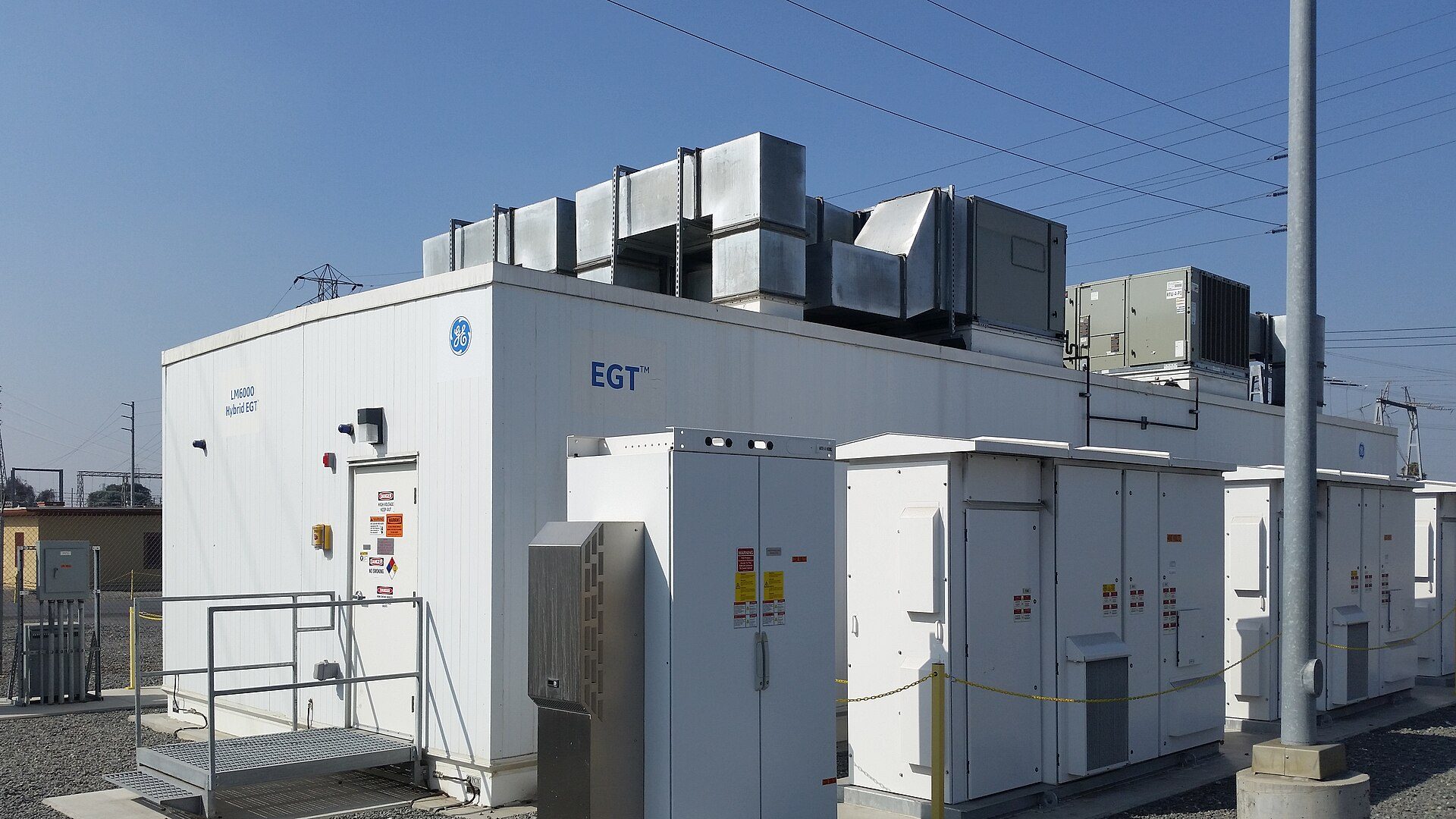
Four-hour battery storage now costs less than open-cycle gas turbines in all 43 markets where Wood Mackenzie modeled both technologies, the research firm said on October 8, 2026, in releasing its latest global levelized cost of electricity (LCOE) reports. WoodMac puts the cause on both sides of the comparison: gas turbine shortages and fuel volatility are pushing peaking costs up while battery manufacturing scale pushes storage down.
"This economic shift is decisive and widening," said Ahmed Jameel Abdullah, principal analyst at Wood Mackenzie. The same reports find single-axis tracker solar is now the lowest-cost new-build technology in 43 of 48 modeled markets, with onshore wind leading in the other five. A four-hour battery is rated by power and sized by energy: it can deliver its full output for four hours, the distinction our kW vs kWh explainer walks through. The figures are WoodMac's modeled costs, and the release does not list the 43 markets.
North America
In the United States the gap is wide. For a 2026 commercial operation date, four-hour battery storage is 65% to 75% cheaper than new open-cycle gas turbine peakers, depending on whether state-level carbon pricing applies, a WoodMac spokesperson told Utility Dive by email; the release itself carries no US storage-versus-peaker figure.
Federal tax credits help. WoodMac says they "continue to provide a competitive advantage for storage," partially offsetting foreign entity of concern (FEOC) restrictions and supply chain constraints. It expects a cost spike after the investment tax credit phases out from 2038, with new battery chemistries, hardware commoditisation and domestic supply chains bringing North American storage LCOE down 10% by 2060.
On the gas side, WoodMac says North American investment in gas generation capacity is entering "a supply deficit cycle through the late 2030s, driven by data centre load growth, a dynamic that keeps thermal capital costs elevated and reinforces the long-term economic case for renewables and storage." US grid batteries are already being built at pace: the fleet was near 52 GW at the end of June 2026 after three years of 70% average annual growth, per EIA's count.
In North America, residential and commercial solar projects face module prices forecast to rise 6% in 2027 and a further 14% in 2028, WoodMac says, as tariffs, anti-dumping and countervailing duty actions and new Section 232 import restrictions press on near-term solar costs, with distributed generation most exposed. Utility-scale solar is partly shielded by 168 GW of safe-harboured capacity, though module prices are still expected to rise around 5% annually through 2030. US rooftop buyers had only just caught a break: the SEIA/WoodMac Q3 2026 Solar Market Insight put distributed-segment module prices down 16% year over year to $0.37 per Wdc after the IEEPA tariffs were invalidated at the start of 2026 (our coverage). The Section 232 proclamation on polysilicon and its derivatives, for one, sets minimum import prices for polysilicon, ingots and wafers, solar cells and modules from December 4, 2026 (background).
Why peakers got dearer
Turbine scarcity, one of the two reasons WoodMac gives for dearer peaking, is something the firm had already measured. In an April 1, 2026 release, the firm said global gas turbine orders stood at 110 GW at the end of 2025 against manufacturing capacity of 60–70 GW, and projected prices reaching US$600/kW by end-2027, a 195% increase since 2019.
"Gas turbines make up an estimated 20 – 30% of project costs for combined cycle projects, and even higher for simple cycle ones," said Aurora Tenorio, senior analyst, Supply Chain at Wood Mackenzie, in that release. Simple-cycle plants are the peakers in the October comparison, so the turbine price weighs most on the very plant the batteries are being measured against. Tenorio also cited six-year lead times and order books sold through 2027.
Batteries also lead the first intake on one new fast lane for generation. Of the first three projects PJM accepted on its Expedited Interconnection Track, two are ENGIE batteries totaling 1,660 MW and the third is a 455 MW upgrade of an existing gas facility (our coverage).
Elsewhere on the map
The Middle East and Africa is where WoodMac's numbers are most explicit. Single-axis tracker solar comes in at US$37/MWh regionally, falling to US$24/MWh by 2035, with Saudi Arabia and the UAE on track to drop below US$20/MWh by 2033. Four-hour storage reaches US$120/MWh in 2026 and is forecast to fall 33% to US$80/MWh by 2035, displacing open-cycle gas turbines on cost in every gas market in the region. Saudi Arabia signed contracts for 2,000 MW of four-hour storage in its first battery tender on August 20, 2026 (our coverage).
China is the storage cost benchmark, with an LCOE more than 55% below the rest of Asia Pacific's US$134/MWh average, which WoodMac attributes to domestic supply chain integration and manufacturing at scale. Competitive Chinese supply is expected to pull that average to US$92/MWh by 2036, though markets including Japan, Australia and the Philippines stay at a premium because of import duties, elevated installation costs and domestic manufacturing policies.
Europe is the reminder that cost curves can bend back up. Battery storage turnkey capex there rose about 2%, the first increase in three years, as cell prices rebounded around 10% from their 2025 low on stronger demand and higher lithium prices. WoodMac forecasts a 12% capex decline by 2031, then a slower pace as lithium prices roughly double in 2029.
Outlook
If turbine prices reach the US$600/kW WoodMac projects for end-2027 and the North American gas supply deficit runs through the late 2030s as it expects, the US gap its spokesperson described for 2026 has room to widen before the cost spike WoodMac anticipates once the investment tax credit phases out from 2038. The comparison is a cost per megawatt-hour, though. A four-hour battery empties after four hours at full output, and a cheaper battery does not by itself settle how grid operators cover longer peaks; PJM's fast track admitted a gas uprate alongside its two batteries.
⚠ The Outlook extrapolates from Wood Mackenzie's October 8, 2026 release (the North American gas supply deficit and the investment tax credit phase-out from 2038), its April 1, 2026 gas turbine price projection, the US cost gap a WoodMac spokesperson gave Utility Dive, and PJM's first Expedited Interconnection Track intake as covered by The Duck Curve.
Sources
Primary
- Four-hour battery storage now beats gas peaking on cost globally · Wood Mackenzie
Supporting
- Gas turbine prices soar 195% as market faces supply-demand crisis · Wood Mackenzie
- 4-hour storage cheaper than gas peakers across global markets: WoodMac · Utility Dive
Copies of cited sources are retained where available. If a link no longer resolves, request a copy at contact@theduckcurve.com.