 The Duck Curve
PJM accepts two ENGIE batteries and a gas uprate on its fast track
All three applied on the track's July 31 opening day; PJM puts their combined nameplate capacity above 2,100 MW and slates them for mid-2029.
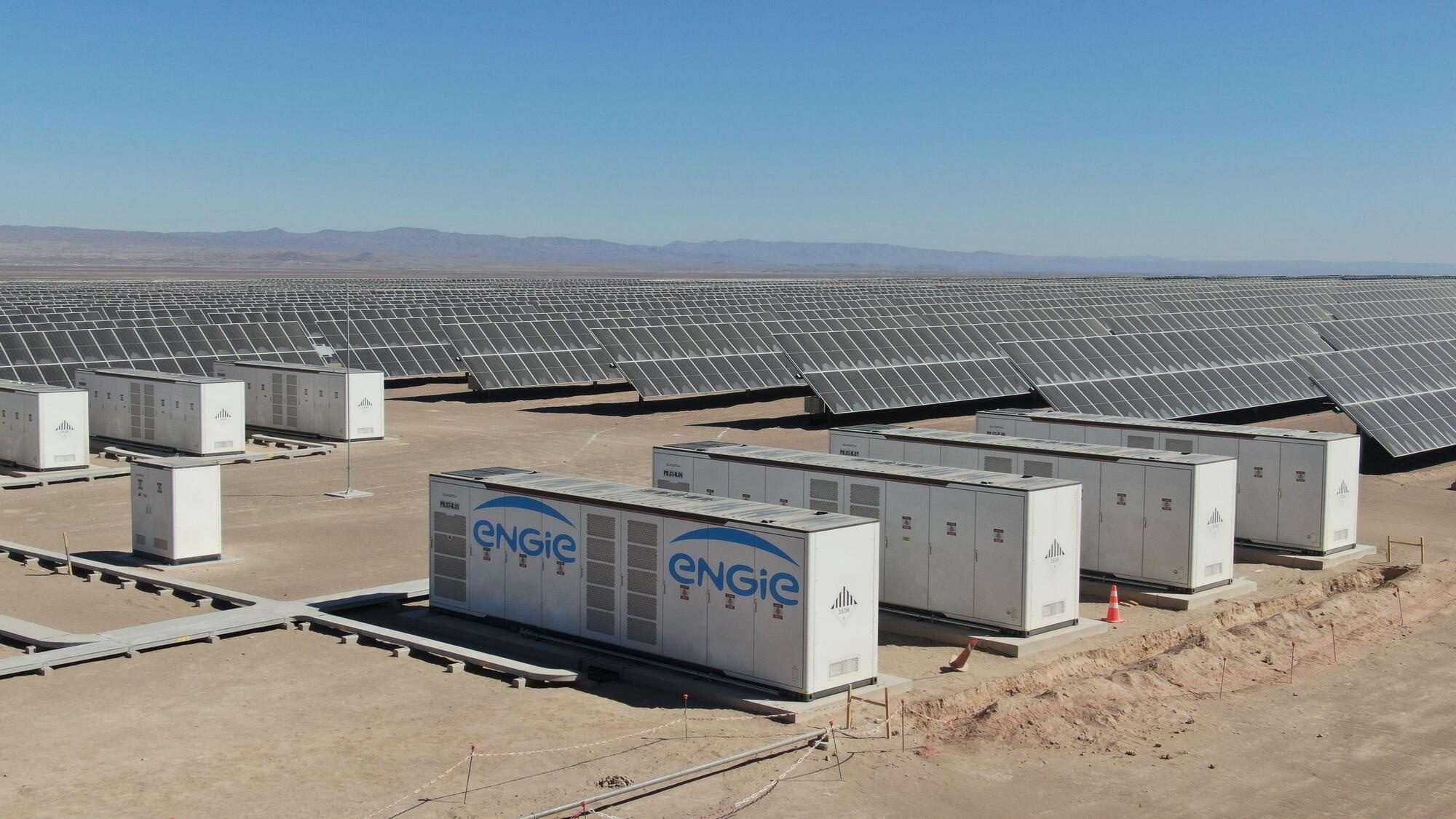
PJM Interconnection has accepted the first three projects on its Expedited Interconnection Track, the temporary fast lane it opened on July 31 for large generators, and two of the three are batteries. ENGIE IR Holdings LLC's Wayne 345 kV storage project in Crawford, Pennsylvania (860 MW) and its Galion 345 kV storage project in Morrow, Ohio (800 MW) are joined by Hunterstown 500 kV, an upgrade adding 455 MW to an existing natural gas facility in Adams, Pennsylvania, PJM said on October 8, 2026. PJM puts the three at more than 2,100 MW of combined nameplate capacity, all slated to come online in mid-2029.
All three were in line on the first day. The requests, numbered ET26-0001 to ET26-0003 on PJM's status sheet for the track, posted on its EIT page on October 7, were submitted on July 31, 2026, the day the window opened, and accepted on September 30; each asks for an in-service date of July 31, 2029. The names are addresses rather than brands: PJM refers to projects by their planned point of interconnection on its transmission system. The sheet lists the Hunterstown request under Hunterstown Generation, LLC, with a maximum facility output of 1,285 MW, and marks all three "Approved"; the announcement places ENGIE's batteries in the PENELEC and ATSI zones and Hunterstown in Met-Ed.
PJM describes the track as a way to "get large generation resources online quickly to address the urgent growth in demand for electricity," driven, it says, particularly by data centers and other large loads. By nameplate, its first intake is 1,660 MW of batteries and 455 MW of gas. Nameplate is the full-output rating, and for a battery that is power, not energy: neither the announcement nor the status sheet gives the two projects a duration in megawatt-hours, which is what decides how long that output lasts (the difference is the subject of kW vs kWh).
How the fast lane works
The track runs beside PJM's regular interconnection queue and takes up to 10 requests per calendar year in 2026 and 2027 for large new or uprated capacity resources. To qualify, a resource must have, among other requirements, a commitment from a relevant state authority to help expedite site permitting, and it must offer at least 250 MW of unforced capacity, the amount credited for reliability purposes. PJM expects projects to sign a Generation Interconnection Agreement within 10 months of submission; proposals are taken on a rolling basis until a year's limit is reached, and the track sunsets at the end of 2027.
Seven of 2026's ten slots are still open by our count, with under three months of the year left: the status sheet lists only these three requests as of October 9. The cap has also firmed since launch, from "will consider up to 10 interconnection requests per calendar year" in PJM's July 31 announcement to "will approve up to 10" in October's.
Getting in is not cheap. FERC's September 24 order denying Oklo's complaint over its removal from PJM's Cycle 01, which pointed Oklo to this track, said its readiness requirements include a commitment to fund network upgrades, 100% site control, a $500,000 study deposit and a $15,000 per MW deposit (our coverage).
Why siting is the gate
David Mills, PJM's board chair and interim chief executive, laid out the logic in a March 27, 2026 letter answering concerns from Governors Pritzker and Sherrill of Illinois and New Jersey. The letter calls the track a "fast lane" that would "allow a very limited set of projects (10) to effectively jump the queue to be studied," with requirements that are "intentionally very stringent" so as not to slow projects in the regular queue, where it says a request submitted then would be "studied and fully processed in 1 to 2 years."
By PJM's account, much of what slows new supply now sits outside its own process, and the siting condition is aimed there. "To date, PJM has ~54 GW of projects that have agreements from PJM and are ready to construct, but obstacles outside of PJM's control, including siting, are impeding their development," the March letter says, adding that this is why the requirement is in the filing. The wording has drifted here too: the October announcement describes the commitment as helping "expedite site permitting," July's said "expedite siting," and the March letter says the filing's definition of a primary siting authority was revised "so as to not confuse siting and permitting." That authority does not have to be state-level and can be a governmental subdivision of the state; it "would simply need to agree to review the project by a certain date," rather than agree to site the project in its letter of support. A state's chief executive can also submit the letter of support where a program to expedite the siting of priority projects has been established by executive order or other binding authority.
Read that way, the track is a trade: PJM shortens its own study, and the developer arrives with a siting authority's promise to review the project by a set date. PJM's count of that backlog has since moved. In its September 30 update on the regular queue, whose first reformed cycle entered Phase I study on September 28 with 617 projects, PJM said it "currently has 49 GW of generation with signed agreements, but many of these projects are either not being built at all or are being slowed by hurdles such as state permitting and supply chain backlogs." By our arithmetic, the three accepted projects come to about 4.3% of that 49 GW (3.9% of March's 54 GW). Our reference page on US interconnection tracks the regular queue.
Outlook
If PJM's 10-month expectation holds, the three July 31 submissions would reach signed interconnection agreements around the end of May 2027, leaving a little over two years before the July 31, 2029 in-service dates they requested. Whether the batteries count for much toward the data-center demand that motivated the track will depend on their duration and on how many megawatts of unforced capacity each is credited with, figures neither the announcement nor the status sheet gives. The remaining 2026 slots, and the 10 available in 2027, are the clearest test of whether developers of large generators beyond these two see the deposits and siting commitment as worth the shortcut.
⚠ The Outlook extrapolates from PJM's October 8, 2026 announcement (10-month interconnection agreement expectation, up to 10 requests per year, 2027 sunset), its EIT status sheet (July 31, 2026 submissions and July 31, 2029 requested in-service dates), and its March 27, 2026 letter on the siting requirement; the end-of-May 2027 date is our arithmetic from PJM's expectation, not a PJM schedule.
Sources
Primary
- PJM Accepts First Expedited Interconnection Track Projects · PJM Interconnection (Inside Lines)
Supporting
- PJM Board response to Governors Pritzker and Sherrill re Expedited Interconnection Track proposal · PJM Interconnection
- PJM Begins Accepting Expedited Interconnection Track Requests · PJM Interconnection (Inside Lines)
- Over 600 Projects Enter Phase I of PJM's New Interconnection Process · PJM Interconnection (Inside Lines)
- EIT Requests Status · PJM Interconnection
Copies of cited sources are retained where available. If a link no longer resolves, request a copy at contact@theduckcurve.com.