 The Duck Curve
FERC denies Oklo complaint; 750-MW project stays out of PJM's Cycle 01
FERC reads PJM's tariff as one chance to cure after a timely deficiency notice and records PJM's finding that the cured model was stable only for the fuel-cell portion; Oklo may fix the errors for Cycle 02 or try the expedited track.
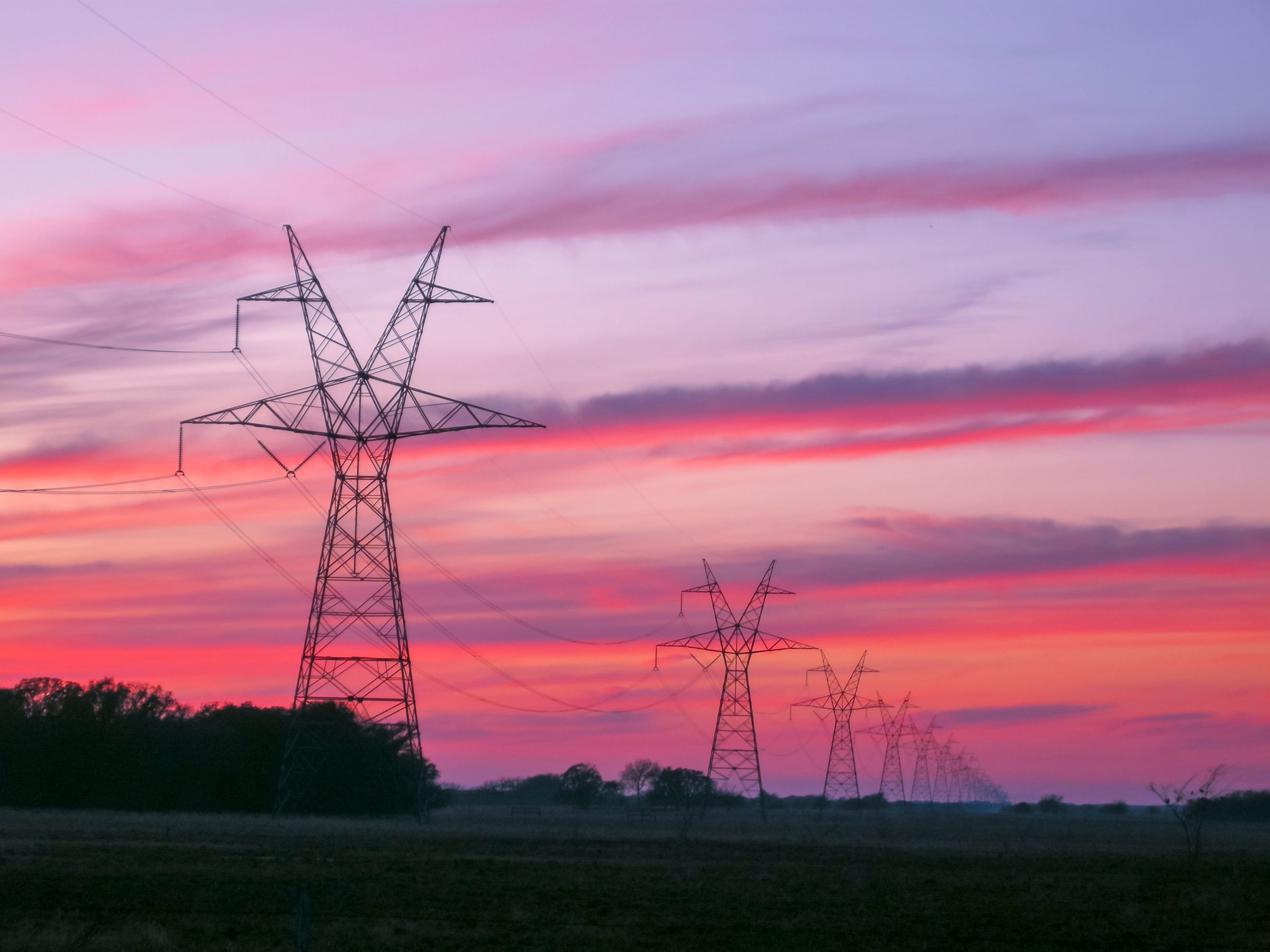
The Federal Energy Regulatory Commission denied Oklo's complaint against PJM Interconnection on September 24, 2026, according to the order in docket EL26-101-000, leaving Oklo's 750-MW mixed-technology project outside PJM's first reformed cycle. The Commission found that Oklo failed to meet its burden under section 206 of the Federal Power Act to show a tariff violation, and dismissed as moot Oklo's request for waivers to put the project back into Cycle 01. The order came four days before September 28, 2026, the Phase I start date PJM's September 4 answer gave.
The project, 150 MW of advanced nuclear generation, 300 MW of fuel cells and 300 MW of natural gas generation, was withdrawn from Cycle 01 on August 3, 2026. Oklo's August 28 complaint redacts the project's identity and location as commercially sensitive, as The Duck Curve reported on August 31, but its public Attachment E, PJM's May 15 deficiency notice, names Possum Point 500 kV and Ladysmith 500 kV as substations A and B and asks for coordinates of the tap location along the 47.56-mile line PJM shows between them; Utility Dive, citing the complaint, says the project would interconnect at two Dominion Energy substations between Washington, D.C. and Richmond, Virginia. The complaint said that, left uncorrected, the withdrawal "will result in a project delay of at least fourteen months." The Duck Curve covered PJM's September 4 answer and Oklo's September 14 reply.
One cure round and one test
The central holding is a reading of section 403(B)(1) of PJM's tariff. Read together, the Commission writes, its subsections (a), (b) and (c) "entitle the Applicant to only one opportunity to cure PJM's initial deficiency notice," provided that PJM exercised reasonable efforts to timely identify deficiencies in that initial notice. PJM's May 15 deficiency notice, per the order, made clear that, "among many other deficiencies," the project had failed to "initialize without any DSTATE errors or suspect initial conditions" and needed to initialize with "all generators turned on." In reviewing Oklo's response, per the order, PJM found the cure model demonstrated only that the 300 MW fuel-cell portion of the 750 MW facility would be stable, not the entire project. Because PJM found that deficiencies identified on May 15 remained unresolved after the cure package, the Commission holds, PJM's rejection was consistent with section 403(B)(1)(c).
That reading disposes of the timing argument over PJM's June 24 comments in NextGen, its application portal, which Oklo said came 41 business days after the application deadline. The Commission's answer is that irrespective of those comments, Oklo failed to demonstrate a stable system for the facility's maximum facility output and so failed to cure the application, "which is sufficient to justify PJM's rejection of Oklo's application." Moreover, the order adds, as PJM points out, the withdrawal notice included deficiencies introduced when Oklo submitted its cure package.
On Oklo's second argument the Commission first adopts PJM's reading and then concedes Oklo's fact. The order says that, as PJM states, the section 7.4 ride-through test for inverter-based resources does not obviate the need for models to demonstrate stability across the project's full output as specified in other parts of PJM's Dynamic Model Development Guidelines; in the Commission's own words, even if Oklo properly followed section 7.4 for the fuel-cell portion, "PJM properly withdrew the Project because Oklo failed to satisfy other modeling requirements specified in the DMDG." Then: "Oklo correctly states that the five cycle, three-phase fault test is not in the DMDG." PJM took "the additional step" of running that test after finding the cured application deficient, the order says, and the August 3 notice listed its failure "as additional information to assist Oklo if it is determined to continue developing its Project."
PJM's September 18 answer, the last filing before the order, put the point more sharply. PJM says it performs the five-cycle, three-phase fault disturbance test on all projects, "including Oklo's other New Service Requests for which PJM was able to validate the Cycle 01 Applications and their models," and that Oklo's allegations of a new test therefore "ring false." PJM agreed in the September 18 filing that the model was stable when Oklo first applied; it says Oklo then turned every unit other than the inverter-based ones offline in the cure model, and that when the remaining units were turned online and the disturbance test was run, the model became unstable. PJM also says it issued withdrawal notices to all project developers at the same time on August 3, "in the interest of efficiency and to prevent undue discrimination."
Beyond the denial
The denial comes with a sentence addressed to PJM: to meet growing demand in the PJM region, the Commission writes, "it is critical that PJM collaborate with project developers before, during, and after the interconnection application process" so that guidance and expectations are clearly understood and properly implemented.
The order's closing paragraph notes that Oklo "can still cure the additional errors and submit the Project to PJM's Cycle 02," or, "if Oklo is committed to moving forward with the Project expeditiously," may consider PJM's Expedited Interconnection Track, "which is open until December 31, 2027." Oklo's reply had called the track "not a viable alternative" because of "numerous additional requirements" it has not planned for, without saying which; a footnote in the order records that Oklo provides no further explanation, and says the track's readiness requirements include a commitment to fund network upgrades, demonstration of 100% site control, a $500,000 study deposit and a $15,000 per MW deposit, citing the Commission's June order approving the track. PJM's July 31, 2026 announcement of the track says it is for large generation projects that are backed by a primary siting authority and can commence operation within three years, that PJM will consider up to 10 requests per calendar year in 2026 and 2027 for large new or uprated capacity resources, and that, among other requirements, a project needs a commitment from a relevant state authority to help expedite siting and at least 250 MW of unforced capacity. At $15,000 per MW, the deposit on a 750-MW request would be $11.25 million by The Duck Curve's arithmetic.
Utility Dive reported on September 25 that five other complaints are pending at FERC contending that PJM improperly dropped projects from the current study cycle, brought by Advantage Capital Renewables, Agilitas Energy, Current Hydro, Lanyard Power Holdings and RWE Americas.
Outlook
The one-cure-round reading of section 403(B)(1) is the part of this order most likely to travel: the five other complaints Utility Dive counts contest withdrawals from the same cycle, and to the extent their facts turn on a second chance to cure rather than an untimely initial notice, this order already answers them. For Oklo, the order itself frames the choice: Cycle 02 with a corrected model, or an Expedited Interconnection Track application, for which the order's footnote names deposits and site control among the requirements and PJM's announcement adds a three-year window to commence operation, against a complaint that put the delay from withdrawal at fourteen months or more.
⚠ The Outlook extrapolates from the September 24, 2026 order's reading of section 403(B)(1), its closing paragraph and its Expedited Interconnection Track footnote, Utility Dive's September 25, 2026 count of pending complaints, PJM's July 31, 2026 announcement of the track's terms, and the complaint's own delay figure; it draws no conclusion about how FERC will rule on the other complaints or what Oklo will file.
Sources
Primary
- Order Denying Complaint, Oklo Inc. v. PJM Interconnection, L.L.C., Docket No. EL26-101-000, 196 FERC ¶ 61,231 · US Federal Energy Regulatory Commission (eLibrary)
Supporting
- PJM Begins Accepting Expedited Interconnection Track Requests · PJM Interconnection (Inside Lines)
- Emergency Complaint of Oklo Inc. v. PJM Interconnection, L.L.C. (Docket No. EL26-101-000), public version with attachments · US Federal Energy Regulatory Commission (eLibrary)
- Motion for Leave to Answer and Answer of PJM Interconnection, L.L.C. (Oklo Inc. v. PJM Interconnection, L.L.C., Docket No. EL26-101-000) · US Federal Energy Regulatory Commission (eLibrary)
- FERC rejects Oklo complaint seeking to reinstate project to PJM's interconnection study cycle · Utility Dive
Copies of every cited source are retained. If a link no longer resolves, request a copy at contact@theduckcurve.com.