 The Duck Curve
FERC backs MISO's penalty-free queue exit a month after the window closed
The November 20 order, effective October 19, covers a refund for DPP-2022 projects leaving by Decision Point 2, a 50% cost threshold for those that stayed and a one-restudy cap; 218 of the cycle's requests remain.
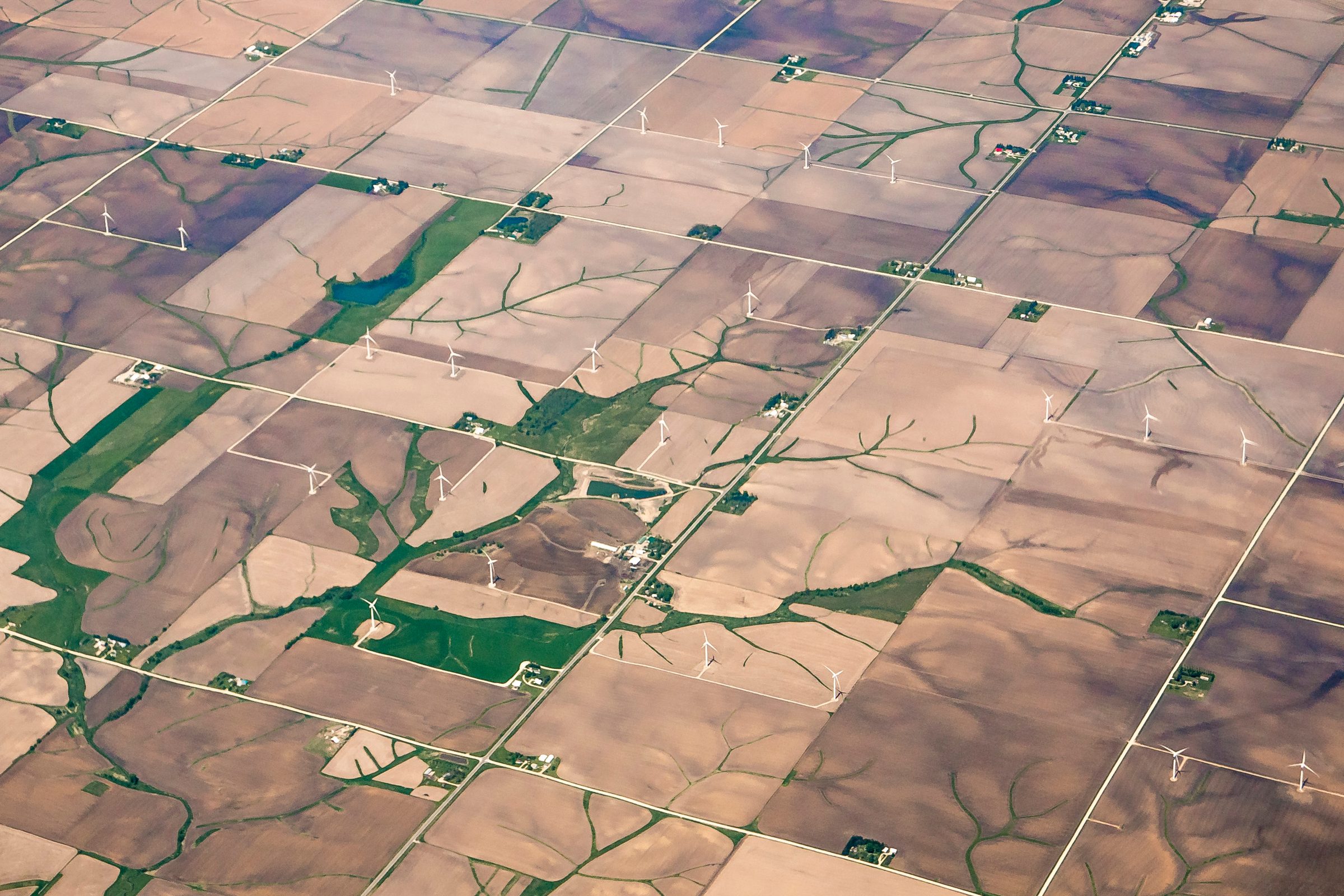
The Federal Energy Regulatory Commission on November 20, 2026 accepted MISO's plan to clear DPP-2022, the grid operator's largest legacy interconnection queue cycle. Projects in the cycle could leave before Decision Point 2 with a full refund of their M2 milestone payment; those that stayed now need their estimated network upgrade costs to rise 50% (and $15,000 per MW), up from 35%, to withdraw without penalty; and Phase III restudies are capped at one for DPP-2022 and every later cycle (docket ER26-3813).
The order arrived a month after the window it governs. Decision Point 2 was scheduled to close on October 20, MISO asked for an order by October 19 with that effective date, and FERC granted the October 19 date "as requested." MISO's September 21 filing said it has no mechanism to unilaterally delay its decision points, that it would register customers' elections to proceed before FERC ruled, and that an order later than October 19 would leave customers processed under the tariff in effect when the decision point concluded. The order is silent on how elections made in the meantime are settled.
The cycle has since moved on. MISO counted 386 DPP-2022 requests, totaling 72.1 GW, on September 21. Its public queue now lists 218 DPP-2022 requests not marked withdrawn, all of them in Phase 3: 168 fewer, by our count. By the queue's summer-capacity figures those 218 total about 38 GW, roughly 18 GW of it solar and 10 GW batteries. The queue does not say when each of the others left or on what terms.
A carrot, a stick and one restudy
MISO's case rests on its last big cycle. In DPP-2019, the Central study region went through nine restudies and four study report revisions while the cycle's other four regions were delayed, MISO told FERC; Phase III results posted on January 30, 2023, and the last restudy concluded on August 28, 2025. Any withdrawal in the same or a higher-queued cycle can trigger another restudy, and the tariff sets no point at which results are final, MISO says.
DPP-2022 is bigger. It began with about 911 requests and 161.2 GW, the largest DPP cycle MISO has run, and MISO put the potential delay from repeated restudies at one and a half years, a figure it called a conservative estimate.
MISO's explanation for why projects linger is the instructive part. Withdrawal penalties rise the further a request gets, so a project whose costs have become prohibitive has a reason to sit in Phase III, MISO says, especially when it is close to qualifying for penalty-free withdrawal on rising upgrade costs. "The lack of finality of the DPP ensures the very penalties designed to ferret unviable projects out of the DPP have ultimately trapped them there," the filing says.
The fix was drafted with a stakeholder coalition of representatives from Clearway Energy Group, NextEra Energy Resources and EDP Renewables, which presented its proposal on September 1. The refund is the carrot. The stick is the higher threshold for projects that stay: their estimated total network upgrade costs must rise by 50% and by $15,000 per MW between the revised and final system impact studies, per the order. MISO says the separate test for affected-system costs, a 40% rise and more than $15,000 per MW, is unchanged.
The one-restudy cap is the part that outlasts DPP-2022. After the final restudy, MISO told FERC, it will not perform another reliability screening when a project withdraws; it will run a sensitivity analysis on the affected upgrades, remove any no longer needed and reallocate the cost of the rest.
Who pays for the exits
Two developers protested. Ranger Power opposed all three changes, and Pathway Power opposed the 50% threshold. Ranger argued that projects remaining after Decision Point 2 will absorb costs left by penalty-free exits, with no forfeited penalties to offset them, and that the threshold change moves the goalposts twice for projects that have been proceeding through the queue in good faith. A single restudy, it said, leaves no chance to spot upgrades that later withdrawals make unnecessary. "In this case, Ranger believes the cure is worse than the disease."
FERC was not persuaded. It found that "MISO has demonstrated a need to expeditiously process its queue and reduce the risk of cascading withdrawals and restudies that have delayed previous queue cycles." It acknowledged that remaining projects could be reallocated upgrade costs, but said the same withdrawals could also cut costs when upgrades are no longer needed, and that the sensitivity analysis means customers are assigned costs only for upgrades necessary for their interconnection. The 50% figure, it said, is consistent with the threshold up to Decision Point 2 it accepted in MISO's 2024 queue reforms, which apply from DPP-2023 on. On Pathway's argument that the change burdens smaller developers, FERC repeated its 2024 finding that the record held no evidence smaller developers were more likely to withdraw.
Ranger had asked that MISO push the Decision Point 2 deadline back 60 days. FERC noted that MISO has no tariff mechanism to pause it.
FERC turned down a broader version of the same idea in October 2025. NV Energy (Nevada Power Company and Sierra Pacific Power Company) asked FERC in July 2025 to waive the withdrawal section of its own interconnection procedures so that any customer that had paid a commercial deposit could leave without penalty. FERC denied it on October 20, 2025, finding that the waiver "is not limited in scope because it is not limited to a discrete number of interconnection customers with a demonstrated need for relief." MISO's filing cites that case and says its own proposal differs: it covers only DPP-2022 and, unlike the waiver, attaches a consequence to staying in the queue. It also came as a tariff change under section 205, filed by the grid operator itself. On October 16 FERC told Massachusetts battery developers seeking a pause in New England that it "has repeatedly denied" waivers of queue deposit, security and penalty rules (our coverage).
FERC accepted the revisions subject to the outcome of two pending dockets, ER24-2046 and ER26-3552, and clarified that only the tariff language pending in those proceedings depends on them.
Outlook
The restudy cap applies to every DPP cycle after DPP-2022, so its effect will outlast the refund. If it works as the order describes, a withdrawal late in Phase III will cost the remaining projects a sensitivity analysis rather than another round of restudy, and a DPP-2019-style run of nine restudies in one region should not recur. The 218 DPP-2022 requests now in Phase 3 will be the first test of whether one restudy and a cost reallocation are enough to carry a cycle that size to interconnection agreements.
⚠ The Outlook extrapolates from FERC's November 20, 2026 order and MISO's September 21 filing (the one-restudy cap and post-restudy sensitivity analysis, and the DPP-2019 Central restudy record) and from MISO's public queue count of DPP-2022 requests in Phase 3; it forecasts no dates or figures.
Sources
Primary
- Midcontinent Independent System Operator, Inc., Order Accepting Tariff Revisions, 197 FERC ¶ 61,128, Docket No. ER26-3813-000 · Federal Energy Regulatory Commission
Supporting
- Nevada Power Company and Sierra Pacific Power Company, Order Denying Waiver Request, 193 FERC ¶ 61,050, Docket No. ER25-3025-000 · Federal Energy Regulatory Commission
- MISO, Legacy Queue Acceleration Proposal and Request for Expedited Action, Shortened Comment Period, and Waiver of the Sixty-Day Prior Notice Requirement (transmittal letter), Docket No. ER26-3813-000 · Midcontinent Independent System Operator, Inc. (filed with FERC)
- Motion to Intervene and Comments of Ranger Power LLC, Docket No. ER26-3813-000 · Ranger Power LLC (filed with FERC)
- MISO Generator Interconnection Interactive Queue · Midcontinent Independent System Operator, Inc.
Copies of cited sources are retained where available. If a link no longer resolves, request a copy at contact@theduckcurve.com.