 The Duck Curve
Oracle deal expected to absorb about $300 million of Point Beach fuel costs
Oracle says its planned subscription to part of the plant's output needs Public Service Commission of Wisconsin approval; We Energies files details in the months after October 2, 2026, and neither release gives megawatts, price or term.
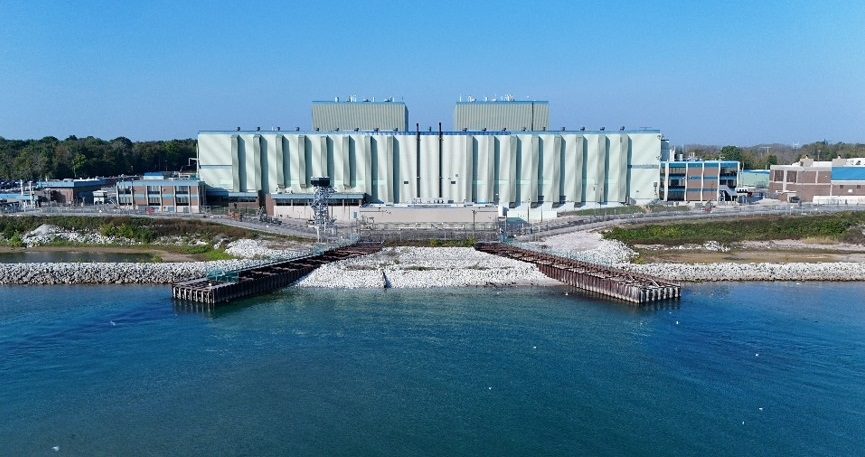
Oracle will subscribe to a slice of the Point Beach Nuclear Plant's output that We Energies is obligated to buy, and both companies say the arrangement is expected to save We Energies customers approximately $300 million in fuel costs. We Energies announced the agreement on October 2, 2026 and said full details go to the Public Service Commission of Wisconsin in the months after that date as part of the commission's review. Oracle's same-day release ties the commitment to Project Lighthouse, its data center development in Port Washington, and says the planned subscription remains subject to the commission's approval.
Neither release says how much power Oracle is taking, at what price, for how long, or over what period the $300 million accrues. In We Energies' telling, Oracle is "voluntarily" taking on part of the increasingly expensive energy the utility is required to purchase from the plant; in Oracle's, it is a "commitment" that, in the words of Mahesh Thiagarajan, executive vice president of Oracle Cloud Infrastructure, "will directly benefit more than 1 million Wisconsin utility customers." Wisconsin Watch reported on October 2 that the deal would let Oracle subscribe to between 10% and 20% of Point Beach's generation, and that We Energies spokesman Brendan Conway said that, if it is approved, it could spare the utility's other customers roughly $300 million in fuel costs over the next five years. The Daily Reporter, the same day, reported that Oracle says it wants to purchase between 125 and 250 MW, or roughly 10% to 20% of the 1.3 GW data center's total energy consumption, and that the company says the move could save utility customers $300 million in fuel costs between 2027 and 2033. The two shares have different bases, the plant's generation and the campus's consumption, and the megawatt range is power, not energy (kW vs kWh). It also quoted Oracle vice president Julia Robin saying the company expects to submit the proposal by the end of 2026. Robin, on the price: "Yes, it may be expensive, but we're not shying away from that."
The contract behind the cost
Point Beach accounts for about a third of We Energies' capacity needs, and the contract for its power for about two-thirds of the utility's 2027 fuel budget, as the company put it in a rate-case presentation WPR reported on August 20, 2026. The reason is a contract signed when the plant changed hands. In December 2006, FPL Energy agreed to buy the two-unit, 1,033 MW plant from Wisconsin Electric Power Company for approximately $998 million, with all of its output sold back to We Energies under a long-term contract running to the license terms of 2030 for Unit 1 and 2033 for Unit 2. The release called the power "competitively priced" and noted that it "escalates each year of the contract." The second clause has aged better than the first.
The monthly cost of delivering one megawatt-hour to We Energies under that contract rose from $45.94 in 2016 to $75.51 in 2026 and was estimated to hit $122.45 by 2033, per an SEC filing cited by WPR. The early years rose 1% to 3% a year and the stretch from 2026 to the end of the contract runs 6% to 8% a year, in the Daily Reporter's account, which also says We Energies cited the agreement as the cause of 20% of its proposed $176 million electric increase for 2027 and the main driver of an estimated $59 million fuel cost increase for that year. That rate case, docket 5-UR-112, was filed April 1, 2026; WEC Energy Group's September 2026 investor presentation expects an order in the fourth quarter of 2026 for new rates effective January 1, 2027 and 2028. Tom Content of the Citizens Utility Board, in the Daily Reporter's account, likened the agreement to "a hockey stick that keeps hitting customers year after year."
The Oracle subscription lands on a contract that is already being rewritten. On August 14, 2026, Wisconsin Electric signed a new power purchase agreement with NextEra Energy Point Beach for 86% of the capacity, energy, ancillary services and environmental attributes of each unit, according to WEC Energy Group's Form 8-K: 20 years from October 6, 2030 for Unit 1 and from March 9, 2033 for Unit 2. The utility is seeking commission approval, per the 8-K; either party may terminate if approval has not been obtained before January 1, 2028 (the date moves to July 1, 2028 automatically if approval is still obtainable and being pursued in good faith), and the new agreement, if approved, will result in customer savings compared with the current one. The licenses are in place: the Nuclear Regulatory Commission issued subsequent renewed operating licenses for both units on September 29, 2025, per the Federal Register notice of October 1, 2025.
A tariff for new plants, a deal on an old one
Wisconsin built its tariff for 100 MW customers around new power plants, and Point Beach's Unit 1 entered commercial operation in December 1970. The Very Large Customer tariff, approved in docket 6630-TE-113 with a written order received May 21, 2026 per the investor presentation, applies to customers with 100 MW or more of forecast new load and has them subscribe to a portion of one or more dedicated new generation resources; Oracle has met the financial security requirements, the presentation says. Neither October 2 release names the tariff, and Oracle's own release describes the subscription as a portion of the existing plant's generation, so the vehicle for it is the filing's to name.
The deal joins a run of hyperscaler contracts attached to existing reactors, the latest being the 20-year Amazon agreement at Calvert Cliffs The Duck Curve covered on October 1, 2026. The shape here is different. Amazon contracts with the plant's owner for output; Oracle, per the two releases, subscribes to a portion of a regulated utility's existing purchase obligation, and the headline benefit is framed as what other ratepayers stop paying.
The load behind it is the Vantage Data Centers campus in OpenAI and Oracle's partnership: four buildings under construction on 670 acres in Port Washington with 1.3 GW of demand forecast through 2030, per the investor presentation, which also says Oracle has stated it will pay its full share of energy.
Outlook
The filing will have to supply the megawatts, the price Oracle pays against the escalating contract, the term, and the window for the $300 million: Conway's five years for what other customers could be spared if the deal is approved, the 2027 to 2033 span Oracle says it could save, per the Daily Reporter, or something else. Robin's end-of-2026 expectation, if it holds, would put the subscription before the commission alongside the Point Beach extension, which the 8-K says either party may terminate if approval has not come by January 1, 2028. The rate case order expected in the fourth quarter of 2026 would set rates for both 2027 and 2028 first; the Daily Reporter's reading is that the announcement is unlikely to affect the 2027 proposal because the data center does not fully launch until 2028.
⚠ The Outlook extrapolates from the October 2, 2026 We Energies and Oracle releases (We Energies says full details go to the Public Service Commission of Wisconsin in the months after that date; Oracle says the planned subscription is subject to its approval), the Daily Reporter's October 2 report of Julia Robin's end-of-2026 filing expectation, WEC Energy Group's August 18, 2026 Form 8-K on the Point Beach extension and its September 2026 investor presentation on the rate case timetable.
Sources
Primary
- We Energies agreement with Oracle expected to save customers approximately $300 million · We Energies (News Center)
Supporting
- FPL Energy announces agreement to purchase Point Beach Nuclear Power Plant · NextEra Energy (newsroom)
- NextEra Energy Point Beach, LLC; Point Beach Nuclear Plant, Units 1 and 2; Subsequent License Renewal and Record of Decision · US Nuclear Regulatory Commission (Federal Register, October 1, 2025)
- We Energies rate filing focuses on reliability, protecting customers and supporting Wisconsin's economy · We Energies (News Center)
- WEC Energy Group and Wisconsin Electric Power Company Form 8-K, Item 1.01: Point Beach power purchase agreement with NextEra Energy Point Beach LLC · WEC Energy Group / Wisconsin Electric Power Company via SEC EDGAR
- We Energies plans to buy power from Point Beach Nuclear Plant into the 2050s · Wisconsin Public Radio
- WEC Energy Group September 2026 investor presentation (Form 8-K Exhibit 99.1) · WEC Energy Group via SEC EDGAR
- Oracle offers to buy nuclear power in Wisconsin · The Daily Reporter (USA TODAY Network)
- We Energies strikes deal to power Oracle data center with nuclear energy · Wisconsin Watch
- Oracle Announces Commitment to Absorb $300 Million in Rising Point Beach Energy Costs for Wisconsin Residents · Oracle
Copies of every cited source are retained. If a link no longer resolves, request a copy at contact@theduckcurve.com.