 The Duck Curve
Vermont Gas will fund and own Riggs Meadow ground loops; Dandelion drills
Dandelion Energy calls the model a first for a US gas utility; VGS's own PUC filing puts its share at $400,000, with $260,000 from an innovation budget carried in base rates.
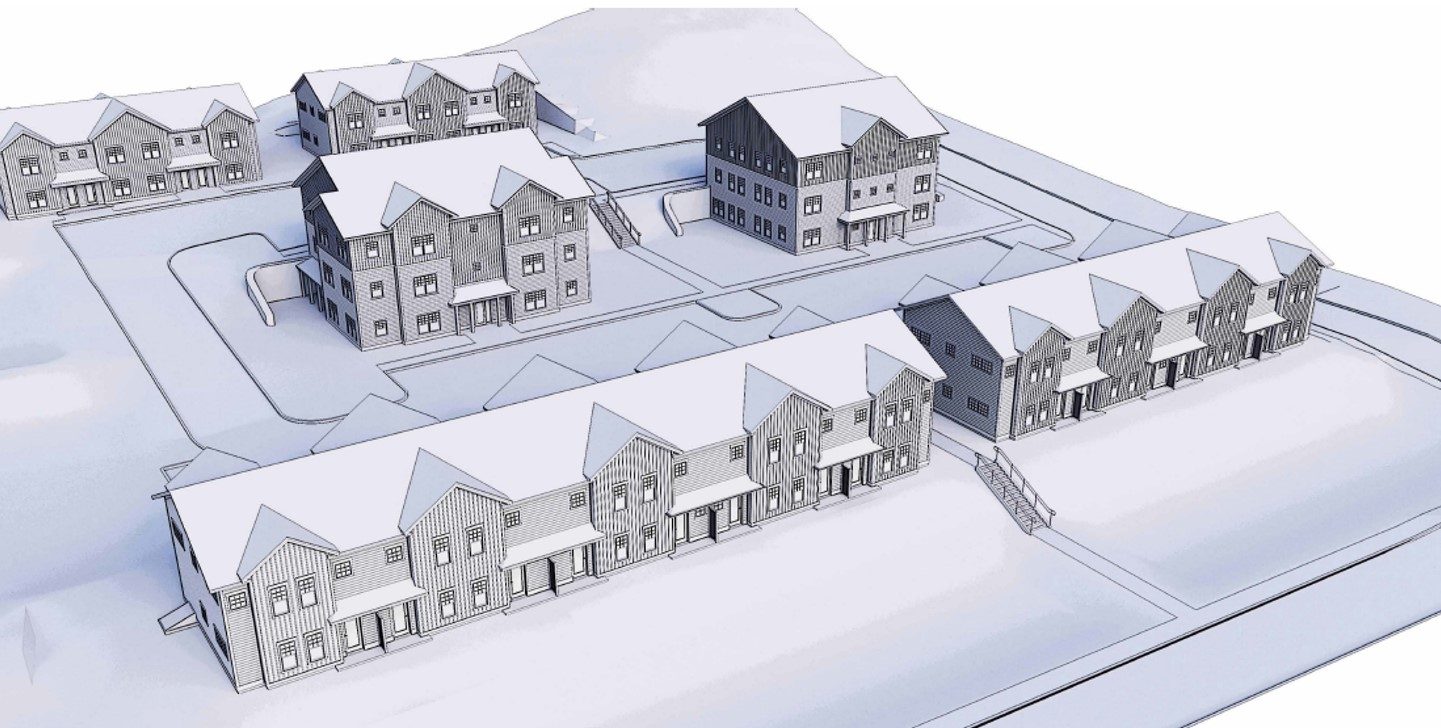
Dandelion Energy said on October 1, 2026 that Vermont Gas Systems (VGS), Vermont's natural gas utility, will pay the upfront cost of the geothermal ground loops at Riggs Meadow, a 44-unit affordable housing development in Hinesburg, Vermont, with Dandelion designing and drilling the system. The release calls the model "the first of its kind in the nation for a natural gas utility" and says borehole drilling will begin in early 2027, with residents occupying the homes in late 2027.
The arrangement is older than the release: VGS put it before Vermont's utility regulators in 2025 and announced it with the developers on April 1, 2026.
Per the Dandelion release, the developers Champlain Housing Trust (CHT) and Evernorth worked with VGS on heating and cooling options before the Dandelion partnership formed, and VGS "is investing in the upfront cost of installing geothermal ground loops."
What the PUC docket shows
The authority for a gas utility to spend on ground loops sits in VGS's Alternative Regulation Plan, which the Vermont Public Utility Commission approved on August 18, 2023 in Case No. 22-5085-PET, per the Commission's gas alternative regulation page. The plan builds $2 million a year of Climate Action and Innovation spending into VGS's base rates and requires 30 days' advance notice to the Commission and the Department of Public Service before VGS spends more than $25,000 of it on one project; if neither objects nor asks for formal process, the plan says VGS may proceed.
The plan's initial term ran to September 30, 2026, and it has been extended. VGS petitioned for a one-year extension on May 30, 2025, and the Commission's order entered August 18, 2025 in Case No. 25-1106-PET grants the petition: "VGS is authorized to extend the term of the Plan to September 30, 2027." The order's findings say "all other components of the Plan, including the Climate Action and Innovation Budget, will remain in place" (its introduction alone says 2026). The extended plan VGS filed in compliance on August 29, 2025 has VGS file a traditional cost of service on February 15, 2027 for the rate year beginning October 1, 2027.
VGS filed the Riggs Meadow notice, under the project name Windy Ridge, on April 16, 2025, opening Case No. 25A-0742. Its June 27, 2025 revised design filing says the first version was a networked system backed by a U.S. Department of Energy grant, that the grant "has not been canceled" but DOE "has been unable to commit to a timeline for fund availability," and that the developer plans to rescind participation in it. The Department of Public Service's July 28, 2025 recommendation puts that original design at approximately $3,300,000, with approximately $3,000,000 awarded from DOE.
The revised design in the June 2025 filing is five single loops, one per multifamily building and one per townhome cluster; VGS would own, operate and maintain the loops, and Dandelion would design and install them for VGS. The filing estimates the whole installation at $2 million: $1.6 million of interior equipment funded by CHT and Evernorth and recovered through rents or sale prices, and $400,000 for the exterior loops, funded by VGS. Of that $400,000, the filing expects approximately $35,000 from utility incentives, approximately $105,000 recovered from customers over twenty years through a monthly loop fee (approximately $25 for apartments, paid by CHT at the building level, and approximately $35 for townhomes), and $260,000 from the Climate Action and Innovation Budget.
The Department did not object. Its July 28, 2025 recommendation asks the Commission to allow the spending "without further process or investigation," and adds that it understands the monthly fee "will not cover the full cost of capital, operation, and maintenance of the system" and "is anticipated to be higher than the cost of gas service." As of October 2, 2026, the case log shows the case open, with the Department's recommendation as the last filing and no Commission-issued documents; under the plan's notice mechanism, no objection means VGS may proceed with the $260,000. The fee itself is on a separate track: the Department's recommendation says that "as VGS proposes to provide service to Windy Ridge residents as a variance from tariffed services, the Department expects subsequent rate cases and untariffed service compliance filings to include analysis of the Projects benefits and costs for VGS customers."
Act 142, signed May 30, 2024, defines a thermal energy exchange network as supplying thermal energy "to more than one household, dwelling unit, or network of buildings that are not commonly owned," then excludes a member-owned cooperative or common interest community serving only its members, "a landlord providing thermal energy exchange services only to its tenants where the service is included in the lease agreement, or any entity that provides thermal energy exchange services only to itself." The Commission's October 20, 2025 report under the act says single-unit and owner-served projects "are not TENs, by definition," and the act's Section 17(b) says nothing in it prohibits companies the Commission already regulates "from pursuing thermal energy change [sic] network projects prior to completion of this study." Neither the June 2025 filing nor the Department's recommendation cites Act 142; the filing calls the revised design "single external loops for each building."
Where the documents differ
The Dandelion release gives 44 townhomes and apartments and does not say how many get geothermal. VGS's April 1, 2026 release says geothermal will heat and cool "four multi-family buildings constituting 36 of the residences on site," and VGS's May 7, 2026 presentation to a House committee repeats 36 of 44; the June 2025 filing and the Department's July 2025 recommendation describe five loops serving all 44 units.
The schedule has moved in each document: the June 2025 filing had the neighborhood breaking ground in January 2026 with all units occupied in early 2027; the May 7, 2026 presentation said drilling would begin in summer 2026; the October 1, 2026 release puts drilling in early 2027 and occupancy in late 2027.
On the "first," the Dandelion release describes the model as "investment in individual geothermal ground loops" and does not mention geothermal networks or any other utility's project; Canary Media's April 14, 2026 piece placed the Vermont project beside Eversource's Framingham, Massachusetts network, which it says launched in 2024 with some 140 retrofitted buildings.
Outlook
VGS's June 2025 filing says its preliminary analysis indicates market-rate customers could provide full capital recovery, making the service cost neutral to its overall cost of service. VGS's innovation filings page also lists a June 15, 2026 notice, Case No. 26A-1191, the "O'Brien Brothers Hillside Single-Family Residence Geothermal Project," alongside two 2022 geothermal cases. With the plan extended to September 30, 2027 and its innovation budget retained, the next regulatory reading on the Riggs Meadow fee is likely the traditional cost of service VGS is to file on February 15, 2027, the kind of rate case in which the Department said it expects the variance to be analyzed.
⚠ The Outlook extrapolates from VGS's June 27, 2025 filing (market-rate customers could provide full capital recovery), VGS's innovation filings page listing Case No. 26A-1191 filed June 15, 2026, the Commission's August 18, 2025 order extending the plan to September 30, 2027 with the innovation budget in place, the extended plan's February 15, 2027 cost-of-service filing date, and the Department's July 28, 2025 statement that it expects subsequent rate cases to analyze the variance.
Sources
Primary
- Dandelion Energy and Vermont Gas Break New Ground with First-in-Nation Geothermal Partnership · Dandelion Energy via PR Newswire
Supporting
- Vermont Gas Systems Alternative Regulation Plan (effective October 1, 2023) · Vermont Gas Systems, Inc.
- Act 142 of 2024 (S.305), An act relating to miscellaneous changes related to the Public Utility Commission, as enacted · Vermont General Assembly
- VGS Windy Ridge Geothermal Project (Revised Design), Case No. 25A-0742 · Vermont Gas Systems, Inc. filing with the Vermont Public Utility Commission (ePUC)
- Vermont Department of Public Service Recommendations on Vermont Gas Systems Proposed Use of Innovation Funds for the Windy Ridge Project (revised design), Case No. 25A-0742 · Vermont Department of Public Service, filed in ePUC
- Order Approving Extension of Alternative Regulation Plan, Case No. 25-1106-PET (order entered 08/18/2025) · Vermont Public Utility Commission (ePUC)
- VGS's Approved Regulation Plan (as corrected May 30, 2025 and extended by PUC Order dated 8-18-25)(clean), compliance filing in Case No. 22-5085-PET · Vermont Gas Systems, Inc. (ePUC compliance filing)
- Thermal Energy Exchange Network Development Report, pursuant to § 17 of Act 142 of 2024 · Vermont Public Utility Commission, via the Vermont General Assembly
- Vermont Gas, Champlain Housing Trust, and Evernorth Announce Partnership to Build Community Geothermal Energy System at New Affordable Housing Development · Vermont Gas Systems newsroom
- Vermont's first neighborhood geothermal project prepares to break ground · Canary Media (Sarah Shemkus)
- Community-Scale Geothermal Overview, presented to the House Committee on Energy & Digital Infrastructure, May 7, 2026 · Vermont Gas Systems (Dylan Giambatista), via the Vermont General Assembly
- Climate Action & Innovation filings · Vermont Gas Systems
- Gas Alternative Regulation · Vermont Public Utility Commission
- Case No. 25A-0742, Vermont Gas Systems, Inc. Windy Ridge Geothermal Project: Register of Actions (case log) · Vermont Public Utility Commission ePUC
Copies of every cited source are retained. If a link no longer resolves, request a copy at contact@theduckcurve.com.