 The Duck Curve
Newsom signs SB 868, California's plug-in solar law, as Chapter 985
Approved September 30, 2026, the Wiener bill exempts qualifying plug-in solar devices of no more than 1,200 watts of aggregated AC output per dwelling from interconnection requirements from January 1, 2027, until January 1, 2030.
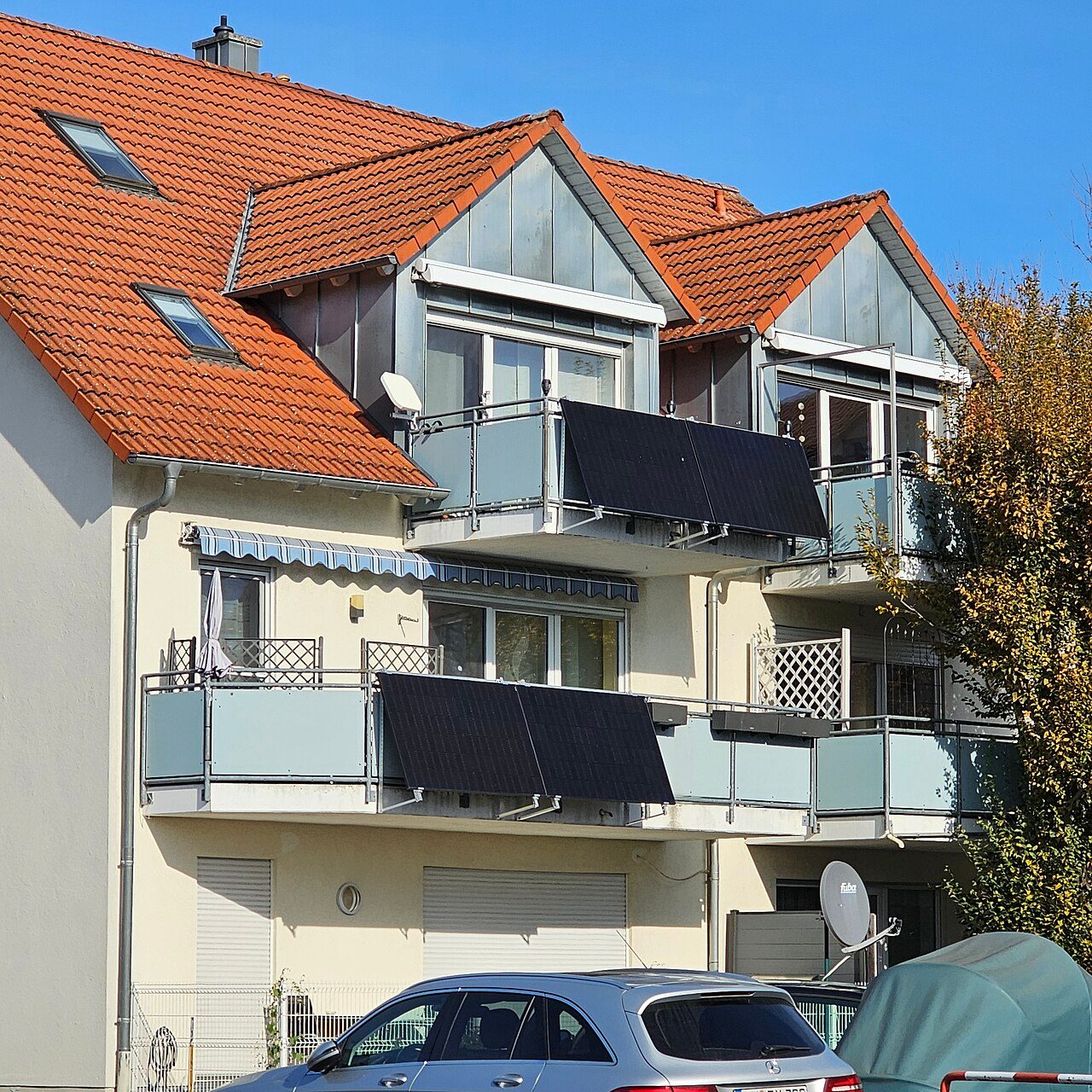
Governor Gavin Newsom approved SB 868 on September 30, 2026, and the Secretary of State chaptered it the same day as Chapter 985, Statutes of 2026, according to the bill's history page. The bill, by state Senator Scott Wiener of San Francisco, adds Chapter 13 (Sections 8530 to 8532) to Division 4.1 of the Public Utilities Code: a "portable solar generation device," defined by six conditions including a maximum aggregated AC output of no more than 1,200 watts per dwelling and connection through a receptacle, is exempt from all interconnection requirements imposed by state law, the California Public Utilities Commission, electrical corporation rules or local publicly owned utility rules. The exemption section repeals itself on January 1, 2030; a sales standard for receptacle-connected devices begins the same day.
The Governor's office listed the bill among those signed in its September 30 legislative update. Wiener's office calls it the Plug And Play Solar Act. The enrolled text has no effective-date section of its own, and its digest key reads "Vote: MAJORITY" where an urgency statute needs two thirds of each house. Under the default rule in Article IV, Section 8(c)(1) of the California Constitution, a statute enacted at a regular session "shall go into effect on January 1 next following a 90-day period from the date of enactment," which by our reading puts the chapter's operative date at January 1, 2027; pv magazine USA reports the same date.
What the chapter does
The definition in Section 8530(c) has six conditions, and a device must meet all of them: (1) a maximum aggregated AC output of no more than 1,200 watts per dwelling; (2) designed to be connected to and disconnected from a building's electrical system through a receptacle; (3) intended to offset the customer's onsite electricity consumption; (4) meets the standards of the most recent National Electrical Code and California Electrical Code; (5) certified "as a plug-in photovoltaic system" by Underwriters Laboratories or an equivalent nationally recognized testing laboratory; and (6) includes a feature, certified by UL or an equivalent laboratory, that isolates the device from the building's electrical system to prevent it from backfeeding electricity to the grid during a power outage. The statute names no UL standard number; the only standards it cites by name are the two electrical codes.
Section 8531 then bars an electrical corporation or a local publicly owned electric utility from requiring a customer to obtain approval before installing or using a qualifying device, to pay any fee or charge related to the device or the electricity it feeds into a building's electrical system, or to install controls or equipment beyond what is integrated into the device. The utility may require notification "using a simple online registration form" of address, make, model and size, and the notification "shall not require approval." The exemption covers requirements "including, but not limited to, any requirement to enter into an interconnection agreement," and that agreement is the hook: Wiener's office's May 19, 2026 release on the 35-1 Senate vote said PG&E "claims residents are required to apply for an interconnection agreement" to use the devices, the senator's office's characterization.
Subdivision (e) gives the chapter its shape: Section 8531 "shall remain in effect only until January 1, 2030, and as of that date is repealed." Section 8532 begins the same day, barring the sale or offer for sale in the state of a receptacle-connected portable photovoltaic device that does not meet conditions (4) to (6), the code, certification and anti-backfeed prongs. The exemption is temporary and the product standard is not: the act's title names Section 8531 as the only section it repeals. The Environmental Working Group, which sponsored the bill with the Abundance Network, says in its September 30, 2026 release that the Assembly added the sunset "using language sought by the utilities" and that the law gives the Legislature "an opportunity to remove the sunset provision." Floor votes were 35-1 in the Senate on May 19, 73-0 in the Assembly on August 25 and 36-4 on Senate concurrence on August 26.
The pattern across states
Between the Senate vote and the signature, the ordinal moved. Wiener's office's May 19 release said Utah "has already passed a law to allow these innovative systems, and SB 868 would make California the second state to do so." EWG's September 30 release calls California "the tenth state to legalize balcony solar." pv magazine USA's October 1 count is Utah's HB 340 in 2025 plus "bills in eight other states" passed and signed into law before Newsom's approval, out of 35 states that it says considered plug-in solar laws in 2026.
Three of those statutes share one number. Utah's HB 340, which took effect May 7, 2025, defines the device as a moveable photovoltaic generation device with "a maximum power output of not more than 1,200 watts," connected through "a standard 120-volt alternating current outlet" and "certified by Underwriters Laboratories or an equivalent nationally recognized testing laboratory"; it also shields the electrical corporation from liability for damage or injury the device causes. New Jersey's Garden State Balcony Solar Act, signed September 1, 2026 and effective in early March 2027, caps a device at 1,200 watts, names UL 3700 or a comparable standard or combination of standards as the certification target, bars civil liability for the utility for injury or damage, and for overvoltage, power-quality or power-flow issues, proximately caused by the devices, and curbs landlord, homeowner-association and municipal bans. California's chapter states its cap as aggregated AC output per dwelling, specifies a receptacle rather than a 120-volt outlet, names no standard number, and is silent on utility liability, landlords and associations.
The signature lands in a month of California permit-counter bills. Newsom approved SB 222, Wiener's heat pump permitting law, on September 28, 2026 as Chapter 738, and the same September 30 signing list carried SB 913, which gives the CPUC until June 30, 2028 to enhance existing market-integrated pathways for aggregated distributed energy resources to qualify as resource adequacy capacity. For the device itself, Wiener's office puts typical plug-in systems at around 200 to 1,800 watts and prices at "$400 for a 200-watt system and up to $2000 for an 800-watt system without a battery."
Outlook
From January 1, 2027, the test of the exemption is whether utilities post the "simple online registration form" the chapter permits; the digest notes that a violation of a commission action implementing the chapter would be a crime under existing law, so any CPUC implementation order is the next document. Before January 1, 2030, the question for the Legislature is whether to extend Section 8531 or let it lapse. EWG frames the four years as time for the market to take off, and Bright Saver co-founder Kevin Chou told pv magazine USA that "the utilities got a 2030 sunset into the bill" and that the plan is to put plug-in solar "on so many California balconies by then that no legislator will vote to take it away."
⚠ The Outlook extrapolates from the enrolled text of SB 868 (the January 1, 2030 repeal of Section 8531 and the digest's note that a violation of a commission action implementing it would be a crime), the Environmental Working Group's September 30, 2026 release, and Kevin Chou's remarks to pv magazine USA published October 1, 2026.
Sources
Primary
- SB-868 Electricity: portable solar generation devices, enrolled text (Version: 08/28/26 - Enrolled) · California Legislative Information
- SB-868 Electricity: portable solar generation devices (2025-2026), Bill History · California Legislative Information
Supporting
- H.B. 340 Solar Power Amendments, 2025 General Session, State of Utah (enrolled copy) · Utah State Legislature
- Senate Passes Senator Wiener's Plug-in Solar Bill To Lower Energy Costs · Office of Senator Scott Wiener
- Newsom signs landmark bill easing Californians' access to clean, affordable 'balcony solar' · Environmental Working Group
- Newsom signs California plug-in solar bill, establishing the nation's largest balcony solar market · pv magazine USA
- Governor Newsom issues legislative update 9.30.2026 · Office of Governor Gavin Newsom
- California Constitution, Article IV, Section 8 · California Legislative Information
Copies of every cited source are retained. If a link no longer resolves, request a copy at contact@theduckcurve.com.