 The Duck Curve
Newsom signs SB 222, California's heat pump permitting law, as Chapter 738
Approved September 28, 2026, the law requires asynchronous inspections statewide by July 1, 2027 and, with small-jurisdiction carve-outs, real-time permits for swapouts by July 1, 2028 and fee caps of $150 (water heaters) and $200 (HVAC).
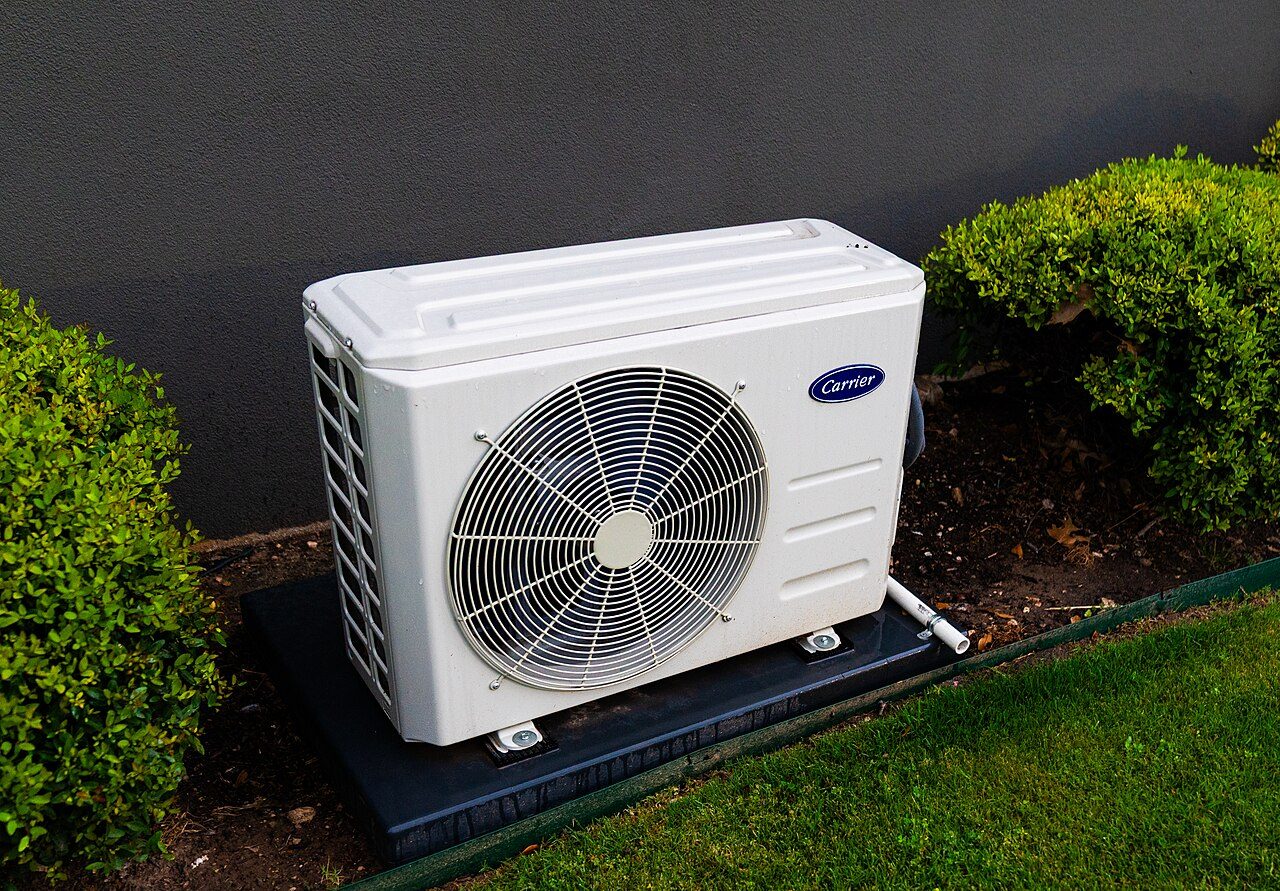
Governor Gavin Newsom approved SB 222 on September 28, 2026, and the Secretary of State filed it the same day as Chapter 738, Statutes of 2026, per the chaptered text's header and the bill's history page. The Governor's office listed the bill, by state Senator Scott Wiener of San Francisco, in a September 28 release on six bills it calls commonsense, under a bullet on "Eliminating red tape to install residential heat pumps" and "creating an automated and streamlined permitting process for standard heat pump water heaters and HVAC installations." The Legislature had passed the bill on August 25; the history page records the Assembly vote at 60-8 on August 24 and the Senate's concurrence in the Assembly amendments at 32-5 on August 25. Wiener's office calls the bill the Heat Pump Access Act and, in its August 25 release, a first-in-the-nation bill.
The chaptered text carries the same deadlines The Duck Curve reported when the bill passed, and puts numbers on the fee cap the Legislative Counsel's Digest describes only as a limit "as specified." Section 3 of the act declares the oversight of heat pump permitting "a matter of statewide concern and is not a municipal affair" and applies Section 2, the Government Code chapter, "to all cities, including charter cities"; three of that chapter's sections carve out the smallest jurisdictions.
What takes effect when
Beginning July 1, 2027, under Section 51297.52 of the Government Code, a city or county "shall adopt and offer asynchronous inspections" for residential heat pump water heater and heat pump HVAC installations, meaning inspections "that do not require a licensed contractor and building inspector to be simultaneously present." An inspector may phone or video-call the contractor, and may require a second inspection with both present if there is an issue to cure or a space to open. Subdivision (f) lets a city or county offer remote inspections "in lieu of an asynchronous inspection pursuant to this section," the option that AB 1738, Chapter 271, requires counties of 150,000 or more and their cities of 5,000 or more to offer by January 1, 2028, or July 1, 2028 for cities of 50,000 or fewer.
On or before January 1, 2028, under Section 51297.53, a jurisdiction "may require up to one nondiscretionary permit per installation," with separate permits still allowed for a panel replacement or structural work, and more than one permit only if the building official makes written findings "based upon substantial evidence" that the installation would have "a specific, adverse impact on public health or safety" with no feasible mitigation.
On or before July 1, 2028, Section 51297.55 requires "an online, automated permitting process that issues permits in real time to a licensed contractor" for an installation that needs no new electrical panel or structural work and is a swapout, which Section 51297.51 defines as a replacement "in the same location on a property" and which excludes a job that touches "more than 25 linear feet of ductwork" or converts a package unit to a split system or the reverse. For a heat pump HVAC system the contractor must certify under penalty of perjury a load calculation to the Air Conditioning Contractors of America's Manual J, the Sheet Metal and Air Conditioning Contractors' National Association's residential installation standards manual, the California Mechanical Code, or successor provisions, and produce it on request.
Fees, window units and the small-jurisdiction carve-out
Section 51297.57 caps the permit fee at $150 for a residential heat pump water heater and $200 for a heat pump HVAC system, within the general rule that a fee not exceed the estimated reasonable cost of the service. A jurisdiction may exceed the caps only through a written finding and an adopted resolution or ordinance with "substantial evidence of the reasonable cost to issue the permit," set at "a regular fixed amount per appliance type" and listed publicly, and it may not add charges above the listed fee. Technology fees charged by third-party permitting vendors sit outside the caps. Section 51297.56 requires each jurisdiction to publish its adopted standards, its required documents and every fee online, to take applications electronically, and to accept electronic signatures.
The real-time permitting and publication sections do not apply to "a city with a population of fewer than 5,000 persons or a county with a population of fewer than 150,000 persons," including each city within such a county. The fee-cap section's carve-out is worded differently: its caps do not apply to a city with a population of "fewer than 5,000 persons and a county with a population of fewer than 150,000 persons," including each city within that county. The chaptered text uses "or" in the first two sections and "and" in the third. The asynchronous inspection section carries no population carve-out, and neither does Section 51297.54, which limits the additional local standards a jurisdiction may apply to five kinds: setbacks of up to 3 feet in side and back yards and 10 feet in front yards; reach codes; planning or zoning standards adopted by ordinance with substantial evidence of a specific, adverse impact; noise standards for inverter-based heat pumps "not to be less than 15 decibels higher than any statutory maximum regulating decibel limits for noninverter-based technologies"; and workforce labor standards such as prevailing wages and apprentices. Site plans cannot be required for a swapout. Plug-in window air conditioners and window heat pumps need no permit or inspection at all if the appliance is rated 120 volts or less, is self-contained, and needs no dedicated circuit, panel upgrade, drainage or structural modification.
Civil Code Section 4737, the bill's other half, voids any provision of a homeowners association's governing documents that "prevents the replacement of a fuel-gas-burning appliance with an electric appliance that complies with all applicable state and local building codes," and voids any covenant, deed restriction or governing-document provision that effectively prohibits or restricts a residential heat pump. Its paragraph (2) bars an association from prohibiting or restricting a member's heat pump, charging a fee for it, requiring a specific contractor or product, claiming a rebate or commission on it, or requiring its removal; that paragraph "shall not apply if the association establishes" that the installation would violate federal, state or local law, or that a required permit was not granted. Subdivision (d) keeps an association's ability to hold a member responsible for damage to a common area, an exclusive use common area, or another member's separate interest.
The chapter does not apply to new residential construction. Section 51297.58 gives the California Energy Commission a lever: a city or county applying for any commission funding must self-certify its compliance with the chapter. The dates now run in order: asynchronous inspections on July 1, 2027; the one-permit limit and AB 1738's first remote-inspection deadline, both January 1, 2028; and real-time permits and AB 1738's deadline for its smaller cities, both July 1, 2028.
Sources
Primary
- SB-222 Residential heat pump water heater or heat pump HVAC systems, Chapter 738, Statutes of 2026 (chaptered text) · California Legislative Information
- Governor Newsom signs commonsense legislation to make your life easier · Office of Governor Gavin Newsom
Supporting
- California Passes Senator Wiener's First-in-the-Nation Bill to Accelerate Heat Pump Approvals, Lower Energy Costs For Households · Office of Senator Scott Wiener
- SB-222 Bill History · California Legislative Information
- AB-1738 State Housing Law: remote inspections (Chapter 271, Statutes of 2026) · California Legislative Information
Copies of every cited source are retained. If a link no longer resolves, request a copy at contact@theduckcurve.com.