 The Duck Curve
Newsom signs SB 925 fusion strategic plan and AB 2647 nuclear assessment
SB 925 requires a fusion strategic plan by December 31, 2029 and opens CEQA-streamlined certification to fusion manufacturing certified at $250 million or more over five years; AB 2647 requires a nuclear assessment by January 1, 2028.
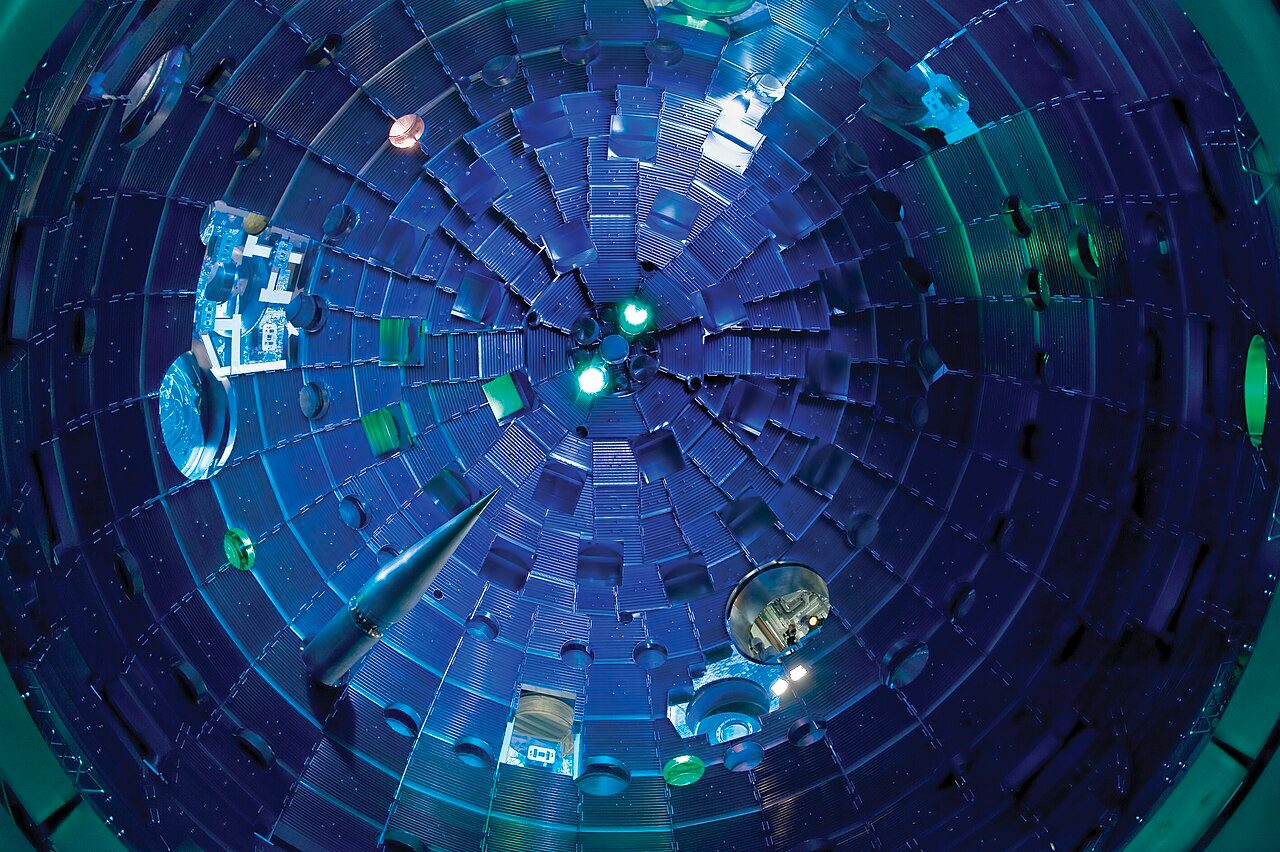
Governor Gavin Newsom announced on September 30, 2026 that he has signed two energy bills, SB 925 by state Senator Jerry McNerney of Pleasanton and AB 2647 by Assemblymember Lisa Calderon of Whittier, his office said from a quantum lab at UC Berkeley. SB 925 requires the California Energy Commission to develop a strategic plan for fusion energy and submit it to the Legislature on or before December 31, 2029. AB 2647 requires the commission, on or before January 1, 2028, to prepare a comprehensive assessment of the potential for new in-state nuclear powerplants and of advanced nuclear technologies, and in preparing it to consider ten listed items, one of which is recommended revisions to state law and regulations, naming the two Public Resources Code sections that condition new fission plants on federal findings about fuel reprocessing and waste disposal.
McNerney's office, in a same-day release, puts the signing on Tuesday, September 29, at a UC Berkeley ceremony, and names General Atomics as the bill's sponsor. The Governor's release carries no signing date beyond its September 30 dateline, and the history pages for SB 925 and AB 2647 still ended at "Enrolled and presented to the Governor," dated August 31, when read on September 30. SB 925 passed the Assembly 77-0 on August 19 and the Senate concurred 40-0 on August 26; AB 2647 passed the Senate 38-0 on August 24 and the Assembly concurred 71-1 on August 25. The release's new $30 million budget allocation is for quantum and deep-space research; neither bill carries money, and both digest keys read "Appropriation: NO."
What SB 925 requires
The bill adds Chapter 16.5, beginning at Section 25995, to the Public Resources Code. The plan must "Serve an advisory function and not form the sole basis for a new procurement mandate or requirement," and Section 25995.5 says the chapter "does not create a technology set-aside, mandatory minimum, or mandate procurement of fusion energy by load-serving entities." Where applicable it builds on Section 25302.4, added by AB 1172 in 2023, which requires a fusion assessment in the 2027 integrated energy policy report.
Five chapters are mandatory: locations, or criteria for locations, for new fusion research and development testing facilities, including options for siting a national integrated facility "such as a fusion prototypical neutron source, volumetric neutron source, integrated blanket and fuel cycle facility, or other capability, in the future"; locations or criteria for fusion demonstrations and powerplants, weighing, among other things, transmission and least-conflict areas for cultural and biological resources; economic and workforce development, including "the need to require the use of a skilled and trained workforce to perform all work"; a regulatory framework and licensing roadmap that the commission must align "with the Nuclear Regulatory Commission's rule establishing a regulatory framework for fusion machines"; and an assessment of "the level at which fusion energy at scale would best support California's long-term renewable energy and greenhouse gas emission reduction goals."
The findings note that the federal ADVANCE Act of 2024 puts fusion machines under the NRC's byproduct materials process and that California's agreement-state status delegates their radiological licensing and registration to the state's Radiologic Health Branch, the path under which Tennessee, also an agreement state, granted Type One Energy a byproduct material license under fusion-machine rules, announced August 31, 2026.
Section 2 amends the facility definition for the commission's opt-in certification of environmental leadership development projects, which carries CEQA streamlining benefits per the digest, with applications open on or before June 30, 2030. The amended paragraph covers a discretionary project for which the applicant has certified a capital investment of at least $250 million over five years, in one of two prongs: the first names energy storage, wind and solar photovoltaic system or component manufacturing, and the second reads "the manufacture, production, or assembly of specialized products, components, or systems that are integral to renewable energy, energy storage technologies, or fusion energy."
What AB 2647 asks
AB 2647 adds Section 25302.2. On or before January 1, 2028, "as part of the integrated energy policy report or as a separate report, as determined by the commission," the CEC must prepare "a comprehensive assessment of the potential role for advanced nuclear technologies in supporting critical infrastructure in California," and of whether new in-state nuclear powerplants can cost-effectively meet statewide needs for new electricity resources and the 100 Percent Clean Energy Act of 2018's policy of 100 percent zero-carbon electricity by 2045. The section lists ten things the commission shall consider, among them system costs, timelines and siting; high-renewable grid scenarios that require "firm, dispatchable, zero-carbon resources"; spent fuel costs against other technologies' waste costs; whether the state will need to procure nuclear electricity after 2045; and, at item (8), "Recommended revisions to state law and regulations, including to Sections 25524.1 and 25524.2."
Those two sections are the state's conditions on new fission plants. Section 25524.1 and Section 25524.2, with exceptions for Diablo Canyon Units 1 and 2 and San Onofre Units 2 and 3, bar a nuclear fission thermal powerplant from being a permitted land use or certified by the commission until the commission finds that the federal government has approved a technology for reprocessing fuel rods, for plants requiring reprocessing, and "a demonstrated technology or means for the disposal of high-level nuclear waste," reports to the Legislature, and 100 legislative days pass without a disaffirming resolution.
AB 2647 amends neither; its subdivision (f) lets the CEC, the PUC, the ISO and other public agencies evaluate nuclear energy for long-term resource needs "notwithstanding the conditional prohibitions on siting new nuclear powerplants pursuant to Sections 25524.1 and 25524.2." Calderon, in the Governor's release, said the bill "gives us the information to make a new choice, based on the technologies and needs of our century."
The competition McNerney names
McNerney's release says "Other states are leading the way in terms of planning, permitting, and establishing regulatory frameworks." It names Xcimer Energy's 2025 decision to open a headquarters in Colorado and expand manufacturing in Arizona, and Pacific Fusion, which broke ground on a $1 billion campus in Albuquerque on August 25, 2026. The release says "One third of all U.S.-based fusion energy startup companies call California home"; the findings of the bill it describes put the share at "more than one-quarter of all United States fusion energy startups."
The state's existing fusion program, created by SB 80 (Chapter 334, Statutes of 2025), offers incentives "up to $5 million," per the CEC's program page.
At the federal level, H.R. 10574, introduced September 24, 2026 by Rep. Zoe Lofgren of California, would appropriate $10 billion by The Duck Curve's arithmetic on a committee-posted draft.
Outlook
Three dated deliverables now sit in sequence: the 2027 integrated energy policy report's fusion assessment under Section 25302.4; the AB 2647 nuclear assessment by January 1, 2028; and the SB 925 strategic plan by December 31, 2029. If the commission takes the option Section 25302.2 gives it and folds the nuclear assessment into the integrated energy policy report, the fission and fusion questions land in one report.
⚠ The Outlook extrapolates from the deadlines in the enrolled texts of SB 925 and AB 2647, Public Resources Code Section 25302.4, and the two offices' releases only.
Sources
Primary
- AB-2647 Energy: nuclear powerplants: assessment (enrolled text, August 27, 2026) · California Legislative Information
- SB-925 Fusion energy: State Energy Resources Conservation and Development Commission: strategic plan: certification and environmental review (enrolled text, August 28, 2026) · California Legislative Information
- Governor Newsom signs legislation to accelerate California's fusion industry, announces major investment for quantum research · Office of Governor Gavin Newsom
Supporting
- Newsom Signs McNerney's Bill to Accelerate Development of Fusion Energy · Office of Senator Jerry McNerney
- Public Resources Code Section 25524.2 (nuclear fission powerplants: high-level waste disposal condition) · California Legislative Information
- Public Resources Code Section 25302.4 (fusion energy assessment in the 2027 integrated energy policy report) · California Legislative Information
- Fusion Research and Development Innovation Initiative · California Energy Commission
- SB-925 Bill History · California Legislative Information
- AB-2647 Bill History · California Legislative Information
- Public Resources Code Section 25524.1 (nuclear fission powerplants: fuel rod reprocessing condition) · California Legislative Information
Copies of every cited source are retained. If a link no longer resolves, request a copy at contact@theduckcurve.com.