 The Duck Curve
Newsom signs AB 1738, a remote-inspection option for heat pumps and solar
Chapter 271 requires counties of 150,000 or more and their cities of 5,000 or more to offer remote inspections for heat pump, solar, battery, reroof and detector permits by January 1, 2028 (July 1, 2028 for cities of 50,000 or fewer).
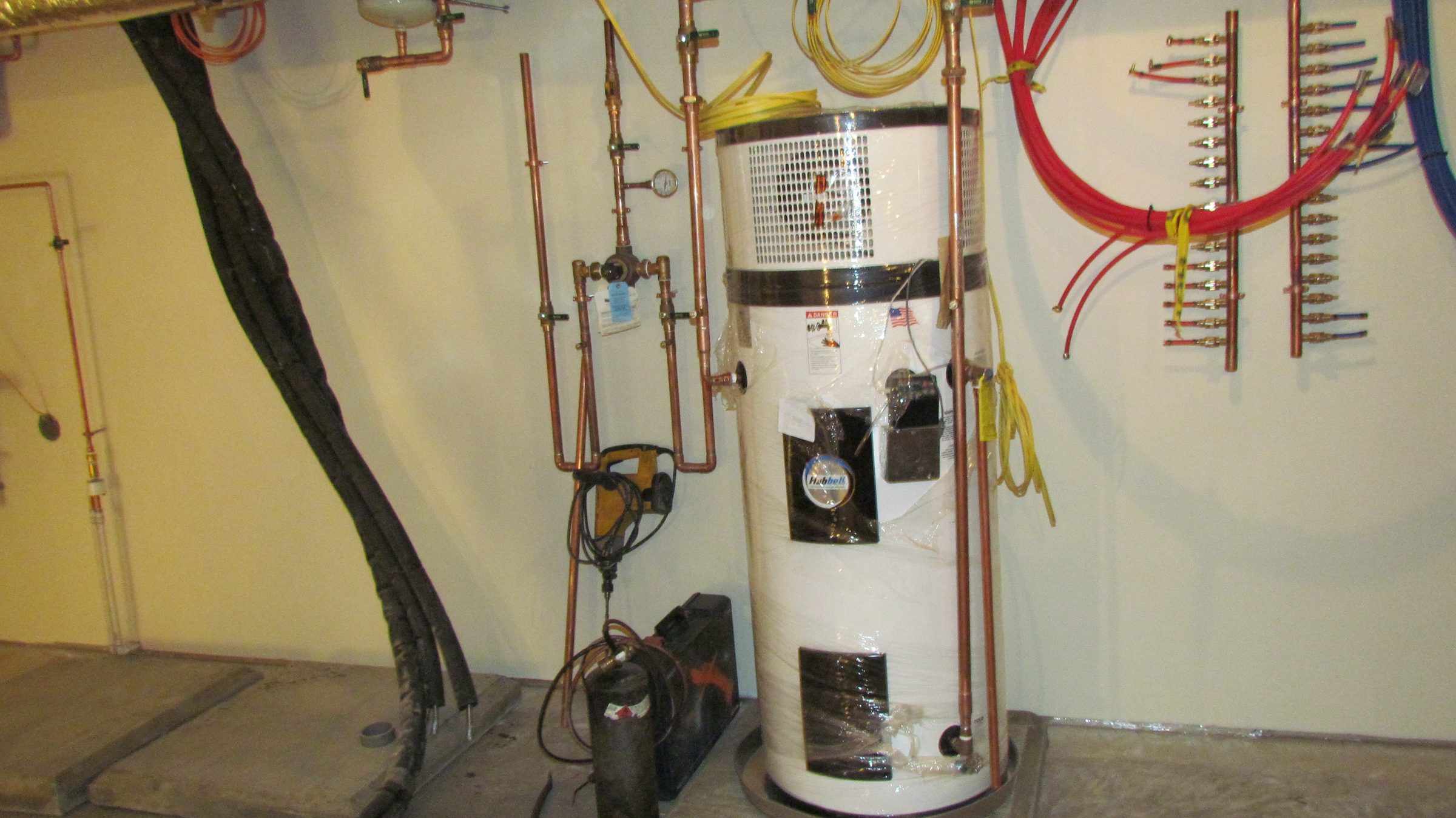
Governor Gavin Newsom signed AB 1738 on September 18, 2026, according to the Governor's office's legislative update of September 18, 2026, and the bill's history page records it chaptered by the Secretary of State on September 18, 2026 as Chapter 271, Statutes of 2026. The bill, by Assemblymember Juan Carrillo of Palmdale, adds Section 17970.9 to the Health and Safety Code. It requires a local agency, defined in the section as a city, including a charter city, county, or city and county, to offer a homeowner, or a contractor who provides the city or county the homeowner's written consent, "the option of requesting a remote inspection for all or a subset of inspections required by a building permit" for five subparagraphs of work in single- or two-family dwelling units. Two are the residential heat pump water heater and the residential heat pump HVAC system; the other three are residential reroofs; photovoltaic systems "with an alternating current nameplate rating less than or equal to 15 kilowatts, and energy storage systems," which the text lists as two kinds of work in one subparagraph; and smoke and carbon monoxide detectors.
The section does not apply at all to a city with a population of fewer than 5,000 or a county with fewer than 150,000, including each city within that county. Among the local agencies it does reach, the date is January 1, 2028 for cities with more than 50,000 residents and for counties, and July 1, 2028 for a "qualifying city or county," which the section defines as a city with a population of 50,000 or fewer "that is not exempt pursuant to paragraph (1) of subdivision (b)"; counties never qualify under that definition.
What the act says
The remote inspection is conducted offsite, by videoconferencing or by recorded photos and videos, with the method "at the discretion of the local construction inspector." For the two heat pump subparagraphs, which include the electrical work to support the installation, the section says a local agency "shall not be required to allow for remote inspections of new or upgraded main electrical services as part of the included scope," though it "may at their discretion elect to remotely inspect new electrical service installations" supporting those installations, and the heat pump HVAC category is offered "Subject to the discretion of the inspector." Subdivision (a)(3) contemplates the reverse of a homeowner's request: "If a local agency requires an inspection to be performed remotely," the contractor discloses that requirement to the homeowner in lieu of the written consent.
Local agencies may adopt "reasonable protocols governing the technical conduct of a remote inspection," a list the section opens with "including protocol to ensure the following" and fills with three items: that the inspector "is able to adequately observe the work that is the subject of the inspection," with sufficient field of view, image quality or camera coverage as its example; that the work shown is the permitted work at the permitted location, with a video or photo inspection that "begins at the street, clearly showing the property address at the front of the building or proof of location"; and that the technology and broadband connection are sufficient. An inspector may end a remote inspection and require an in-person one "if the inspector cannot verify compliance with applicable codes or regulations via the remote inspection," and after a failed remote inspection the inspector may conduct the permit's later inspections remotely or in person at their discretion.
The remote option must come "at no greater cost and with no greater delay than in-person inspection." A homeowner or contractor found to have willfully misrepresented the work may be banned from remote inspections for a period "not to exceed 6 months for the first offense and 12 months for offenses thereafter."
VuSpex, a remote-inspection software vendor, said in a September 21 release that the Governor "has signed" the bill; the release describes the covered work as "including residential reroofs, qualifying photovoltaic and energy-storage systems, minor electrical and plumbing work, and smoke and carbon monoxide detectors." The chaptered section's five subparagraphs name no minor electrical and plumbing work; the electrical work it covers is the work supporting a heat pump installation.
Votes, opponents and the two other bills
The votes page shows the Assembly passing the bill 62-0 on May 22, 2026, the Senate 29-6 on August 20, and the Assembly concurring in the Senate's amendments 68-0 on August 24. The Assembly Local Government Committee's analysis for its April 15, 2026 hearing put the count of jurisdictions already doing this at "Approximately 19 out of the 540 jurisdictions in California," and named Sacramento, which offers virtual inspections "for certain residential permits, including minor HVAC work, water heater replacement, solar photovoltaic systems, EV charger installations, and some reroof inspections." The history page shows the bill amended three times in the Senate after that hearing, on June 10, June 22 and July 2.
The co-sponsors, Permit Power and SPUR, argued in that analysis that "Contractors routinely wait hours for inspections that take minutes, adding $600–$1,000 per inspection in standby and administrative costs." The California Building Officials, in opposition, answered that "many of these declarations" in the bill date from the pandemic, that Palo Alto's lead time as of their letter was a next-day turnaround, and that "nearly all jurisdictions statewide conduct inspections on the business day following the request by the contractor or homeowner." For a virtual inspection over FaceTime, the letter quotes an unnamed member of the association's board: the risk is "what they are not showing outside of the camera view."
SB 222, the Heat Pump Access Act The Duck Curve covered when the Legislature passed it on August 25, was still at "Enrolled and presented to the Governor at 6 p.m.," dated August 30, on its history page on September 27, 2026; the author's office put the deadline to act at September 30. SB 222's Section 51297.52 requires cities and counties, beginning July 1, 2027, to "adopt and offer asynchronous inspections" for heat pump water heater and heat pump HVAC installations, meaning inspections "that do not require a licensed contractor and building inspector to be simultaneously present," and its subdivision (f) lets a city or county offer remote inspections "in lieu of an asynchronous inspection pursuant to this section."
The September 18, 2026 update also lists AB 113, the Budget Act of 2026 amendments bill, among the signed bills, and its history page records it chaptered on September 18, 2026 as Chapter 248. The chaptered text carries the two $10 million appropriations for the Distributed Electricity Backup Assets program that The Duck Curve described when the bill passed on September 1: Schedule (2) of Item 3360-102-0001, a $10,250,000 General Fund item whose other $250,000 is for electric vehicle charging infrastructure in the Antelope Valley, "exclusively for new clean Microgrids, or new non-residential or aggregated residential distributed clean energy and storage projects," and Item 3360-102-6093, $10 million payable from the Safe Drinking Water, Wildfire Prevention, Drought Preparedness, and Clean Air Fund, under a provision worded the same except for a lowercase "microgrids." The chaptered text does not name the Demand Side Grid Support program.
Sources
Primary
- AB-1738 State Housing Law: remote inspections (Chapter 271, Statutes of 2026) · California Legislative Information
Supporting
- AB 1738 (Carrillo) bill analysis, Assembly Local Government Committee, hearing April 15, 2026 · California State Assembly, Local Government Committee
- SB-222 Residential heat pump water heater or heat pump HVAC systems (2025-2026) · California Legislative Information
- AB-113 Budget Act of 2026 (amendments), Chapter 248, Statutes of 2026 · California Legislative Information
- SB-222 Bill History · California Legislative Information
- AB 113 bill history (2025-2026 session) · California Legislative Information
- Governor Newsom issues legislative update 9.18.26 · Office of Governor Gavin Newsom
- VuSpex Highlights Passage of AB 1738 as Governor Newsom Signs Bill Expanding Virtual Inspections Across California · VuSpex via PR Newswire
- AB-1738 Bill Votes · California Legislative Information
- AB-1738 Bill History · California Legislative Information
Copies of every cited source are retained. If a link no longer resolves, request a copy at contact@theduckcurve.com.