 The Duck Curve
Newsom signs six EV bills on charger permits, fees, and battery labels
SB 1283 extends expedited charger permitting to supporting infrastructure; AB 1820 caps Level 2 charger permit fees at multifamily housing from July 1, 2027, and from January 1, 2028 in jurisdictions under 200,000 residents.
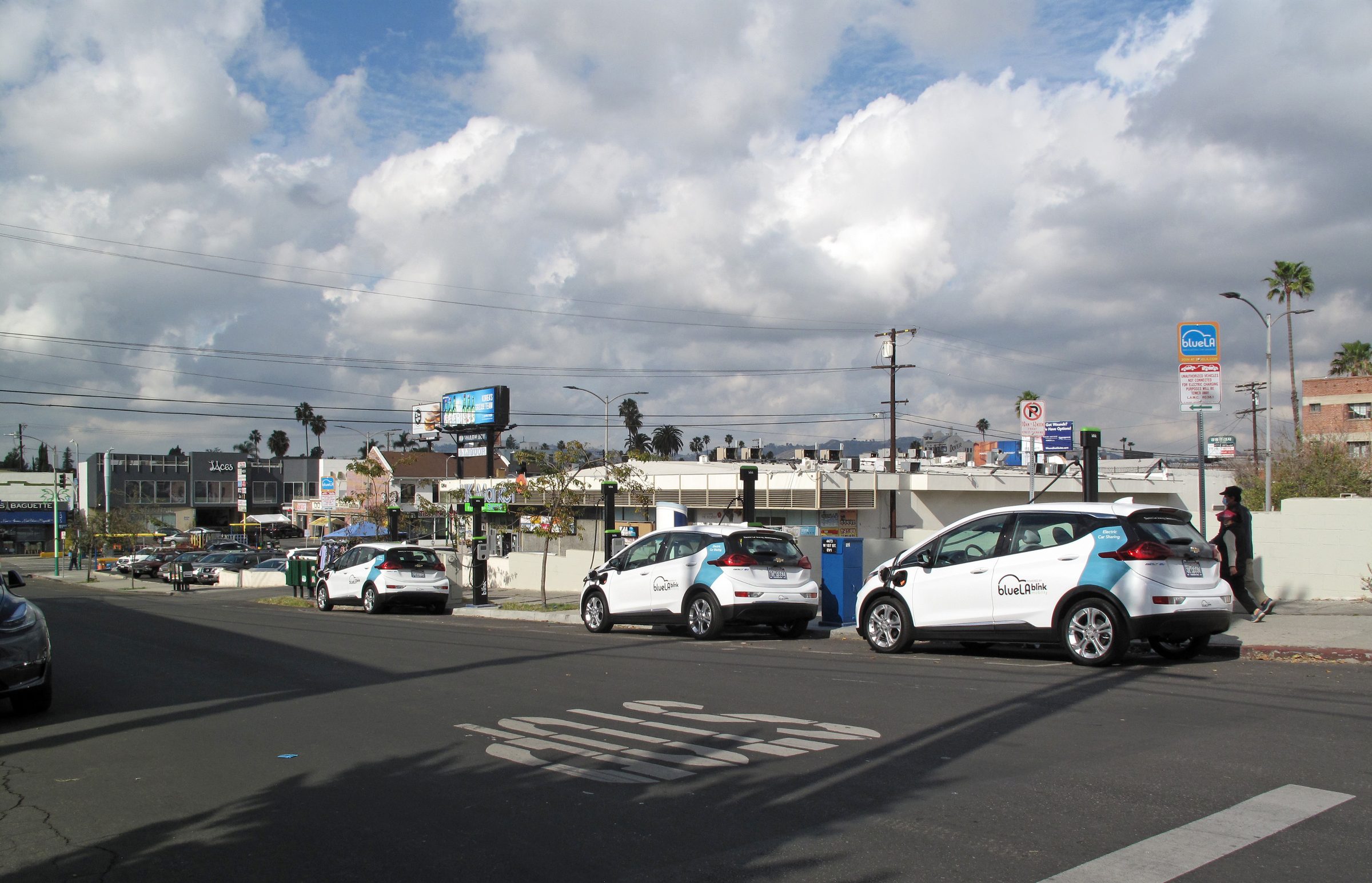
Governor Gavin Newsom signed six electric vehicle bills on September 20, 2026, his office said: SB 969 (Reyes), SB 1283 (Ashby), AB 1820 (Schiavo), SB 1213 (Reyes), SB 1267 (Allen) and SB 615 (Allen). The operative details sit in the bill texts, and they are more specific than the release.
What the six bills do
SB 1283 amends Sections 65850.7 and 65850.71 of the Government Code, which already require cities and counties to approve charger installations administratively under an expedited permitting ordinance and checklist. The Legislative Counsel's Digest says the bill extends that administrative approval to stations with a canopy, as defined, or with onsite energy storage sized to support charging, requires the local ordinance to also address expedited streamlining for any supporting infrastructure necessary for or accessory to the operation of EV stations, and requires ordinances and checklists to be amended no later than December 31, 2027. The enrolled text says that infrastructure "includes, but is not limited to, any paving, concrete pad, utility trench, canopy, or onsite energy storage system sized to support electric vehicle charging," and defines the canopy: a clearance height of 17 feet or less, a fascia width of 4 feet or less, and a coverage area of 5,000 square feet or less.
AB 1820 adds Section 66015.5 to the Government Code, and the enrolled text has two prongs. First, a city, county, city and county, or charter city "shall not charge a permit fee for an electric vehicle charging station that exceeds the estimated reasonable cost of providing the service for which the fee is charged," as Section 65850.7 defines that term. Second, for a Level 2 station installed at a new or existing multifamily housing development, that fee may not exceed $500 plus $5 per kilowatt for each kilowatt between 51 kW and 250 kW, plus $2 for every kilowatt above 250 kW, unless the jurisdiction, "as part of a written finding and an adopted resolution or ordinance, provides substantial evidence of the reasonable cost to issue the permit." The section becomes operative July 1, 2027, and applies from January 1, 2028 in jurisdictions with fewer than 200,000 residents; it is repealed on January 1, 2036.
SB 969 works inside a system that already exists: its digest says existing law gives the Department of Food and Agriculture general supervision of weighing and measuring devices "including devices used to measure electricity sold as a motor vehicle fuel." The Secretary of Food and Agriculture must adopt regulations governing how often commercial electric vehicle fueling systems are inspected, county sealers must inspect them and report monthly to the Division of Measurement Standards, and the division must pass that data to the California Energy Commission no less than biannually. Type-approved systems factory tested and certified by a factory registered service agency are exempted from, among other things, field placing-in-service by a service agency or sealer.
SB 615 is a two-year bill: its history page shows it ordered to the Assembly inactive file on September 9, 2025 and taken off it on June 23, 2026. The enrolled text requires that, commencing July 1, 2028, a new vehicle traction battery sold in the state be equipped by its battery supplier with a permanent label carrying only seven items: the supplier's name, the date of manufacture, the chemistry including cathode and anode type, the rated capacity or energy as measured by SAE J2288, the hazardous substances it contains, product safety and recall information, and safe disposal information. For the last five, subdivision (c) allows a QR code on the pack linking to a data repository website instead. The label sits on the pack's exterior, visible and accessible when the battery is removed from the vehicle. Per the digest, battery suppliers pay a tiered fee from July 1, 2029, the State Air Resources Board must adopt regulations by July 1, 2031, and the board's duties are contingent on an appropriation. The release says the bill gives consumers "clearer EV battery information when comparing vehicle options." A label that becomes visible when the pack comes out of the car is a recycler's tool before it is a showroom one.
SB 1213 addresses truck and bus incentives. Its digest says that beginning January 1, 2027, a state agency running a medium- or heavy-duty vehicle incentive program funded by the Greenhouse Gas Reduction Fund, the California Clean Fuel Reward, or the Clean Transportation Program must condition a vehicle model's inclusion on transparency requirements, among them the manufacturer providing the suggested retail price for all zero-emission models offered for sale in California that the programs may fund.
SB 1267 amends the Davis-Stirling Common Interest Development Act. Its digest states the Legislature's intent to give an association that complies with existing charging-station rules civil liability protection for injuries and damages emanating from a station the association does not own, makes the station's owner and each successive owner responsible for damage costs resulting from its use, adding use to the installation, maintenance, repair, removal, and replacement existing law already covered, and requires the installer to indemnify or reimburse the association or its members for loss or damage caused by the installation. The release says the law helps Californians in homeowner associations access charging; the text's mechanism is settling who pays when a member's charger causes damage.
The record, and the release's own citations
The Legislature's record had not caught up with the signing as of September 20, 2026: each bill's history page still ends at "Enrolled and presented to the Governor," dated August 28 for AB 1820, August 30 for SB 1283 and SB 1267, September 4 for SB 969, September 8 for SB 1213, and September 9 for SB 615. The floor votes those pages record: SB 1283 passed the Senate 31-4 on May 26, 2026 and the Assembly 71-0 on August 24, and the Senate concurred in the Assembly amendments 32-5 on August 25; AB 1820 passed the Assembly 72-0 on May 26 and the Senate 27-10 on August 20, and the Assembly concurred 71-1 on August 24; SB 615 passed the Senate 28-6 on May 29, 2025, passed the Assembly on August 30, 2026 with no count printed on its page, and the Senate concurred 29-10 on August 31. SB 969, SB 1213, and SB 1267 recorded no floor votes against.
SB 222, the heat pump permitting bill the Legislature passed on August 25, 2026, shows the same "Enrolled and presented to the Governor" entry, dated August 30, on its history page; the September 20 release does not mention it, and the author's office puts the Governor's deadline to act at September 30, as The Duck Curve reported.
One of the release's citations does not match its link. The release says the California Energy Commission "allocated $98.5 million in light-duty ZEV infrastructure funding for fiscal year 2025-26" and links to a CEC release of August 18, 2026 that describes a $95.2 million Clean Transportation Program investment plan for fiscal year 2026-2027, of which $48 million is for light-duty EV charging infrastructure. They are not the same figure, and the linked document supports only the second.
Sources
Primary
- Governor Gavin Newsom signs legislation to accelerate California's EV future, expand consumer choice, and strengthen energy independence · Office of Governor Gavin Newsom
Supporting
- CEC Approves $95 Million Plan to Expand ZEV Infrastructure · California Energy Commission
- AB-1820 Electric vehicle charging stations: permit fees (Enrolled August 26, 2026) · California Legislative Information
- SB-1283 Electric vehicle charging stations: installation: permits (Enrolled August 27, 2026) · California Legislative Information
- SB-1267 Common interest developments: electric vehicle charging stations owned by members in common areas (Enrolled August 27, 2026) · California Legislative Information
- AB-1820 Bill History · California Legislative Information
- SB-1267 Bill History · California Legislative Information
- SB-222 Bill History · California Legislative Information
- SB-1283 Bill History · California Legislative Information
- SB-969 Weights and measures: electric vehicle fueling systems (Enrolled August 31, 2026) · California Legislative Information
- SB-1213 Zero- and near-zero-emission medium- and heavy-duty vehicles: incentives: transparency (Enrolled September 01, 2026) · California Legislative Information
- SB-969 Bill History · California Legislative Information
- SB-615 Vehicle traction batteries (Enrolled September 04, 2026) · California Legislative Information
- SB-1213 Bill History · California Legislative Information
- SB-615 Bill History · California Legislative Information
Copies of every cited source are retained. If a link no longer resolves, request a copy at contact@theduckcurve.com.